
 en
en English
 Español
 Français
 русский
 عربى
عربى
Spring Roll Sheet-to-Wrap Integration to Bring Yield Under Control
Content
- 1 What “Sheet-to-Wrap Integration” really means in a spring roll line
- 2 Wrapper machine control points that directly protect yield
- 3 Line synchronization: turning stable sheets into stable wraps
- 4 Yield metrics that tell you whether integration is working
- 5 Commissioning checklist to bring yield back under control
- 6 Troubleshooting: map defects to the most likely control lever
- 7 How to position your wrapper machine in an integrated line
If you want Spring Roll Sheet-to-Wrap Integration: Bringing Yield Back Under Control, the fastest path is to stabilize wrapper output first (thickness, temperature, release, cooling), then synchronize sheet delivery with the wrapping/forming station so the wrapper is always fed at the same condition and pace. Done correctly, you can move from “operator-dependent yield” to a repeatable process where scrap is driven by measurable parameters—not guesswork.
On your wrapper-making stage, the key levers are already built into the machine design: wrapper thickness range of 0.28–0.6 mm, automatic temperature control of ±1°C, and production capacity up to 10,000 pcs/hour. These specs are most valuable when they are treated as “line control points,” not just standalone machine features.
What “Sheet-to-Wrap Integration” really means in a spring roll line
Sheet-to-wrap integration connects three decisions into one closed loop: (1) how the wrapper sheet is formed and released, (2) how it is cooled and conveyed, and (3) how it is cut/portioned and handed off to the wrapping/forming station. The objective is simple: every wrapper arrives at the wrap point within the same thickness, temperature, and tackiness window, at a rate the wrapper can reliably handle.
Why yield drifts when the wrapper stage is “loose-coupled”
- Thickness variation creates edge tearing or weak corners during wrapping.
- Wrapper temperature/moisture variation causes sticking, poor release, or “dry cracking.”
- Speed mismatch between wrapper conveyor and wrapping station leads to misfeeds, skew cuts, and rework piles.
- Inconsistent batter flow or nozzle behavior causes local thin spots—yield losses that often look like “random” defects.
Wrapper machine control points that directly protect yield
In integrated lines, the wrapper machine is the “quality gate.” The parameters below should be defined as acceptance criteria during commissioning, then used as daily checks.
| Control point | What to watch | Why it affects yield | Recommended action |
|---|---|---|---|
| Thickness window | 0.28–0.6 mm setpoint by SKU | Thin areas tear; thick areas don’t fold cleanly | Lock batter solids/viscosity, then fine-tune nozzle gap and bake contact |
| Bake temperature stability | ±1°C control | Temperature swing changes surface tack and release behavior | Validate sensor placement; verify controller response after warm-up |
| Cooling and anti-jam | Ice-water cooling performance | Over-tacky wrapper causes sticking, misfeeds, and scrap piles | Keep cooling loop stable; schedule nozzle cleaning to avoid uneven release |
| Sheet width vs. cutter | Up to 30 cm sheet width | Skew or width drift creates off-center cuts and wrap failure | Align conveyor tracking; calibrate cutter timing to conveyor encoder |
| Capacity range | 500–10,000 pcs/hour | Running too fast for downstream causes repeated misfeeds | Set line rate from the slowest station; use buffer only if it preserves wrapper condition |
A practical “wrapper acceptance test” (use this before you integrate)
- Measure thickness at 5 points across the sheet (center + edges) every 15 minutes; confirm it stays in the chosen SKU window.
- Do a release check: wrapper must separate cleanly without edge tearing for at least 30 consecutive sheets.
- Do a fold test at the wrap point temperature: wrapper folds without cracking or sticking.
Line synchronization: turning stable sheets into stable wraps
Integration fails most often because the wrapper stage and wrapping stage are “individually stable” but not synchronized. The goal is to keep a constant handoff rhythm so the wrapper arrives flat, centered, and timed to the wrap mechanism.
How to set the line rate (a practical example)
Suppose your downstream spring roll forming station is reliable at 6,000 pcs/hour and begins misfeeding above that. Even if the wrapper machine can reach 10,000 pcs/hour, set the integrated line to 5,800–6,000 pcs/hour and treat wrapper capacity as headroom for stability—not a target. This prevents “micro-stops,” which are one of the biggest hidden yield killers (each micro-stop creates misaligned sheets and a burst of scrap).
Critical synchronization elements to include
- Conveyor-to-cutter timing: cutter trigger referenced to conveyor encoder, not a free-running timer.
- Sheet centering: mechanical guides + tracking to avoid gradual drift that becomes off-center wraps.
- Temperature discipline: keep wrapper handoff temperature consistent; do not “store” wrappers long enough to dry out.
- Stop/start strategy: if downstream stops, stop wrapper output immediately (or divert to controlled buffer) to avoid piles and sticking.
Yield metrics that tell you whether integration is working
“Yield under control” should be defined by numbers you can audit each shift. Use the metrics below so you can pinpoint whether losses come from wrapper formation, sheet handling, or wrapping mechanics.
Suggested KPI set (simple, practical, and actionable)
- Wrapper scrap rate (%): (discarded sheets ÷ sheets produced) × 100.
- Wrap defect rate (%): (rework + rejects ÷ spring rolls formed) × 100.
- Micro-stop count (per hour): stops under 60 seconds; correlate spikes with sheet misfeeds.
- Thickness drift (mm): max–min thickness across a 30-minute window.
A common target used in mature lines is: wrapper scrap ≤ 1.5% and wrap defects ≤ 2.0% under steady operation. If you cannot sustain those numbers, treat it as a control problem (temperature, thickness, timing), not a labor problem.
Commissioning checklist to bring yield back under control
Use this sequence to avoid “tuning the wrong station.” You will reach stability faster because each step locks a variable before moving to the next.
- Lock batter fundamentals: solids, viscosity, and temperature (record the values that produce stable 0.28–0.6 mm thickness).
- Warm-up and stabilize bake zone: do not start yield evaluation until the machine holds ±1°C for 20–30 minutes.
- Validate release and cooling: confirm wrappers separate cleanly and do not stick on conveyors; verify cooling loop stability.
- Set integrated line speed: choose a rate below the downstream limit (use wrapper capacity headroom as stability margin).
- Sync cutter and handoff: ensure cut length and timing are referenced to conveyor motion, then confirm consistent placement at wrap point.
- Run a 2-hour stability trial: track scrap, defects, and micro-stops; adjust only one parameter per iteration.
After the first stable trial, freeze the “golden settings” and convert them into a shift checklist. That is how yield stays controlled when staffing changes.
Troubleshooting: map defects to the most likely control lever
When yield drops, start with the wrapper condition (it drives most wrap failures), then check synchronization. The table below helps teams troubleshoot without “random tweaking.”
| Observed problem | Most likely cause | First check | Fast corrective action |
|---|---|---|---|
| Edge tearing during wrap | Local thin spots / thickness drift | Thickness checks across sheet width | Stabilize batter + adjust nozzle/bake contact; reduce speed temporarily |
| Wrappers sticking on conveyor | Wrapper too tacky / cooling insufficient | Cooling loop + handoff temperature | Increase cooling stability; clean nozzles; shorten dwell time before wrap |
| Off-center wraps / skewed sheets | Conveyor tracking drift / misaligned guides | Sheet edge alignment at cutter and wrap point | Re-center guides; recalibrate cutter timing to encoder |
| Cracking during fold | Wrapper too dry / too cool at wrap point | Wrapper temperature and time from bake to wrap | Reduce delay; adjust bake/cooling balance so wrapper remains pliable |
How to position your wrapper machine in an integrated line
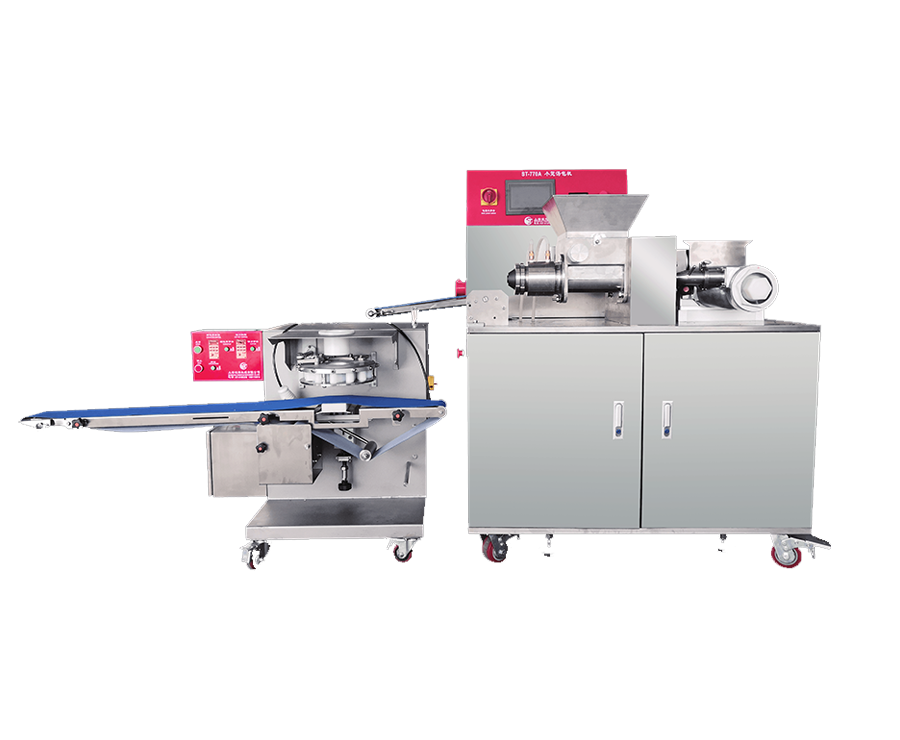
Your wrapper machine outputs a continuous, controlled sheet using a heated roasting wheel process and supports adjustable thickness and cutting size. In integration projects, the most reliable configuration is:
- Wrapper machine → controlled cooling and conveyance → precise cutting/portioning → immediate handoff to wrap/form station.
- Minimal buffering: only use a buffer if it maintains wrapper condition (temperature and humidity), otherwise it creates drying and sticking.
- Rate set by the slowest station: wrapper capacity headroom is used to maintain stability and reduce micro-stops.
The outcome you should expect from correct Spring Roll Sheet-to-Wrap Integration is not “maximum speed,” but predictable yield with fewer stops, fewer misfeeds, and fewer wrappers wasted. When wrapper output is stable and synchronized, yield becomes controllable—and scale becomes much easier.
Related Products
Copyright © Shanghai Chengtao Machinery Co., Ltd. All rights reserved.  Food Machinery Manufacturers
Contact Us