
 en
 English
 Español
 Français
 русский
 عربى

Auto Bakery Planning: How to Design a Consistent Automated Production Line
Content
- 1 What an Auto Bakery Really Includes
- 2 Start With the Product, Not the Machine
- 3 Dough Handling Sets the Ceiling
- 4 Choosing the Right Level of Automation
- 5 Layout and Flow Matter More Than a Machine List
- 6 Proofing, Baking, and Cooling as One Rhythm
- 7 Hygiene and Changeovers Are Part of the Design
- 8 How to Test Before You Commit
- 9 A Practical Starting Checklist
An auto bakery is best understood as a production system, not a single piece of equipment. It brings ingredient preparation, mixing, forming or depositing, proofing, baking, cooling, and packaging together so that each stage feeds the next with predictable timing. That sounds technical, but the purpose is simple: fewer surprises between one batch and the next. Whether you are adding capacity to an existing bakery or designing a new line, the most useful question is not which machine is fastest, but where the product needs consistency and what the whole line needs to run well.
What an Auto Bakery Really Includes
In commercial baking, automation usually grows stage by stage. A complete scope can include ingredient sifting and weighing, dough mixing, dividing and rounding, filling and forming, proofing, baking, cooling, and end-of-line packing. For mixed product ranges, the same line may need changeover routines for different doughs, fillings, moulds, or tray layouts. That is why it helps to look at the process as a chain rather than a shopping list of machines. Our bakery food production lines show how these stages can be connected in practice.
- Preparation: sifting, weighing, cutting, and filling preparation.
- Mixing and dough handling: batch or continuous mixing with temperature control.
- Forming and depositing: bread, buns, pastries, cakes, cookies, and filled items.
- Proofing and baking: controlled fermentation, steam, and oven loading.
- Cooling and packing: stable product temperature, tray handling, and packaging.
- Controls and records: settings, alarms, and batch traceability where needed.
The right scope depends on product mix and operating reality, not on chasing a fully automated label. A line that runs three stable products at high volume has different priorities from a bakery that changes recipes several times a day.
Start With the Product, Not the Machine
A soft bun dough, a laminated pastry, a cake batter, and a cookie dough behave differently. Their handling needs change the mixer type, forming method, proofing conditions, and even conveyor speeds. Before comparing equipment, write a short product brief: target weight range, dough or batter characteristics, filling type, surface finish, bake profile, and acceptable variation. This brief will do more to narrow the shortlist than a long catalogue.
 Dual-Rolling Pastry Machine Models ST-520, ST-620, ST-302For recipe trials, compare ST-520, ST-620, and ST-302 for dual rolling, adjustable thickness, and stainless steel construction across Danish, bread, biscuit, and pastry production.View Product →
It also helps to test with the ingredients you actually use. Flour strength, fat content, hydration, filling viscosity, and room temperature can all shift performance. A machine that looks suitable on paper may need different settings once your recipe is running. Experienced buyers often ask for a trial that includes normal startup, a planned changeover, and a cleaning stop, because those moments reveal more than a short demonstration.
Dough Handling Sets the Ceiling
Many line problems begin before forming. If mixing is inconsistent, the dough may arrive at the divider too warm, too stiff, or too relaxed, and every later stage has to compensate. Batch size, mixing time, water temperature, and rest time deserve as much attention as the former or the oven. For bakeries running several dough types, a mixer that supports repeatable settings and straightforward cleaning is often more valuable than a larger unit with fewer controls.
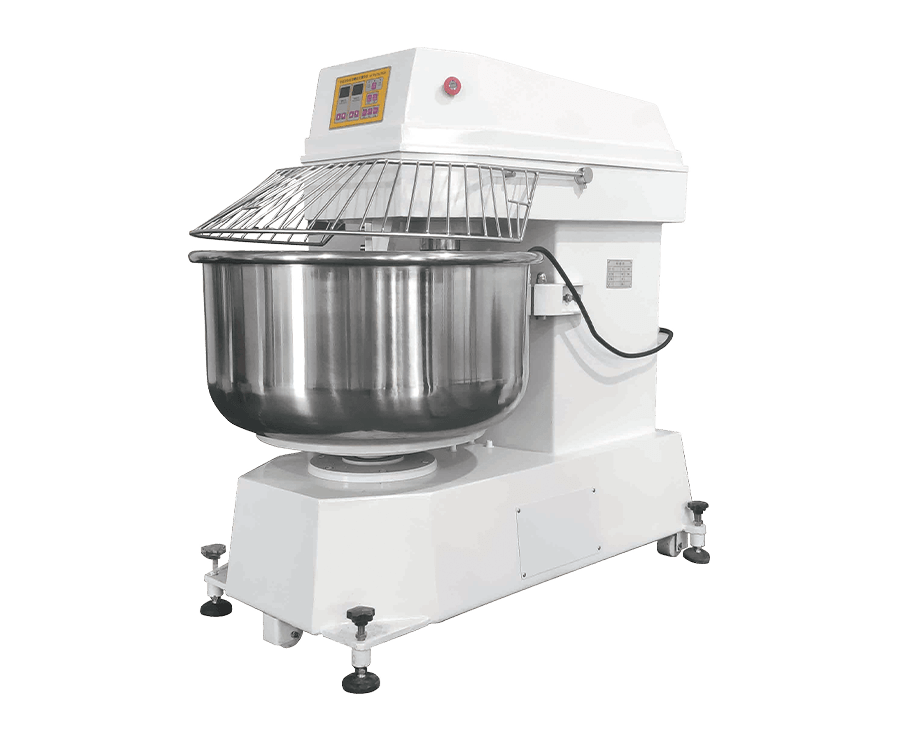 ST-210 Vertical Dough Mixer in Six CapacitiesCompare six ST-210 configurations with 48L–300L bowls and 18kg–125kg dough capacities, supporting repeatable settings and sanitary stainless-steel construction for varied batches.View Product →
Keep the dough path short and predictable. Long waits, uneven temperatures, and unnecessary transfer points can undo good mixing. If the line runs filled products, plan the filling preparation and holding area with the same care, especially where allergens or colour changes are involved.
Choosing the Right Level of Automation
Automation is not a single destination. It is a series of choices about where repeatability, speed, and labour reduction matter most. The table below offers a practical way to frame the decision without assuming that every bakery needs the same answer.
| Level | Typical fit | Main planning focus |
|---|---|---|
| Manual | Small batches, recipe development, frequent product changes | Accuracy, repeatability, and operator training |
| Semi-automatic | Growing output with a mixed product range | Flexibility, changeover time, and consistent settings |
| Fully automatic | Stable, high-volume products with defined quality targets | Line integration, validation, maintenance, and data |
A semi-automatic step can be the sensible choice when volumes are still developing. It keeps capital exposure lower while removing the most repetitive work. A fully automatic line makes more sense when the product range is stable and the cost of variation is high.
Layout and Flow Matter More Than a Machine List
A good layout follows the product, not the building's empty corners. The basic flow is easy to describe: receive and stage ingredients, prepare and mix, form or deposit, proof and bake, cool, then pack. The difficulty is in the details between those steps.
- Keep ingredient staging close to mixing without blocking fire routes or cleaning access.
- Separate raw materials from baked and cooled products where hygiene requires it.
- Allow enough space at changeover points for tools, trays, and waste.
- Plan steam, power, compressed air, drainage, and ventilation before equipment arrives.
- Give maintenance access to guards, motors, belts, and control panels.
Small buffers can prevent a single stop from halting the whole line, but they should not become hiding places for stale product. Walk the route with operators and cleaners, not only with engineers. Their daily movements often reveal bottlenecks that a layout drawing does not.
Proofing, Baking, and Cooling as One Rhythm
Proofing is a time and climate process, not a waiting room. Temperature, humidity, airflow, and loading pattern all affect the final volume and crumb. A fermentation cabinet should be judged by how evenly it holds conditions across the chamber and how easily it can be cleaned and monitored. If proofing is uneven, the oven will bake inconsistency into the product, and packaging will only reveal it later.
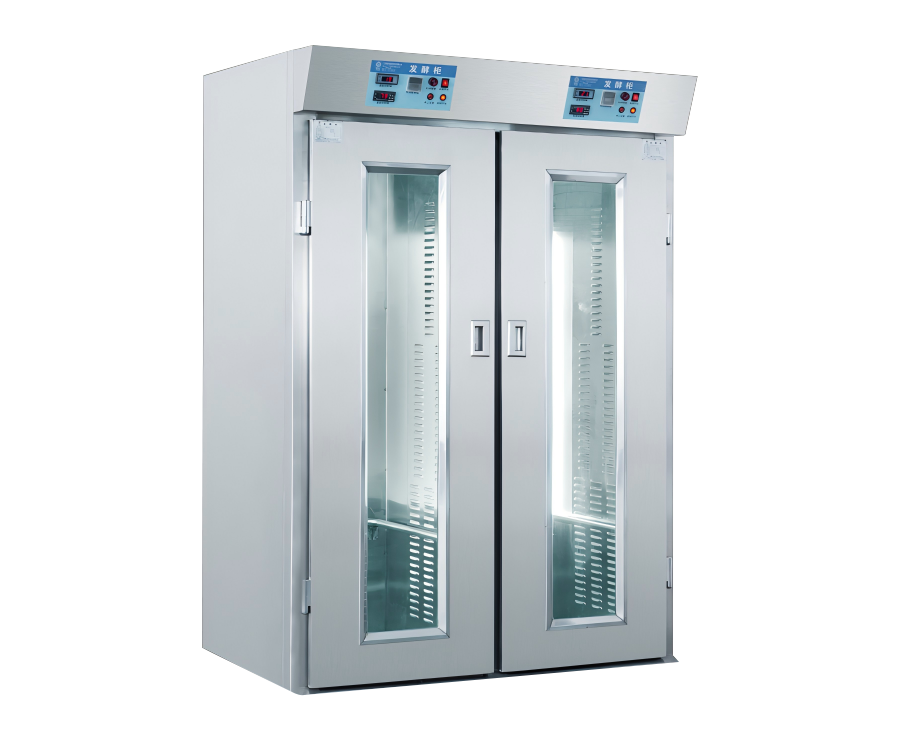 PLC-Controlled Fermentation Cabinet for Uniform ProofingCheck PLC control, steam parameters, and air circulation designed for even temperature and humidity across the chamber before baking and cooling.View Product →
Baking and cooling need to be considered together. Overloading an oven may save a few minutes at the front end but create uneven colour and a difficult cooling stage. Cooling should bring the core temperature down predictably before packing, otherwise condensation and spoilage risk increase. The line rhythm should be set by the slowest necessary stage, not by the fastest machine in the room.
Hygiene and Changeovers Are Part of the Design
An auto bakery is judged every day by how well it can be cleaned and changed over. Look for smooth product contact surfaces, accessible guards, sensible drainage, and places to store tools without putting them on the floor. Allergen control deserves its own plan: where shared equipment is used, cleaning verification and changeover sequencing should be written down and practised.
Changeover time is often underestimated. Recipe changes may involve filling hoppers, swapping moulds, adjusting depositors, and rechecking weights. A line that runs beautifully on one product but takes half a shift to switch will struggle in a mixed bakery. Ask for a realistic changeover procedure and test it with your own operators.
How to Test Before You Commit
A serious trial should use your recipe, your ingredient specification, and your acceptance criteria. Run the product at the intended speed, then check weight range, shape, filling position, bake result, and ease of cleaning. Keep samples from startup, middle, and end of run so that variation is visible rather than remembered. It is also fair to ask what happens when the line stops, how settings are recovered, and which spare parts should be kept on site.
Good suppliers will welcome detailed questions. They will also be clear about what their equipment can and cannot do. If you want to discuss capacity, product range, and site constraints in a practical way, the best first step is a focused conversation rather than a long wish list. You can start a practical conversation with our team when your product brief is ready.
A Practical Starting Checklist
- Define priority products and the weight or size range for each.
- Set realistic hourly output, allowing for changeovers and cleaning.
- Confirm dough, batter, and filling behaviour with samples.
- Map the footprint, utilities, drainage, and maintenance access.
- Agree hygiene, allergen, and changeover requirements early.
- Plan packaging, tray flow, and a sensible buffer strategy.
- Request trial data, spare parts lists, training, and service terms.
An auto bakery works best when the equipment serves a clear product plan and a realistic daily routine. Start with the products you need to make consistently, then build the process around them. A calm, well-integrated line will usually outperform a collection of fast machines that never quite learn to work together.
Related Products
Copyright © Shanghai Chengtao Machinery Co., Ltd. All rights reserved.  Food Machinery Manufacturers
Contact Us