
 en
 English
 Español
 Français
 русский
 عربى

Tunnel Oven Guide: Continuous Baking Equipment, Heat Types, and Line Planning
Content
- 1 What a Tunnel Oven Actually Is
- 2 How the Baking Profile Is Built
- 3 Direct-Fired or Indirect Heating
- 4 Where the Tunnel Oven Sits in a Production Line
- 5 Why Proofing Deserves as Much Attention as Baking
- 6 Matching the Oven to What You Bake
- 7 Specifications Worth Checking Before You Commit
- 8 Running and Maintaining It Day to Day
- 9 Getting the Line Right From the Start
A tunnel oven looks like the simplest machine on a bakery floor: a long chamber, a moving belt, and heat. In practice it is the piece of equipment that decides whether a shift runs smoothly or whether someone spends three hours chasing uneven colour at the discharge end. We have spent years building and integrating bakery and frozen food equipment, and the questions buyers ask about tunnel ovens are remarkably consistent: how many zones, which fuel, what belt width, and how to keep the whole thing stable month after month.
This guide walks through how a tunnel oven works, how the baking profile is actually built, and what is worth checking before you commit to a specification.
What a Tunnel Oven Actually Is
A tunnel oven is a continuous baking oven. You will also see it called a traveling hearth, a band oven, or simply a continuous oven. Product enters at one end on a conveyor, travels through a heated chamber, and leaves at the other end fully baked. Nothing stops, nothing is loaded by hand into a swinging deck.
The chamber is insulated and split into zones. Each zone has its own temperature setpoint, and on most industrial designs the top and bottom heat can be adjusted independently. Fans circulate air to even out the temperature across the belt, and burners or electric elements supply the heat. The conveyor itself may be a mesh belt, a slat band, or a solid steel band, depending on the product and how delicate it is.
The practical difference from a deck oven or a rotary oven is throughput and repeatability. A batch oven gives you one bake at a time and depends heavily on the operator. A tunnel oven gives you a steady stream of identical bakes, provided the settings are right and the dough arriving at the infeed is consistent.
How the Baking Profile Is Built
People often talk about oven temperature as if it were a single number. In a tunnel oven it is a curve, and the curve is created by the combination of zone temperatures, airflow, steam, and belt speed.
Heat, zone by zone
The first zones usually run hot so the product gets rapid oven spring and the crust sets before the structure collapses. Middle zones tend to be moderate, letting the crumb finish developing without scorching the surface. Final zones handle colour and moisture: a little more top heat for browning, or a gentler setting if you are baking something with a delicate glaze.
Time comes from belt speed
Bake time is set by belt speed, not by a timer. If the baking length is fixed, speeding up the belt shortens the bake and typically forces you to raise the setpoints, which changes crust and crumb at the same time. This is why belt speed range matters as much as zone count when you compare specifications.
Airflow and steam do the quiet work
Uniform airflow is what stops one side of the belt baking faster than the other. Steam injection at the entry is what gives bread its shine and stops the crust from setting too early. Both are easy to overlook on a quotation sheet and hard to fix afterwards.
Direct-Fired or Indirect Heating
Most tunnel ovens fall into one of two families. In a direct gas-fired oven, combustion gases pass through the baking chamber. In an indirect design, the burners heat tubes or elements and only clean, recirculated air reaches the product. Neither is universally better; the right answer depends on what you bake and how sensitive it is.
| Consideration | Direct gas-fired | Indirect heating |
|---|---|---|
| Heat delivery | Combustion gases circulate through the chamber | Burners heat tubes or elements, clean air recirculates |
| Response speed | Fast, reaches setpoint quickly | Slower and more gradual |
| Flavour impact | Products may pick up faint combustion notes | Neutral, delicate flavours stay intact |
| Energy efficiency | High, heat goes straight into the chamber | Slightly lower, heat passes through a wall or tube |
| Temperature evenness | Good, but needs careful burner tuning | Very even, helpful for thin or fragile products |
| Typical fit | Bread, buns, biscuits in high-volume runs | Cakes, pastries, colour-sensitive products |
Where the Tunnel Oven Sits in a Production Line
A tunnel oven rarely fails because of the oven. It fails because of what arrives at the infeed. Dough that is mixed to a slightly different consistency, or pieces that were formed a few grams heavy, will show up as uneven colour and uneven crumb no matter how carefully the zones are tuned. Planning the oven together with the machines either side of it is the single most useful habit we can recommend, and our bakery food production lines overview shows how the stages usually connect.
Mixing is the first link in that chain. A stable mix, with predictable hydration and dough temperature, gives the forming and proofing stages something to work with.
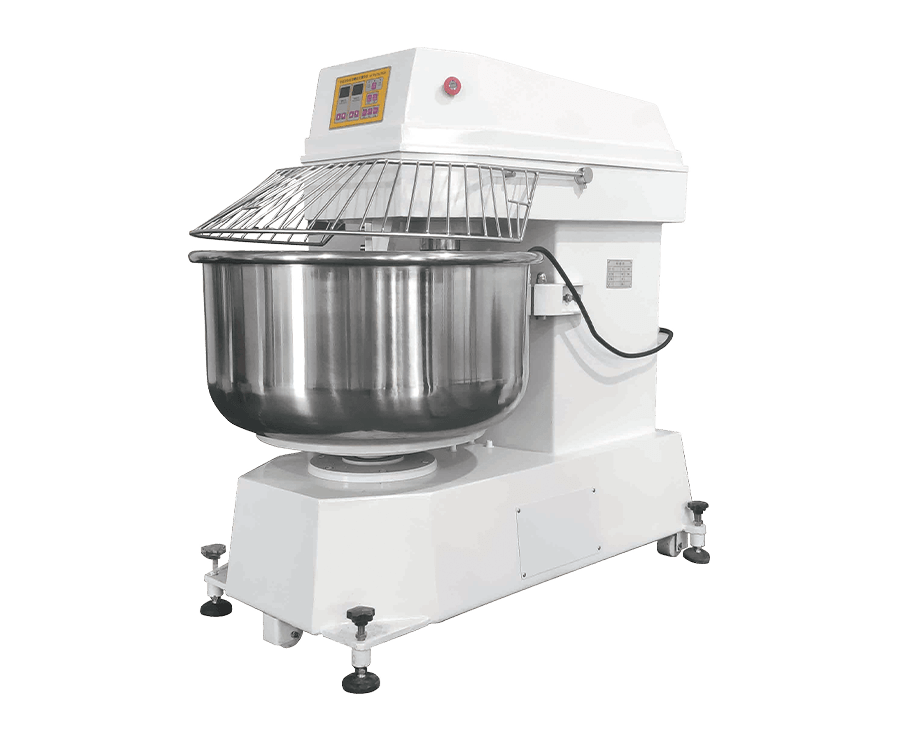 ST-210 Vertical Dough Mixer for Consistent MixingThe ST-210 vertical dough mixer comes in multiple bowl and dough capacities, supporting a stable mix before forming and proofing.View Product →
Once the dough is consistent, the oven settings become a tuning exercise rather than a daily rescue operation.
Why Proofing Deserves as Much Attention as Baking
Between forming and baking sits the proofing stage, and it has a direct effect on what the tunnel oven has to do. Under-proofed dough needs more oven spring and punishes you with a tight crumb; over-proofed dough collapses in the first zone and bakes flat. If the proofer drifts a degree or two, the oven cannot compensate without changing everything else.
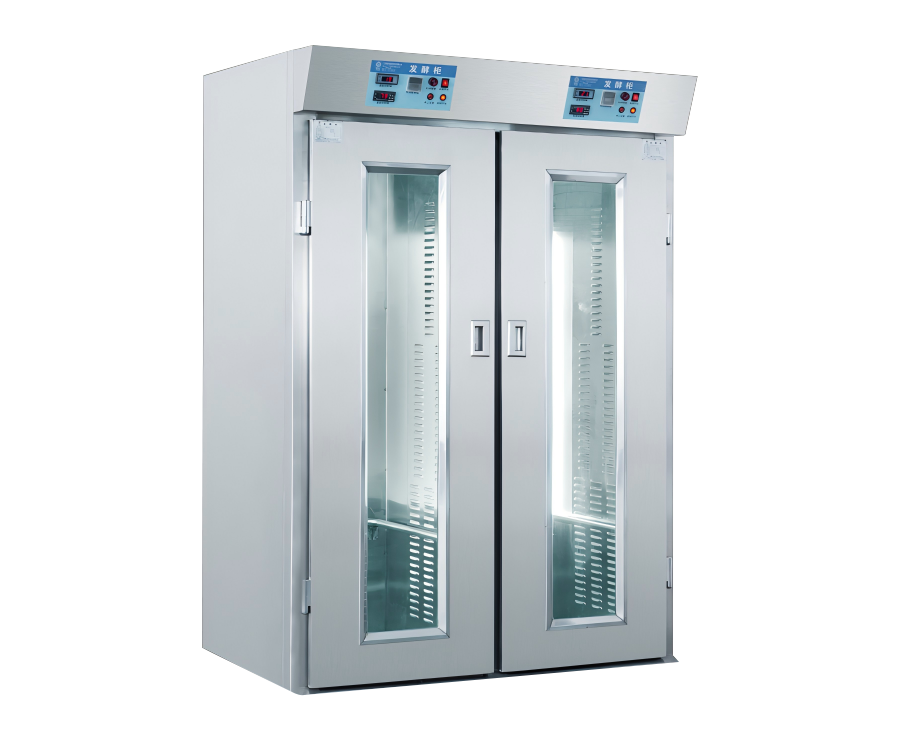 Customizable Fermentation Cabinet for Controlled ProofingA PLC-controlled fermentation cabinet with uniform temperature and humidity circulation, relevant when proofing control must support consistent tunnel-oven results.View Product →
For that reason, we usually ask about proofing capacity and humidity control before discussing zone counts. An oven sized for the right throughput will still produce inconsistent results if the fermentation step is uncontrolled.
Matching the Oven to What You Bake
Tunnel ovens are forgiving across a wide product range, but they are not universal. Bread and buns want strong bottom heat early and steam at the entry. Biscuits and crackers want a drier chamber and a longer, gentler tail so moisture escapes evenly. Cakes and filled pastries want even, indirect heat and a shorter dwell in the hot zones. If your product mix changes with the season, recipe memory on the control panel becomes far more valuable than an extra zone.
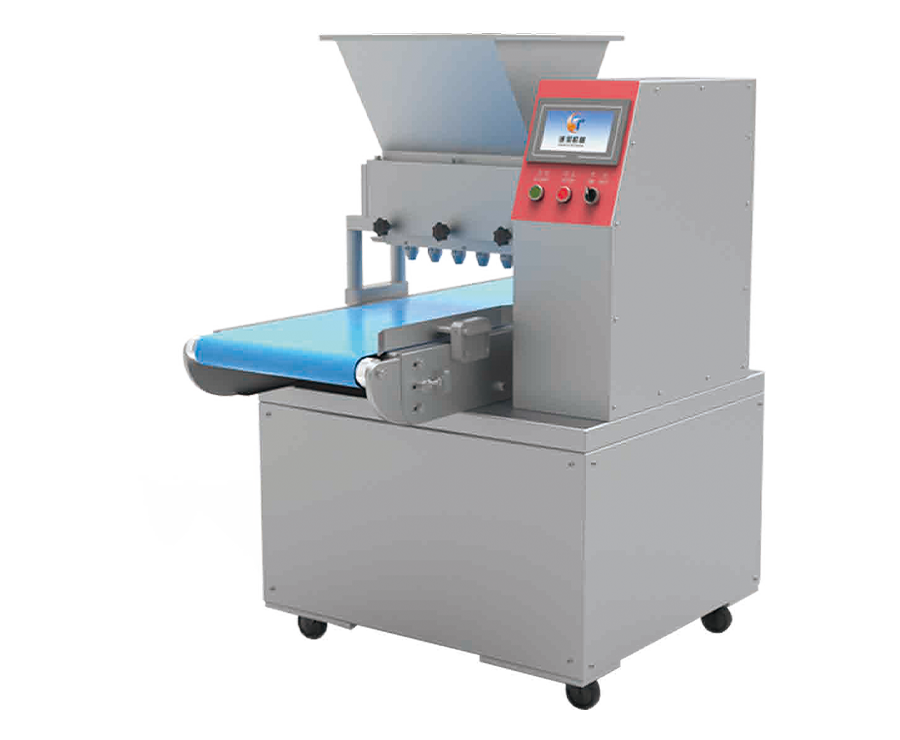 Automatic Cookie Forming Machine CT-GD400/600A modular cookie-forming machine with adjustable quantification, thickness and cutting size, useful when one oven runs multiple products and forming must deliver consistent piece weights.View Product →
When a plant runs several products on one oven, the practical solution is not a compromise setting for everything. It is a stored recipe per product, with the forming stage set to deliver a consistent piece weight for each one.
Specifications Worth Checking Before You Commit
The quotation sheet usually lists the headline numbers. These are the details that decide whether the oven fits your building and your production plan:
- Belt width and usable baking width, since the two are not the same figure
- Number of zones, and whether top and bottom heat are controlled separately
- Fuel type and measured energy consumption per kilogram of product
- Belt speed range, and the bake time range it corresponds to
- Steam injection capacity and how quickly it responds
- Insulation quality and exterior surface temperature in a warm room
- Controls: recipe storage, alarm history, and data logging
- Hygiene details such as drainage, crumb trays, and cleaning access
- Footprint, ceiling height, and venting or chimney requirements
- Spare parts availability and service response time in your region
Running and Maintaining It Day to Day
Most tunnel oven problems are small and predictable. A belt that drifts a few millimetres, a thermocouple that reads a degree high, a burner that has slowly gone out of tune. A short routine keeps all three under control.
- At the start of each shift, confirm zone temperatures against a reference reading, not just the display.
- Check belt tracking and belt tension, and remove crumbs from the return run.
- Record bake results for the first batch: colour, weight, and internal temperature.
- Clean the chamber and drip trays on a fixed schedule, not when someone notices smoke.
- Have burners, gas trains, and safety interlocks inspected on the interval your local rules require.
Keeping a simple log of setpoints and results pays for itself quickly. When something drifts, you can see whether the change started with the oven or with the dough.
Getting the Line Right From the Start
Every bakery we work with has a slightly different building, product mix, and labour situation. That is why our approach to baking equipment starts with your product and your shift pattern rather than with a catalogue page. Oven length, belt type, zone layout, and the machines feeding it can all be adapted, and we would rather adjust a drawing than hand over a line that needs workarounds from day one.
If you are planning a new line or replacing an ageing oven, send us your product details, expected hourly output, and available floor space through our contact page. We will come back with a practical configuration and the questions we still need answered.
A tunnel oven is a long-term decision. Chosen well, it quietly produces the same bake thousands of times a day and becomes the least interesting machine in the building, which is exactly what you want. Chosen in a hurry, it becomes the topic of every morning meeting. Take the time to match the oven to your product, your proofing, and your people, and the rest of the line will follow.
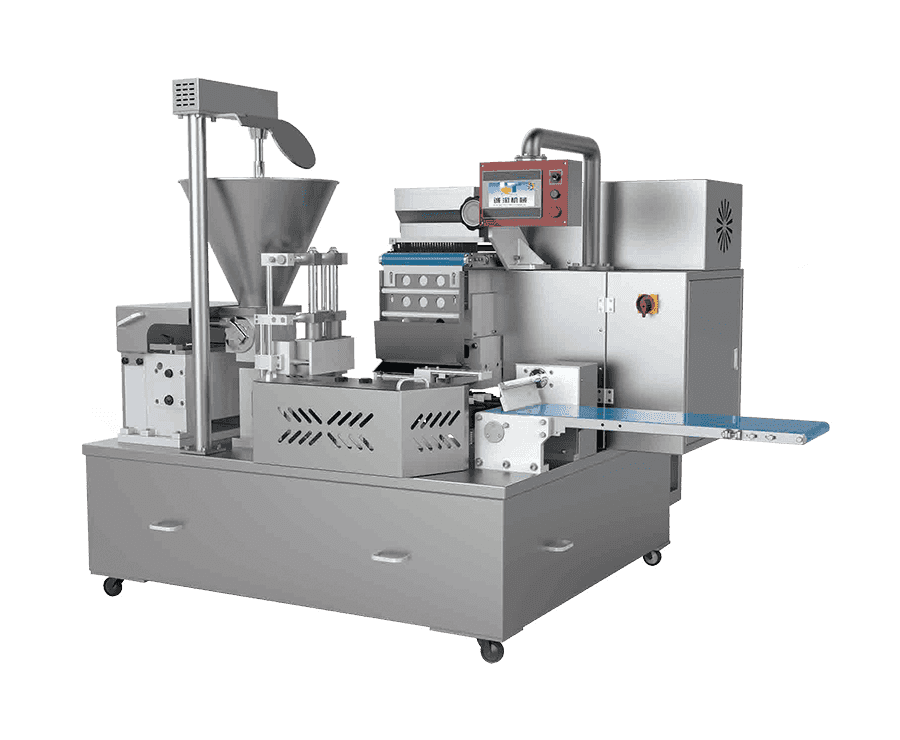
Related Products
Copyright © Shanghai Chengtao Machinery Co., Ltd. All rights reserved.  Food Machinery Manufacturers
Contact Us