
 en
en English
 Español
 Français
 русский
 عربى
عربى
Automation in Small Footprints: Layout Tactics for Compact Production Lines
Content
Most food manufacturers don't get to design their facility from scratch. Equipment accumulates, production volumes grow, and floor space stays fixed. The result: lines that are too long, workflows that double back on themselves, and square footage that works against throughput instead of for it. The solution isn't always a bigger building—it's a smarter layout.
Compact automation is not a compromise. When planned correctly, a well-designed small-footprint line can match—and in some cases exceed—the output of a sprawling traditional setup, with lower labor costs and faster changeovers. This article breaks down the layout tactics that make it possible.
Why Space Efficiency Is the New Competitive Edge
Floor space is one of the most expensive assets in any production facility. Rent, utilities, and compliance costs scale with square footage—but revenue doesn't automatically follow. Manufacturers who treat layout design as a strategic lever, not just a facilities question, consistently outperform those who simply add equipment wherever it fits.
The global market for compact automation equipment is growing at over 7% annually, driven largely by small and mid-sized manufacturers in Asia, North America, and Europe who need to scale output without expanding their buildings. IoT-enabled sensors, plug-and-play robotics, and modular control systems have made these solutions increasingly accessible—even for operations producing as few as 500 units per day.
The core insight is simple: output per square meter matters more than total output. A line producing 3,000 units per hour in 80 square meters is more valuable than one producing 3,500 in 200 square meters, when you account for the full cost of space.
Layout Shapes That Work in Tight Spaces
The geometry of your production line is the first decision to get right. Three configurations consistently outperform straight-line layouts in constrained environments:
U-shaped lines are the most space-efficient option for most food production scenarios. All operators work within close visual range of each other, which speeds up problem detection and reduces material handling time. Parts travel shorter distances between stations, and the entry and exit points of the line are adjacent—simplifying logistics and replenishment. U-shaped lines are particularly effective for low-to-mid volume output and work well with both manual and automated stations.
L-shaped lines suit facilities where one wall or corner is available but a full U-shape isn't feasible. They allow for a directional change in flow without the footprint of a straight run, and they integrate well with corner-mounted equipment or fixed utility connections.
Cell-based layouts cluster related operations—preparation, forming, and packaging, for example—into self-contained units. Each cell operates semi-independently, which means one section can be updated or reconfigured without halting the entire line. This is especially useful in food production environments where SKU variety is high and changeover frequency matters.
The common thread across all three: minimizing the distance materials travel and keeping operator movement short and predictable. Every unnecessary step in a workflow is a cost that compounds across thousands of production cycles.
Go Vertical: Rethinking the Z-Axis
Most compact line planning focuses on the floor plan—but the most underutilized dimension in manufacturing is height. When horizontal space runs out, the answer is often to build upward.
Vertical conveyors and spiral lifts allow accumulation and buffering to happen above the production floor rather than alongside it. Instead of running long horizontal conveyors between process stages—which consume aisle space and create safety hazards—products move vertically to a staging level and descend when the downstream station is ready. This approach can clear entire production aisles without requiring structural changes to the building.
Overhead infeed systems, elevated buffer zones, and stacked drying or cooling stages are all proven methods for reclaiming floor space in food lines. A bakery line that previously required a 15-meter cooling conveyor running parallel to the oven, for instance, can often be redesigned with a vertical cooler that occupies a fraction of that footprint while maintaining the same dwell time.
The key planning rule: assess ceiling clearance early in the design process. Many facilities have more usable vertical space than operators realize, and retrofitting for vertical conveyance is almost always cheaper than expanding the building footprint.
Modular Equipment as the Core Strategy
Modular production lines—where each process stage is a standardized, self-contained unit connected through defined interfaces—are the most flexible foundation for compact automation. Rather than committing to a fixed layout, modular systems allow the line to be reconfigured as product mix, volumes, or processes change.
The practical advantages compound quickly. A modular line can be installed in phases, which reduces upfront capital exposure. When one module requires maintenance or an upgrade, the rest of the line keeps running. And when capacity needs to grow, new modules are added without redesigning the entire system. One real-world example: an LED lighting manufacturer built an industry-scale automated line using just six modules occupying 60 square meters—covering loading, assembly, aging, testing, laser marking, and packaging within a footprint most factories would allocate to a single process.
For food manufacturers, modular design also supports hygienic zoning—grouping raw and cooked product areas into discrete cells with clear separation, rather than running them through a single shared line. Explore Chengtao's production line integrations to see how modular food lines are structured across different product categories.
Multi-Function Machines: One Unit, Many Jobs
In a compact line, every piece of equipment needs to justify its footprint. Multi-function machines—units capable of handling multiple product types, formats, or process steps within a single frame—are one of the most effective ways to reduce machine count without sacrificing capability.
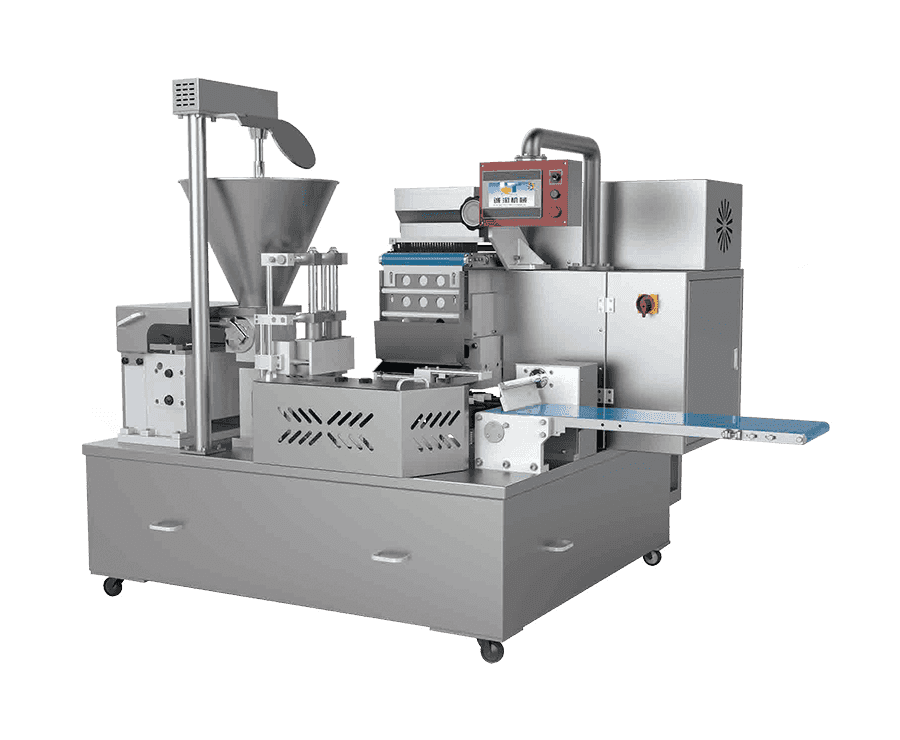
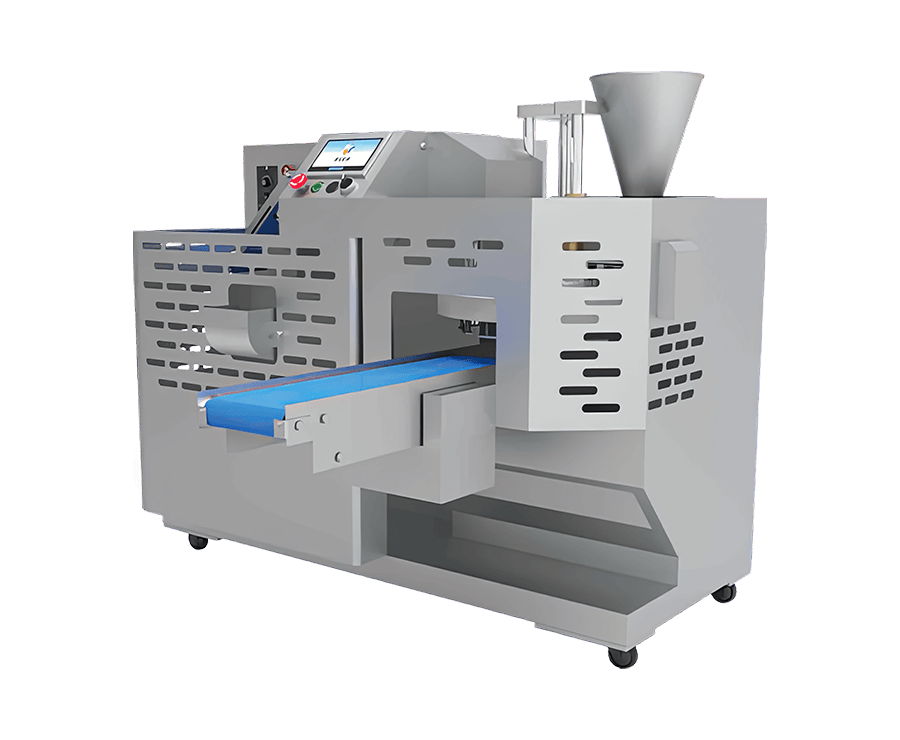
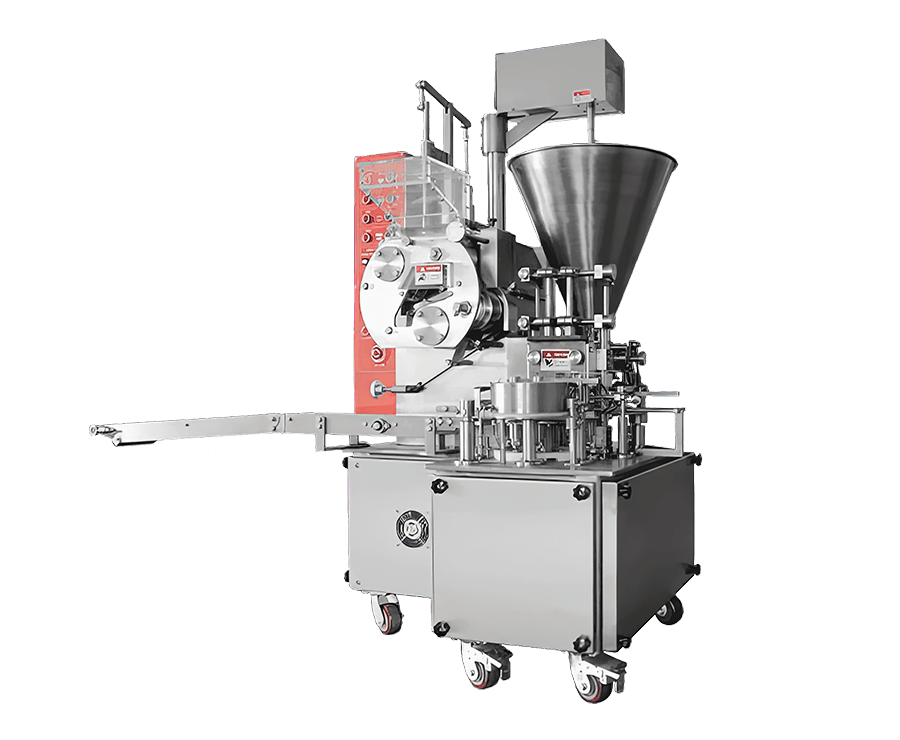
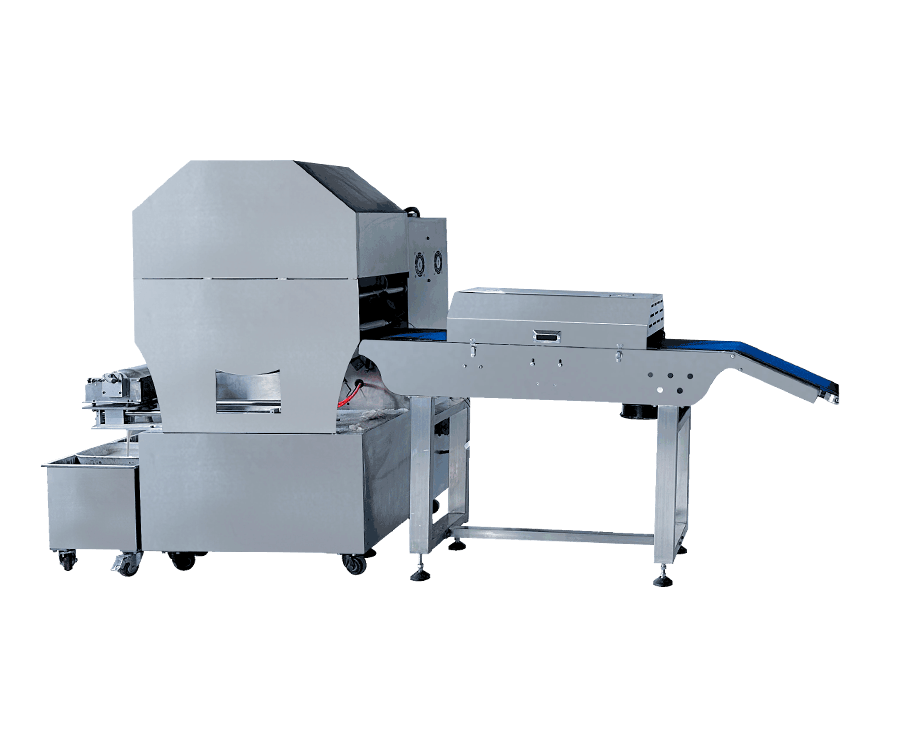
In food production specifically, this means looking for equipment that combines preparation and forming, or forming and portioning, in one integrated unit. A single machine capable of producing dumplings, siomai, wontons, and similar products with a mold change eliminates the need for separate dedicated equipment for each SKU. The same principle applies to bakery lines, where a forming machine that handles rolls, filled buns, and flatbreads through interchangeable tooling occupies far less space than three separate machines.
The selection criteria for multi-function equipment in tight layouts should include: changeover time (under 15 minutes is the practical benchmark for high-SKU environments), footprint relative to output capacity, and compatibility with upstream and downstream equipment. Browse Chengtao's range of forming machines designed for multi-product flexibility, or explore the full range of food machinery solutions organized by product category.
Multi-function equipment also reduces the number of handoff points between machines—which is where product damage, contamination risk, and throughput bottlenecks most commonly occur. Fewer machines mean fewer transitions, and fewer transitions mean a more reliable line.
Planning Your Compact Line: A Practical Checklist
Translating layout strategy into a working line requires structured planning. The following checklist covers the key steps in sequence:
- Measure the real footprint. Capture actual dimensions including column lines, utility drops, door clearances, and any fixed obstructions. Add aisle width requirements (typically a minimum of 800mm for pedestrian access, more for equipment service access) before calculating available production area.
- Define takt time and throughput targets. Work backward from required daily output to determine the cycle time each station must achieve. This drives equipment selection and station count more reliably than rule-of-thumb estimates.
- Map material flow before placing equipment. Trace the path of raw materials, work-in-progress, and finished goods through the facility. Identify where flows cross or double back—these are the points where compact layout changes deliver the highest return.
- Select layout geometry. Based on available space and material flow analysis, choose U-shaped, L-shaped, or cell-based configuration. Avoid straight-line layouts unless the facility geometry leaves no alternative.
- Evaluate vertical options. Assess ceiling height and identify process stages—cooling, accumulation, buffering—that can be moved off the floor.
- Prioritize multi-function and modular equipment. For each process stage, evaluate whether a multi-function unit can replace two or more single-purpose machines. Build the line from modular units where possible to preserve reconfiguration flexibility.
- Validate with simulation before committing. Digital layout tools allow cycle times, buffer sizing, and aisle clearances to be tested before any equipment is purchased or installed. This step consistently surfaces bottlenecks that are invisible on a 2D floor plan.
- Plan for maintenance access from the start. Compact layouts fail in operation when service access is blocked. Build in clearance envelopes around every machine before finalizing the layout.
For operations focused on frozen or chilled products, the spatial constraints introduced by temperature-controlled zones add another layer of planning complexity. See how Chengtao approaches frozen food production lines designed for compact, hygienic environments.
The Bottom Line
Space is a cost. Every square meter that a production line occupies is a square meter that isn't available for storage, expansion, or other value-generating activity. Compact automation—built on smart layout geometry, vertical space utilization, modular equipment, and multi-function machines—allows manufacturers to increase throughput and reduce labor without the cost and disruption of facility expansion.
The manufacturers who treat layout design as a strategic discipline, not an afterthought, consistently find that the constraint of limited space pushes them toward better, more efficient lines than they would have built with unlimited floor space. Start with the checklist, work through the geometry, and choose equipment that earns its footprint.
Related Products
Copyright © Shanghai Chengtao Machinery Co., Ltd. All rights reserved.  Food Machinery Manufacturers
Contact Us