
 en
en English
 Español
 Français
 русский
 عربى
عربى
Breading Machine Guide: Batter, Crumb Coating and Production Line Integration
Content
- 1 What a Breading Machine Does, Stage by Stage
- 2 Where the Breading Machine Sits in the Production Line
- 3 Specifications Worth Comparing Before You Buy
- 4 Coatings, Recipes and Product Formats
- 5 Hygiene and Maintenance Habits That Protect Coating Quality
- 6 Matching Throughput and Keeping the Line Balanced
- 7 Problems That Show Up First on a Breading Line
- 8 Planning the Installation and the Changeovers
- 9 Frequently Asked Questions
Ask anyone who has spent a few years on a coating line and they will tell you the same thing: breading looks like the simplest step in the plant and turns out to be one of the hardest to keep consistent. A breading machine takes most of that guesswork out of the job, but only when it is set up for the product actually running through it.
What follows is a practical walkthrough of how breading equipment works, what to compare before you buy, how it connects to the machines around it, and the habits that keep coating quality stable from the first tray of a shift to the last.
What a Breading Machine Does, Stage by Stage
Equipment sold under the name breading machine is usually a coating system rather than a single unit. Depending on the product, it runs two or three stations in sequence, and each one has a distinct job.
- Preduster. A light layer of fine flour or starch dries the surface and gives the batter something to hold on to. Skip it and the coating tends to slide off in the fryer.
- Batter applicator. Pieces pass under a curtain of batter or through a bath, while air knives or rollers control how much liquid stays on the surface.
- Crumb applicator. A belt, drum or vibratory screen distributes crumb over the top and bottom, and a roller presses it down just enough to adhere without crushing the texture.
The three stages behave as one system. Thicken the batter slightly and more crumb sticks; more crumb means higher pickup weight; higher pickup weight changes fryer load, oil absorption and, eventually, the cost per kilogram of finished product.
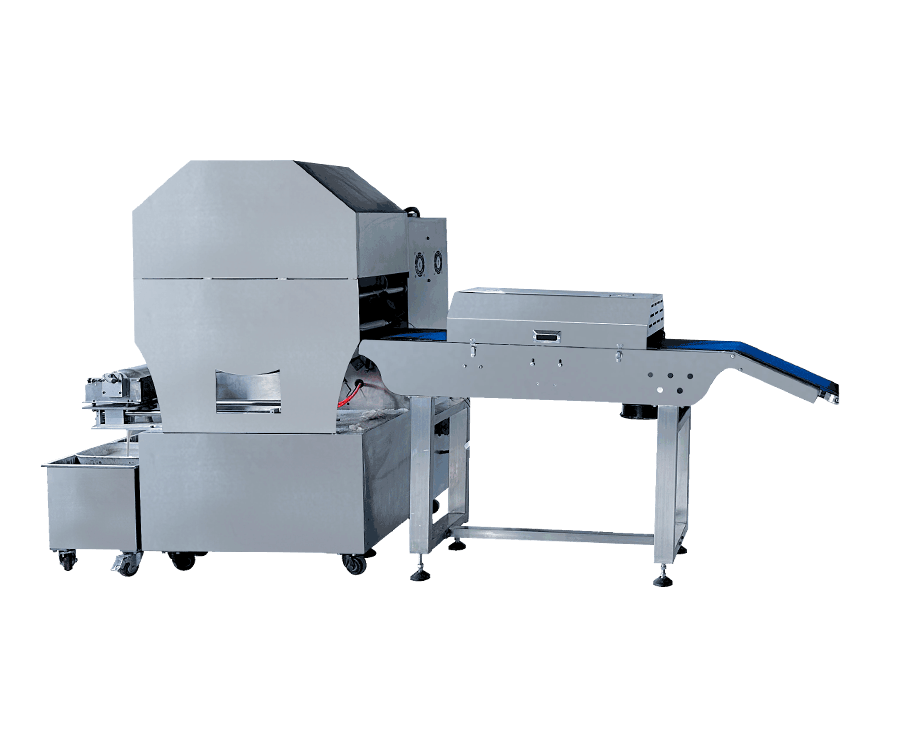
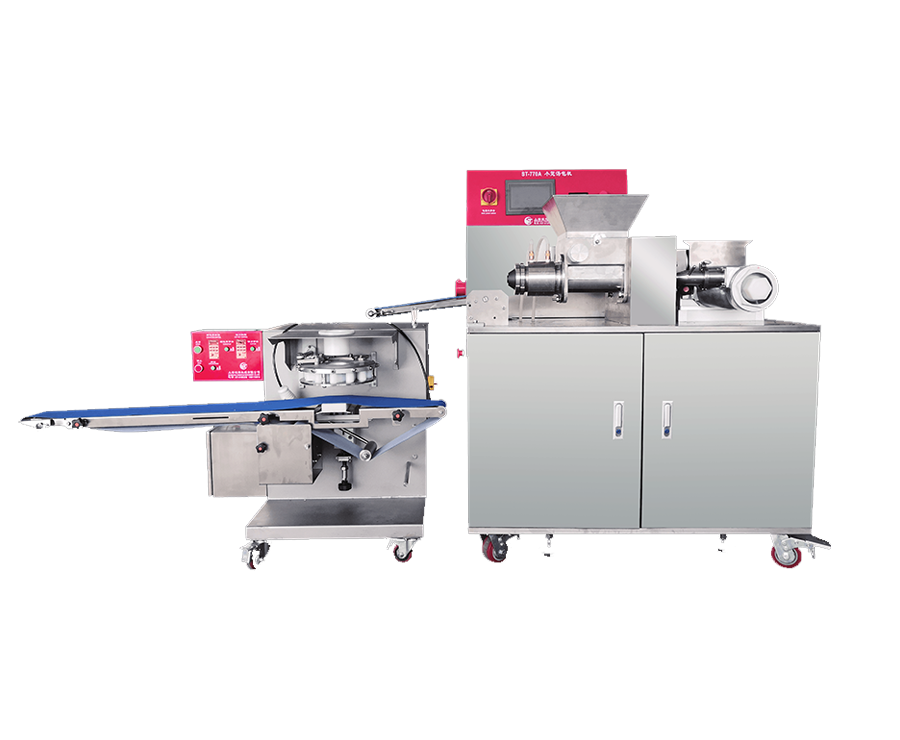
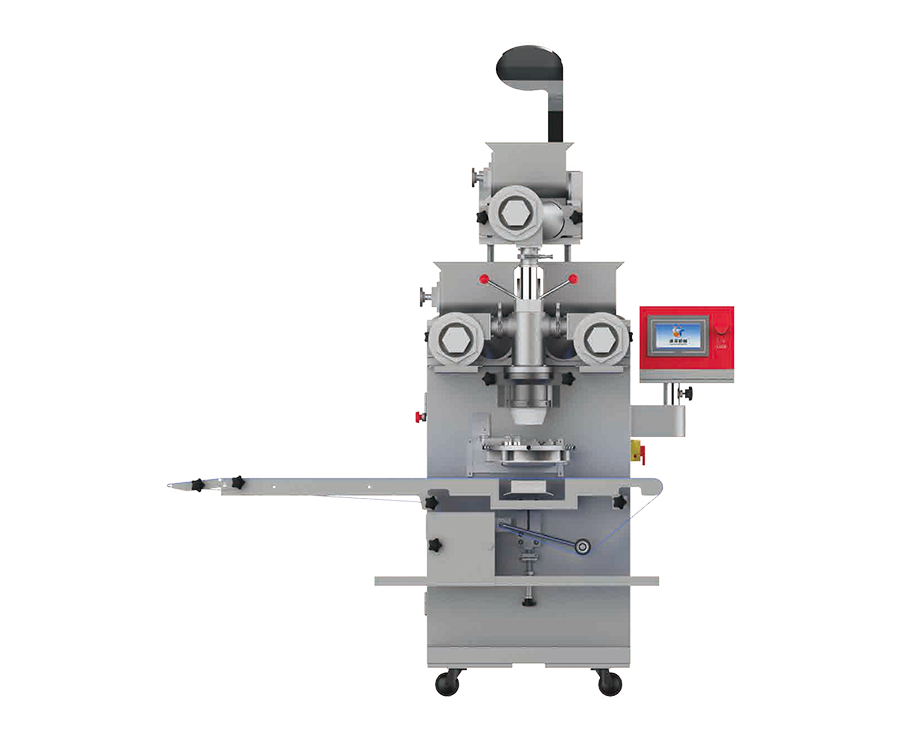
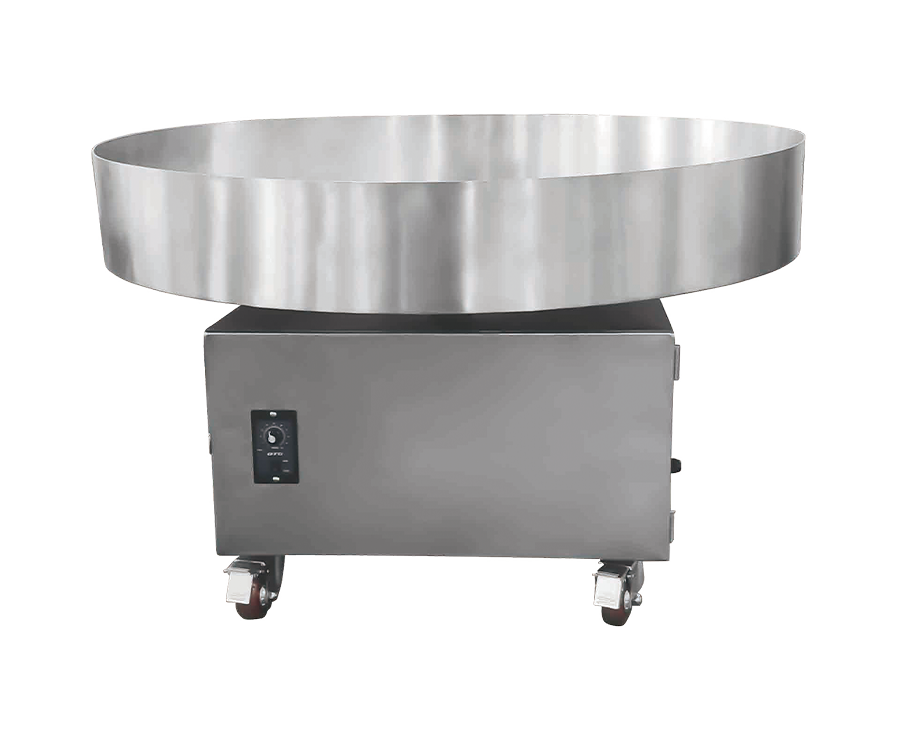 ST-280A Mochi Powder Wrapping Coating MachineRotary coating equipment for mochi and similar items, using cooked powder to prevent overlap before packaging.View Product →
That is the design logic behind the coating equipment we build: stations you can reach and adjust without stopping the whole line, and parts that come apart for cleaning.
Where the Breading Machine Sits in the Production Line
Breading rarely stands alone. Upstream, the core of a nugget, meatball, croquette or stuffed cutlet has to be formed to a consistent weight and shape, because a coating can only hide so much variation. Pieces that arrive at the batter station at different thicknesses leave with different pickup weights, and the fryer will show you the difference.
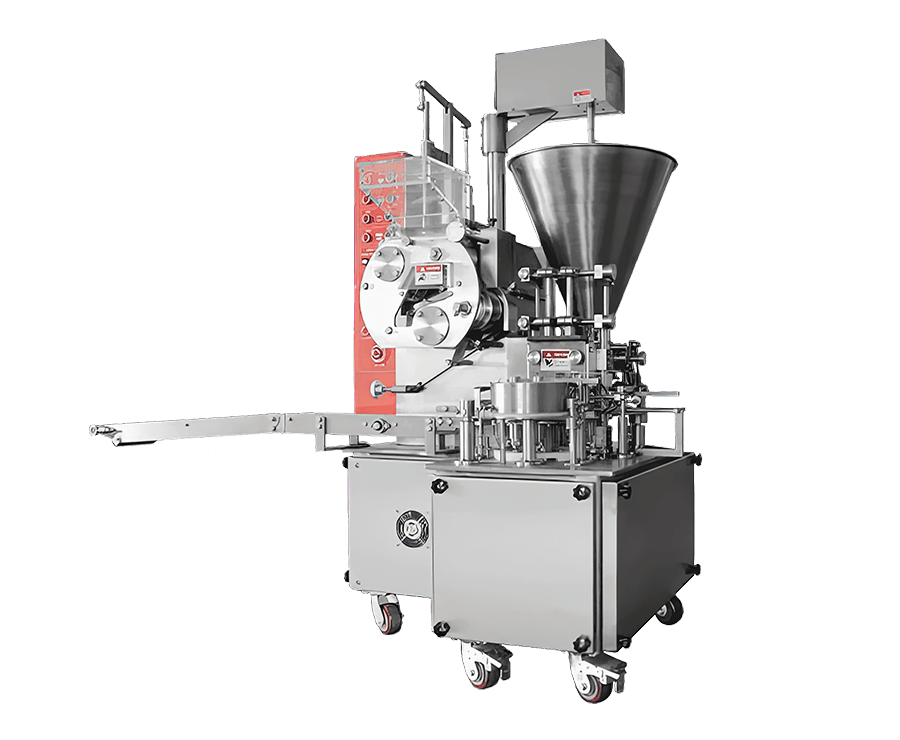
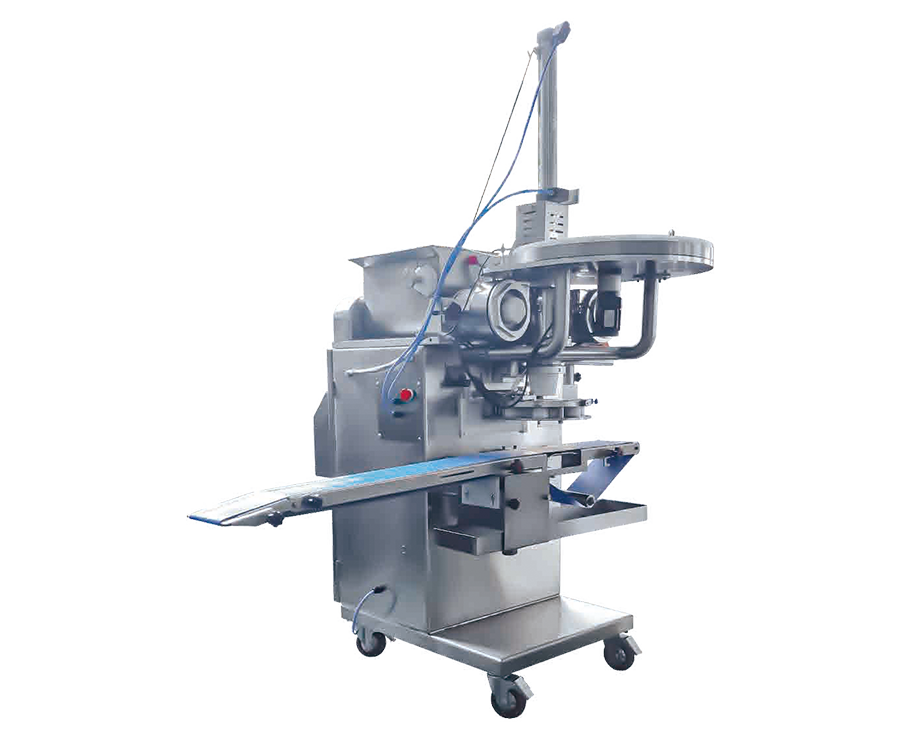 ST-168-GX-32 Automatic Solid Item Encrusting MachinePLC-controlled forming machine for solid fillings such as eggs, strawberries, and cherries, helping keep core weight and shape consistent before coating.View Product →
Downstream, the coating has to survive cooking and freezing. A par-fryer, oven or steamer sets the crust, a blast freezer locks the shape, and packing holds it. Belt heights and transfer points matter more than most people expect, because a product that drops even a few centimetres between conveyors sheds crumb and leaves a trail of loose coating behind it.
Specifications Worth Comparing Before You Buy
Two breading machines can look almost identical on a showroom floor and behave completely differently in your plant. The differences usually sit in the details below.
| Specification | What to look at | Why it matters in practice |
|---|---|---|
| Belt width and coating area | Often 400 to 1,200 mm on common models | Sets how many pieces pass per minute and whether trays, fryer belts and freezer belts line up. |
| Speed range | Variable drive with a genuinely usable slow end | Delicate fish and thin cutlets need gentle travel; sturdy nuggets can run fast. |
| Pickup control | Air knives, rollers, screens or a combination | Affects crumb cost, crust thickness and how much oil the product absorbs. |
| Contact materials | Food-grade stainless steel and washable belting | Determines hygiene, corrosion resistance and service life in a wet room. |
| Transfer heights | Matched to the machines before and after | Misalignment causes tumbling, coating loss and jams at the worst moment. |
| Cleaning access | Removable belts, trays and crumb collectors | Breading dust reaches everywhere; a machine that cannot be opened will not be cleaned properly. |
| Utilities and extraction | Power supply, compressed air, crumb extraction | Missing extraction is a common oversight when a crumb station joins an existing line. |
If a supplier cannot discuss the pickup weight range for your specific product, the conversation has not gone far enough yet.
Coatings, Recipes and Product Formats
The machine is only half of the coating. Batter viscosity, crumb size and freshness, and the type of predust all influence adhesion, and all of them drift with temperature and time. A batter that runs perfectly at nine in the morning can be noticeably thicker by early afternoon if the tank is not temperature-controlled.
Filled products bring their own requirements. Cordon bleu, cheese-stuffed croquettes and similar items need the filling sealed before the coating goes on, or the first minutes in the fryer will find the weak point.
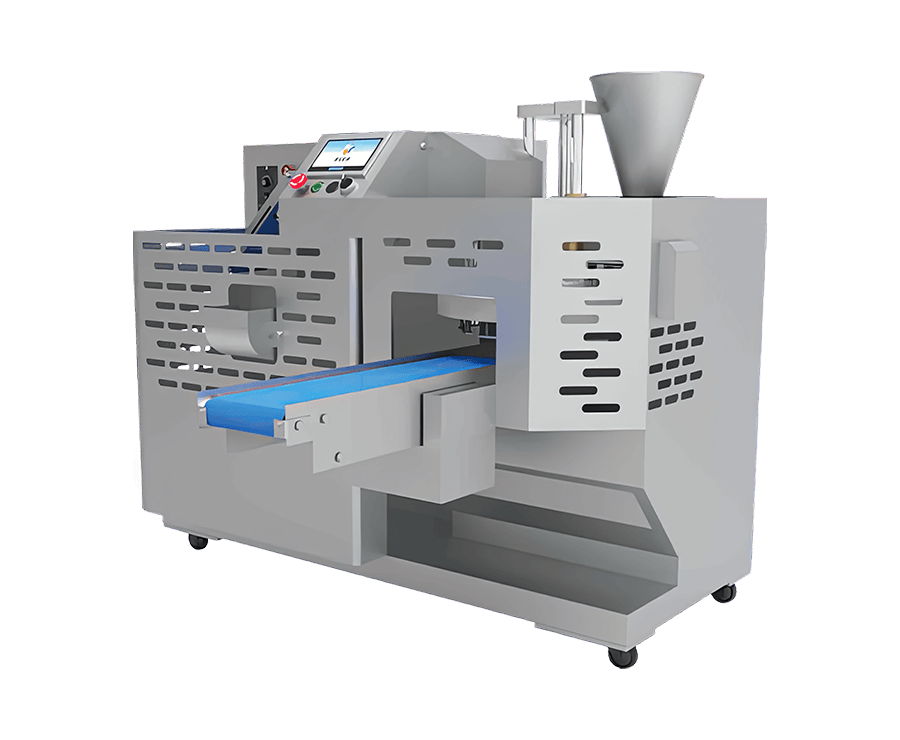
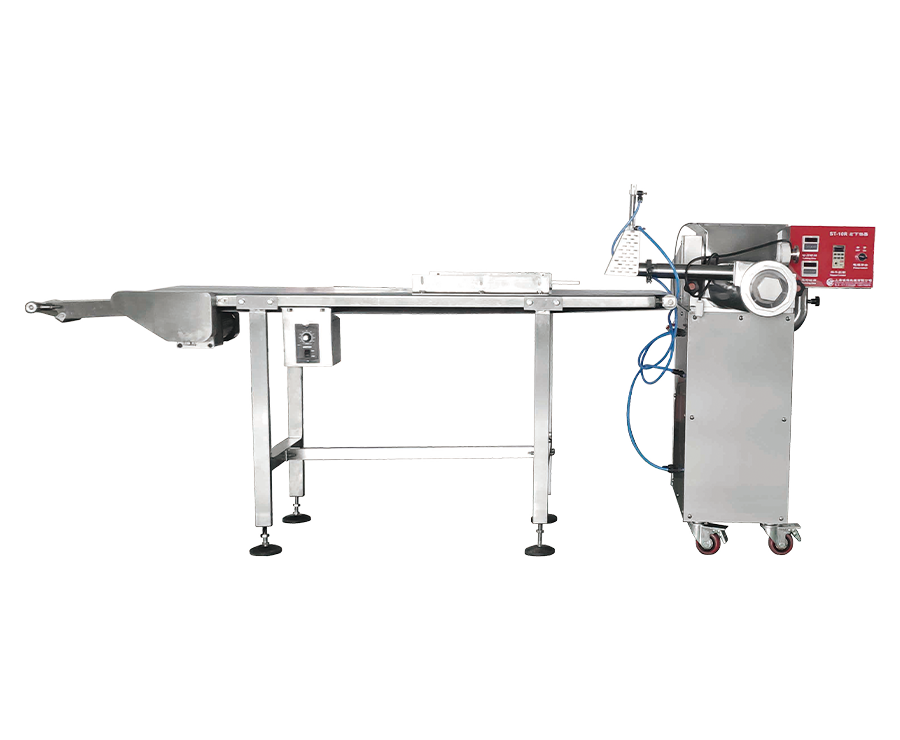 ST-20 Automatic Food Filling MachineAutomatic filling machine with photoelectric induction to control stuffing weight and size for filled products before coating and crumb application.View Product →
Crumb choice matters as well. Fine crumb gives a tighter surface and travels well through conveyors; coarse crumb looks rustic but sheds more easily. Whichever you choose, keep a consistent supplier specification, because changing crumb grade mid-week alters pickup weight without anyone touching a setting.
Hygiene and Maintenance Habits That Protect Coating Quality
Breading equipment has a reputation for being messy, and it earns it. Fine flour and crumb dust settle on frames, rollers and floors, and batter residues dry into hard films if they are left overnight. A short daily routine prevents most of it.
- Empty and brush out crumb trays at every break, not only at the end of the shift.
- Rinse batter tanks, pumps and lines on a fixed schedule, and dry them before refilling.
- Check belt tension and tracking weekly; a drifting belt spoils coverage long before it fails.
- Inspect rollers, screens and air knives for wear, since worn edges change pickup weight quietly.
- Keep spare belts, screens and seals on site so a small failure does not cost a production day.
None of this is complicated, but it has to be assigned. Coating lines usually run better when one person owns the daily check list.
Matching Throughput and Keeping the Line Balanced
The most common capacity mistake is sizing the breading machine to the fryer and forgetting everything else. Coating speed has to sit comfortably inside the slowest real constraint on the line, which is often the freezer or the packing station.
Breaded products are frequently par-fried and then frozen, and a line that coats faster than it can freeze simply builds a queue of warm, fragile product on a conveyor. If you are planning capacity for frozen retail or food service packs, it helps to think of the coating station as part of a frozen food line rather than an isolated purchase.
A useful exercise is to write down three real numbers: pieces per minute, grams of pickup per piece, and available run time per shift. They usually reveal which machine deserves the upgrade first.
Problems That Show Up First on a Breading Line
Coating faults announce themselves in predictable ways, and most trace back to a small number of causes.
- Coating falls off after frying: usually a missing or too-light predust, or a batter too thin to grip.
- Patchy crumb coverage: uneven loading on the belt, or crumb distribution not adjusted across the full width.
- Pickup weight drifting during a shift: batter temperature and viscosity changing, or fines building up in the recirculation.
- Fryer oil darkening quickly: loose crumb escaping into the oil, which points to extraction or screening.
- Jamming at transfer points: a height or speed mismatch between conveyors that were set up independently.
Check the simplest things first. It is almost always a setting, a temperature or a cleaning item rather than a design flaw.
Planning the Installation and the Changeovers
Breading machines are rarely installed into empty space. They go into rooms with drains in fixed places, extraction already routed, and operators who have their own way of working. Decisions made early, such as which side the operator loads from and where the crumb hopper can be reached, save a lot of frustration later.
Changeovers deserve the same attention. If one line runs fish in the morning and chicken in the afternoon, cleaning and reset time between products is part of the machine's real capacity. Removable parts, marked settings and a written changeover sequence usually cut that time more than any mechanical upgrade.
For a closer look at how coating equipment behaves once it is integrated into a running line, our team prepared a practical guide to integrating a coating machine into production lines covering the questions plant teams ask most.
Frequently Asked Questions
Do I need predust, batter and crumb stations, or can I skip one?
It depends on the product and the finish you want. Tempura-style items often skip crumb entirely, while a seasoned flour coating may only need a preduster. Three-stage coating is standard for products that must hold a thick crust through frying and freezing.
Can one machine handle both batter and crumb?
Yes, at smaller outputs. Combined units save floor space and cost, but they take longer to clean between products. Once you run several products a day or a few tonnes per shift, separate stations tend to pay for themselves.
Breading is a detail-driven process, and the equipment only performs as well as the routine around it. Align the forming, coating and freezing stages, keep the cleaning schedule honest, and a breading machine becomes one of the most dependable parts of the plant. If you are weighing up a new coating station or reworking an existing line, we are happy to talk through the numbers with you, because we have built a great many of them and we know where the surprises usually hide.
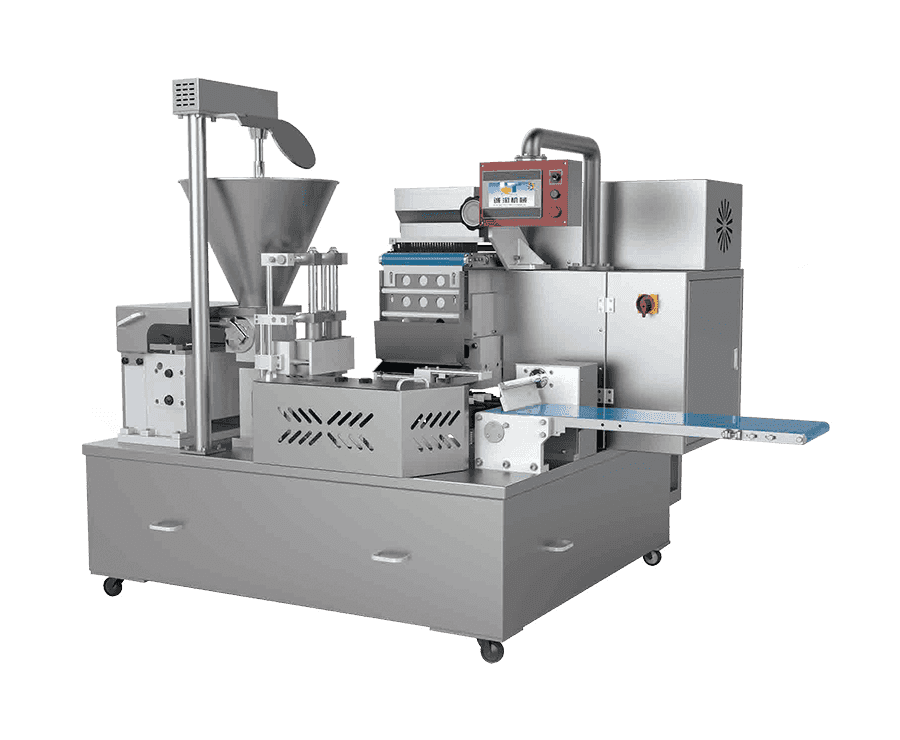
Related Products
Copyright © Shanghai Chengtao Machinery Co., Ltd. All rights reserved.  Food Machinery Manufacturers
Contact Us