
 en
en English
 Español
 Français
 русский
 عربى
عربى
Continuous Mixer Guide: How Continuous Mixing Fits Food Production Lines
Content
Most people searching for a continuous mixer are standing on a production floor, not in a library. They have a line that needs to run faster, more evenly, or with fewer hands on it, and someone has told them that continuous mixing solves at least one of those problems. The real question is narrower and more practical: will it work with our dough, our batter, our filling, and our shift pattern?
We build food machinery for bakeries, frozen food plants, and agricultural processors, so we end up discussing that question often. Below is a walk through what a continuous mixer actually does, how it differs from the batch mixers most plants already own, and the handful of details worth checking before anyone signs off on a new installation.
What a continuous mixer actually does
A continuous mixer meters ingredients straight into the mixing chamber and discharges them as an uninterrupted stream. There is no fill, mix, stop, empty cycle. Flour, water, fat, and minor ingredients arrive at controlled rates, meet inside the chamber, and leave the far end at the same rate they entered.
That single change reshapes the whole machine. Because product spends seconds in the chamber rather than minutes in a bowl, the mixing action has to be efficient and the feeding has to be accurate. In practice, four things decide whether the result is good:
- How precisely each ingredient is dosed, whether by gravimetric or volumetric feeders.
- How the chamber is built, from shaft geometry to paddle and pin configuration.
- How long product stays inside, which depends on throughput against chamber volume.
- How the controls behave when a feed rate drifts or a downstream machine slows down.
Get those four right and the payoff is steadiness. The hundredth portion of a shift looks like the first, and there is no scrap pile waiting at the start of every batch.
Continuous mixing versus batch mixing
Batch mixing is not obsolete, and continuous mixing is not automatically better. They solve different problems, and the differences show up in the same few places every time.
| Aspect | Batch mixing | Continuous mixing |
|---|---|---|
| Production capacity | Bound by bowl volume and cycle time; output grows by adding mixers or shifts | Follows the line rate; capacity scales with feeder and chamber size |
| Recipe handling | A full recipe is weighed and loaded for each batch | Ingredients are metered as a stream, so recipes need stable feed settings |
| Flexibility | Forgiving of small changes and one-off products | Best for a recipe that repeats many times in a day |
| Quality tracking | Each batch can be numbered, sampled, and released individually | Quality is held by parameters and monitoring rather than batch identity |
| Labor and footprint | Loading, unloading, and cleaning take operator time | Fewer manual steps in a compact unit beside the line |
| Changeover and cleaning | Straightforward to clean between recipes | Needs a purge routine and easy access built into the design |
If you are weighing a continuous setup against the mixers already in your plant, this note on choosing between spiral, planetary, and other mixing approaches covers the comparison from the recipe side.
Where the mixer sits in your production line
A continuous mixer is rarely a standalone purchase. It sits between raw material handling and the forming machine, and all three have to be sized together. If the mixer runs faster than the former can accept dough, you gain nothing; if it runs slower, the former starves and your output drops to the slowest component in the chain.
Sizing the mixer to the former
Start from the finished piece. Work back through pieces per minute, dough weight per piece, and hydration, and you arrive at a required kilograms-per-hour figure for the mixer. Add a modest buffer, usually a short resting or conveying stage, so small stoppages downstream do not force the mixer to stop and start.
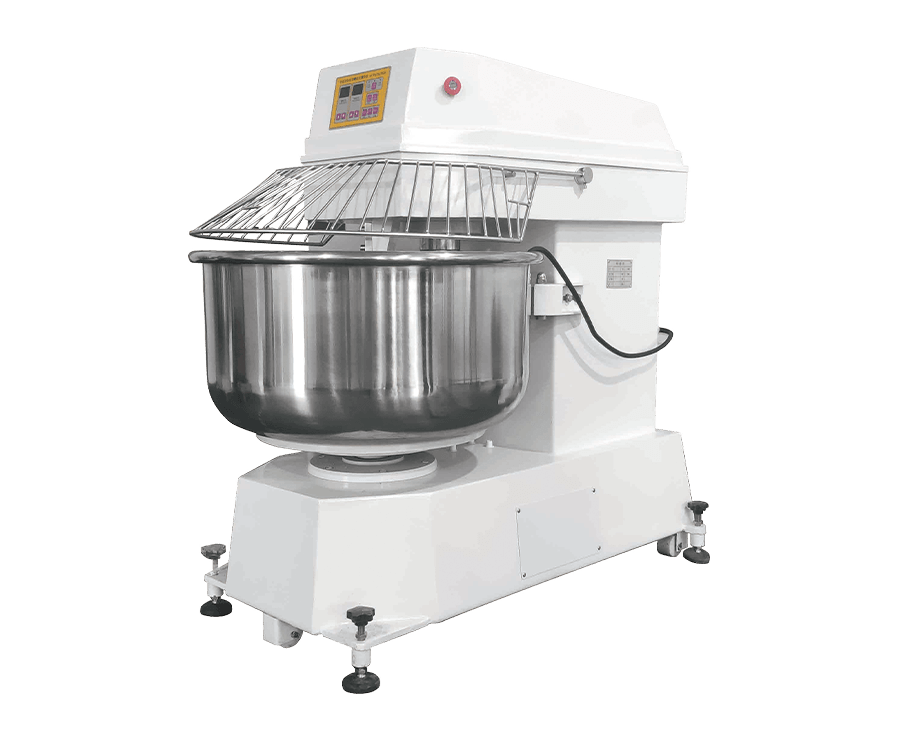 Dough Mixers for Consistent Preparation Across Production LinesShanghai Chengtao dough mixers offer multiple bowl capacities and stainless-steel construction for reliable mixing before downstream forming and baking stages.View Product →
Preparation equipment is the part of the line we get asked about first, because everything downstream inherits whatever the mixing stage decides. Dough that arrives at the forming machine at a consistent temperature, hydration, and development level simply behaves better in the die, the extruder, or the encrusting head.
Applications where continuous mixing earns its place
Continuous mixing suits products with a recipe that repeats, a high daily volume, and a forming stage that expects a steady feed. The classic examples are baked snacks, cookies, crackers, sweet goods, pizza and tortilla doughs, and bread and bun lines. Batter-based products and some fillings and coatings also work well when the feed is accurate.
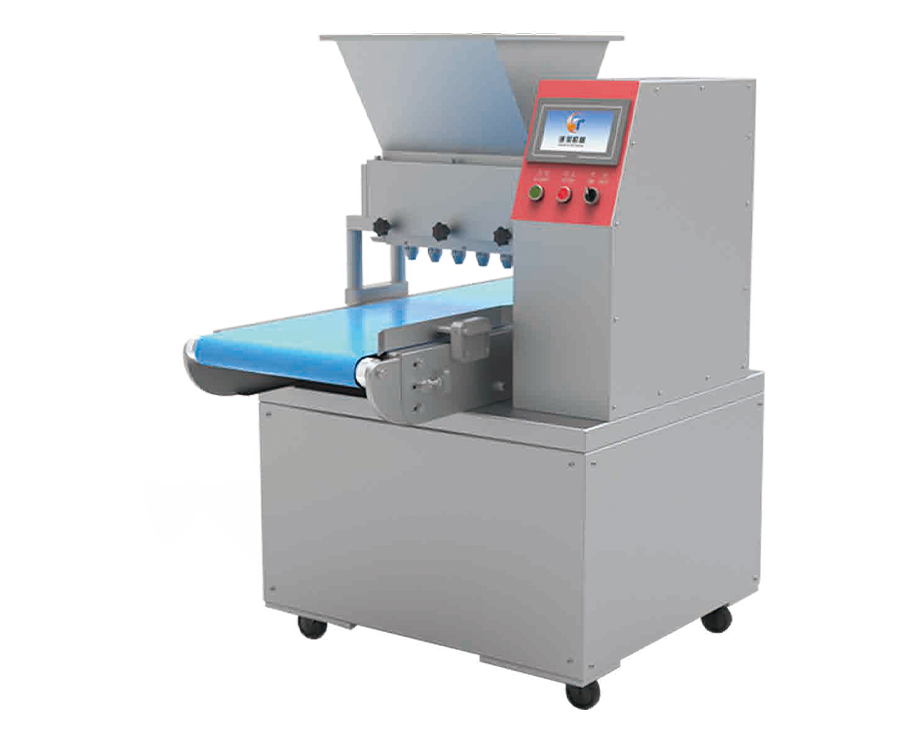 Automatic Cookie Machine CT-GD400/600 for Biscuit LinesModular cookie forming machine with 400 mm and 600 mm models, HMI/PLC control, and capacities of 200 or 300 kg/h for steady dough feed.View Product →
On a biscuit or cookie line, for example, the mixer, the forming stage, and the baking profile are one system. A steady stream of dough lets the forming equipment hold piece weight, and that in turn keeps bake times predictable. It is the same logic behind a dedicated mooncake, maamoul, and cookie production line, where each stage is matched to the next instead of being bought separately.
When batch mixing is still the better answer
There are plants where a continuous mixer would be an expensive way to create problems. If your product range changes several times a day, if you run short runs for special orders, or if your recipes rely on long, slow development of stiff doughs, a batch mixer remains the sensible choice. The same is true when allergen changeovers are frequent and a thorough clean between recipes matters more than throughput.
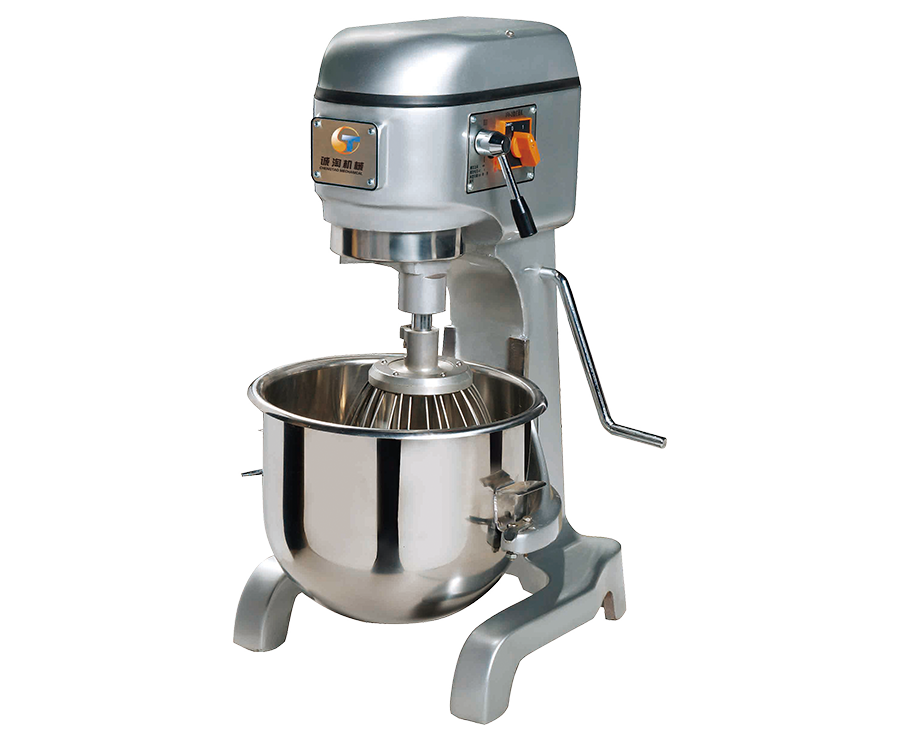 Planetary Mixer for Batch Food Preparation and BakeryStainless-steel planetary mixer with multiple bowl sizes and speeds, suited to dough, fillings, eggs, and cream in flexible batch production.View Product →
Plenty of successful plants run both. A batch mixer handles the awkward jobs and the new product trials, while a continuous unit carries the high-volume workhorse recipe that never changes. Planning for that split from the beginning is far cheaper than discovering it two years later.
What to check before you invest
Whether you are comparing quotations or simply scoping a project, these are the questions that separate a smooth installation from a difficult one:
- Recipe behavior: hydration, fat content, yeast or chemical leavening, and how the mix behaves over a full shift rather than a five-minute trial.
- Target output and turndown: how far below full rate you can go without losing accuracy.
- Metering accuracy: gravimetric or volumetric, how calibration is handled, and what happens when a feeder drifts.
- Residence time and energy input: what the chamber does to your recipe in seconds instead of minutes.
- Hygiene: tool-free access, drainage, product contact materials, and how much product hides in corners.
- Purge and changeover: how much material is lost at start-up, shutdown, and recipe changes.
- Controls and records: recipe storage, alarms, and whether you can show what happened during a shift.
- Line interface: infeed height, conveying, and how the output meets your forming machine.
- Support: spare parts, remote assistance, and commissioning on site.
If any of those answers is vague, a trial run will settle it faster than a spreadsheet.
How we work with plant teams
Shanghai Chengtao Machinery builds equipment across preparation, forming, extended application, cooking, and packaging, and we take on line integration work where those stages have to fit together. That means the mixing discussion rarely ends at the mixer. It usually continues into how dough is conveyed, how it is formed, and how the finished product is handled after baking or steaming.
Because recipes differ so much between plants, most of our machines are configured around the customer's product rather than sold off a fixed list. If you are weighing continuous mixing for a new line or upgrading one you already run, bring us the recipe, the target output, and a photo of the current layout. That is usually enough to say honestly whether continuous mixing will help, and where the real bottleneck sits.
Related Products
Copyright © Shanghai Chengtao Machinery Co., Ltd. All rights reserved.  Food Machinery Manufacturers
Contact Us