
 en
en English
 Español
 Français
 русский
 عربى
عربى
From Single Machines to Full Lines: A 3-Step Framework for Repeatable Capacity
Content
- 1
- 2 The Gap Between a Single Machine and a Full Line
- 3 Defining “Repeatable Capacity”: More Than Just Speed
- 4 The 3-Step Framework: From Assessment to Implementation
- 5 The Hidden Cost of Changeover: Quantifying Flexibility
- 6 Key Technologies for Consistent Forming
- 7 Building Your ROI Model for Line Expansion
- 8 Recipe-Meets-Machine: The Final Piece of the Puzzle
- 9 Conclusion: From Artisan Know-How to Repeatable Capacity
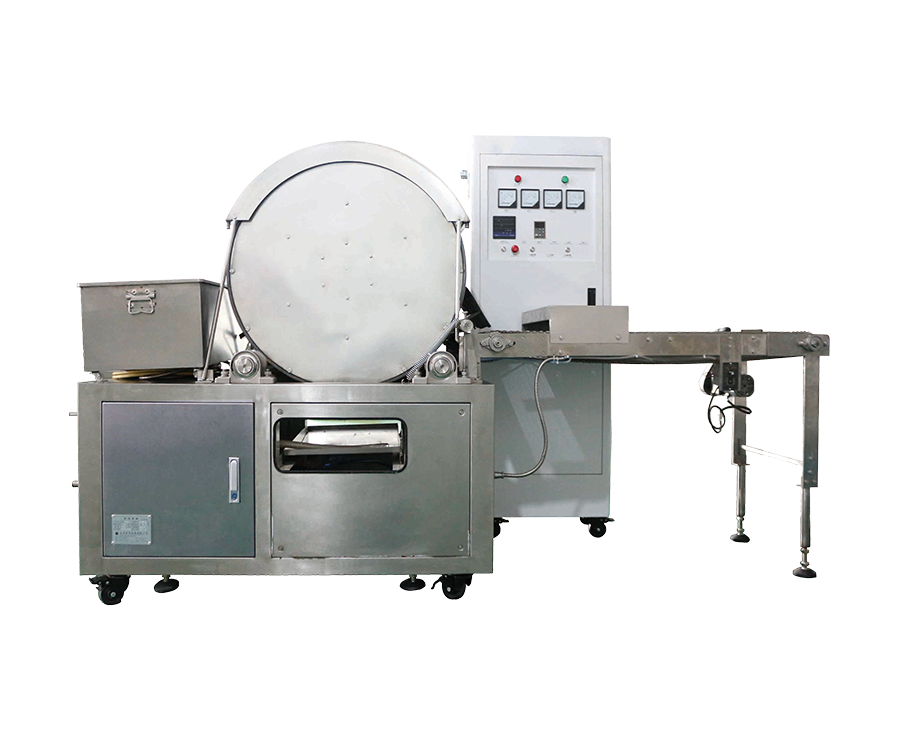
The Gap Between a Single Machine and a Full Line
If your production floor still runs on a single forming machine pumping out 2,000 pieces an hour with three operators hovering around it, you are already losing margin every minute. A single machine forces you to accept a hard ceiling on output. It ties labor costs directly to volume. And it makes batch-to-batch consistency hostage to the operator who showed up that morning.
A full production line flips that equation. It integrates forming, filling, arranging, cooking, and freezing into one synchronized stream. The numbers tell the story clearly.
| Metric | Single Machine | Full Integrated Line |
|---|---|---|
| Output (pieces/hour) | 2,000–3,000 | 10,000–18,000 |
| Direct labor per 1,000 pieces | 0.7–1.0 hours | 0.15–0.25 hours |
| Scrap rate | 3–5% | 0.5–1.5% |
| Changeover time (minutes) | 45–90 | 5–15 (with quick-change tooling) |
That scrap-rate difference alone often pays for a line upgrade within 18 months. Yet most teams hesitate because they view the transition as a single giant leap. It is not. The shift from a standalone forming machine to a repeatable-capacity line happens in measured steps, each with its own ROI.
Defining “Repeatable Capacity”: More Than Just Speed
Speed grabs attention. Consistency builds the business. Repeatable capacity means every shift turns out product that weighs, shapes, and seals within a tight tolerance band—regardless of batch, operator, or ambient conditions. Three pillars hold it up.
Machine Precision: The ±0.1 mm Reality
In food forming, small deviations compound fast. A filling weight that varies by just 2 grams across 100,000 pieces creates 200 kg of giveaway product per day. Modern forming equipment uses independent servo-driven motors for each filling and forming station. These motors hold stroke positions to within 0.1 mm, cycle after cycle. That precision translates directly to portion control and fewer customer complaints.
Tooling Standardization: Quick-Change as a Profit Lever
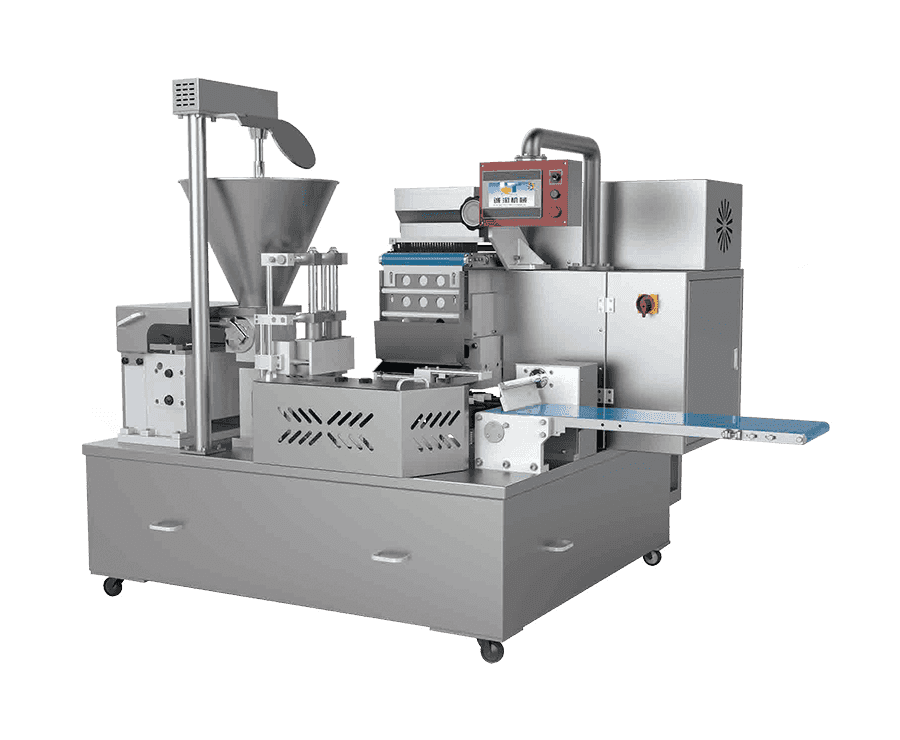
Tooling is what turns a generic forming machine into a system that can produce dumplings, siomai, spring rolls, and stuffed buns on the same frame. Standardized, quick-change clamping plates let one operator swap out a complete die set in under 10 minutes. For instance, a forming machine designed with a modular tooling interface—like the ST390 siomai-wonton machine—removes the guesswork from alignment. The dies lock into a fixed reference point, so the machine does not need re-calibration after every change. That is the difference between 20 minutes of tinkering and a plug-and-play swap.
Digitalized Process Parameters
A skilled operator can adjust a machine by feel. A repeatable line stores those adjustments as digital recipes. When the HMI screen holds pre-set values for forming pressure, folding speed, and dwell time—each matched to a specific dough recipe—you remove the most variable element in the factory: human judgment. Tomorrow's third shift will produce the same product as today's first shift did.
The 3-Step Framework: From Assessment to Implementation
Most capacity-expansion projects stall because the team does not know where to start. Use this three-step model to turn a vague desire for “more output” into a concrete, justifiable capital request.
- Map the real bottleneck. Do not assume the forming machine is the problem. Measure actual cycle times, idle time, changeover duration, and downstream starvation. Often the bottleneck sits in manual tray loading or a batch steamer that cannot keep up. Collect two weeks of shift data before drawing conclusions.
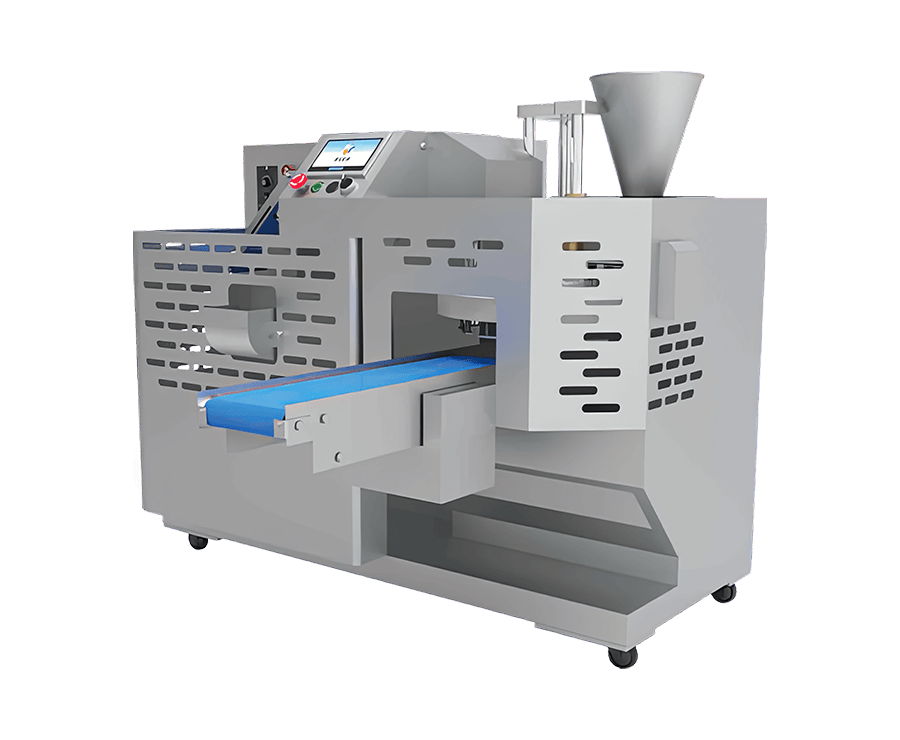
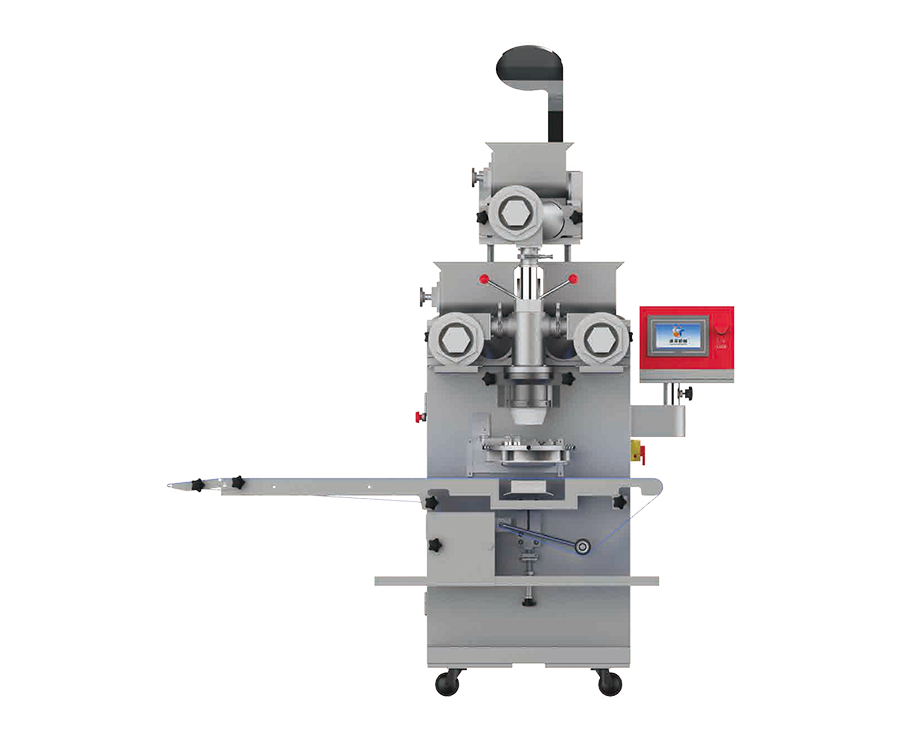
- Quantify the volume gap. Define required daily output in pieces, including peak-season surges. Then calculate how many additional forming lanes you need. A single-head machine delivering 3,000 pieces per hour cannot hit 50,000 pieces in an 8-hour shift. The math forces the conversation toward a multi-head forming station or a parallel line layout. Upgrading from a single-head unit to a dual-head machine like the ST168Plus automatic encrusting machine can double throughput without doubling floorspace.
- Assemble a modular line, not a monolith. Choose components that can be commissioned independently and later integrated: forming machine, automatic tray denester, continuous steamer, spiral freezer. This approach lets you phase investment and validate each module before linking them. It also means one failure does not stop the whole line.
The Hidden Cost of Changeover: Quantifying Flexibility
Most line-capacity calculations assume one product runs forever. That assumption is expensive. In a central kitchen producing four different SKUs per day, changeover time directly eats into saleable output. A traditional changeover that takes 60 minutes—removing dies, cleaning, recalibrating—twice daily costs 120 minutes. Over 300 operating days, that is 600 lost production hours. At 3,000 pieces per hour, you lose 1.8 million pieces a year to downtime. Not to defect, not to waste—to standing still.
Quick-change tooling and recipe-driven automation slash that penalty. A system that switches dies in 5 minutes and loads the parameter set for the next product immediately reclaims 55 minutes per changeover. The capacity gain is immediate and requires no additional machine speed.
| Changeover Method | Time per Change | Lost Production/Year |
|---|---|---|
| Traditional (manual alignment) | 60 min | 1,800,000 pieces |
| Semi-automated (indexed tooling) | 25 min | 750,000 pieces |
| Quick-change (modular tooling + recipe loading) | 5 min | 150,000 pieces |
Flexibility is not a buzzword. It is raw, measurable capacity that you reclaim from the pause between products.
Key Technologies for Consistent Forming
Repeatable shaping across millions of pieces demands more than a strong gearbox. Four electro-mechanical systems form the backbone of modern precision forming.
Independent variable-frequency drives (VFDs) give each motor—filling auger, pleating actuator, belt takeaway—its own speed curve. This decoupling prevents vibration from one axis from destabilizing another. The result: stable filling weights even when the line accelerates or decelerates.
Closed-loop temperature control keeps dough and filling at target temperatures. Many doughs exhibit a sharp rise in stickiness when they warm by just 2–3°C. PID-controlled water jackets around the forming head, along with chilled hoppers, maintain a tight thermal window. That means the 10,000th piece releases as cleanly as the first.
Servo-driven positioning replaced mechanical cams a decade ago, but the leap to absolute encoders now means the machine knows its exact position after a power cycle. No homing routine. No lost product. In a high-mix operation, this shortens restart time to seconds.
In-line vision inspection is increasingly affordable. A camera mounted above the outfeed conveyor checks seal integrity and shape. It flags deviations and, when coupled with a reject station, stops a malformed piece from ever reaching packaging. The beauty of this technology is that it captures data. A rise in reject rate at 2 p.m. might correlate with a filling temperature drift—giving you a process signal, not just a QC report.
Building Your ROI Model for Line Expansion
Finance teams need more than a spec sheet. Build a simple cost-benefit model that compares the status quo with the proposed line over a two-year window. Start with four inputs.
| Input Parameter | Current Single Machine | Proposed Full Line |
|---|---|---|
| Equipment cost (amortized over 5 years) | $12,000/year | $65,000/year |
| Annual labor (3 operators vs. 1 operator) | $90,000 | $30,000 |
| Annual output (pieces) | 4,500,000 | 12,600,000 |
| Scrap value lost (at $0.08/piece scrap) | $14,400 | $4,320 |
The net annual benefit—labor savings plus scrap reduction minus additional equipment cost—can be dramatic. In this example, the new line costs $53,000 more in annualized equipment but saves $70,080 in labor and scrap. The result is a positive cash flow of over $17,000 in year one, and output nearly triples. Payback periods under 12 months are not unusual when you include the revenue from the additional saleable pieces.
Real-world line extensions often pair the forming machine with downstream modules that prevent bottlenecks. A continuous steaming cart matched to the forming speed, for example, ensures the line does not stall at the thermal step. Steaming carts designed for inline integration replace batch retorts and provide the steady throughput a high-speed forming line demands.
Recipe-Meets-Machine: The Final Piece of the Puzzle
Identical machines will produce wildly different results if one runs a low-moisture, high-fat dough and the other runs a wet, extensible pastry dough. Repeatable capacity is not solely a mechanical achievement. It is the marriage of recipe and machine parameter.
A filling with high water activity may require a lighter compression stroke to avoid bursting; a stiffer dough needs a longer dwell time under the folding plate. The best-organized plants build a digital recipe library where each SKU is linked to a machine parameter file. When the operator selects “Pork & Chive Dumpling – 18g” on the HMI, the forming pressure, belt speed, and pleat count load automatically. No trial runs. No wasted dough.
This integrated approach also accelerates new product development. Once the R&D team finalizes a formulation, they record the machine settings that produced the gold-standard sample. That data goes straight into the production database, cutting the scale-up timeline from days to hours.
Conclusion: From Artisan Know-How to Repeatable Capacity
Food manufacturing still romanticizes the artisan touch. But the businesses that scale profitably are the ones that treat forming as an engineering discipline. They instrument the process, digitize the recipes, and select modular equipment that grows with demand. The transition from single machine to full line is not a single project—it is a deliberate, phased investment in repeatability. And its payoff shows up not only on the P&L but in the confidence that the 5-millionth piece will be indistinguishable from the first.
Related Products
Copyright © Shanghai Chengtao Machinery Co., Ltd. All rights reserved.  Food Machinery Manufacturers
Contact Us