
 en
en English
 Español
 Français
 русский
 عربى
عربى
Baozi & Steamed Bun Automation Roadmap: Balancing Output, Texture, and Labor
Content
- 1
- 2 Why Automation Matters for Baozi Production
- 3 The Three Pillars: Output, Texture, and Labor
- 4 Key Process Parameters for Consistent Texture
- 5 Equipment Comparison: Single-Head vs. Dual-Head Forming Machines
- 6 The 3-Phase Automation Roadmap
- 7 Real-World Case: From 200 to 2,000 Buns per Hour
- 8 How to Measure and Validate Texture Quality
Why Automation Matters for Baozi Production
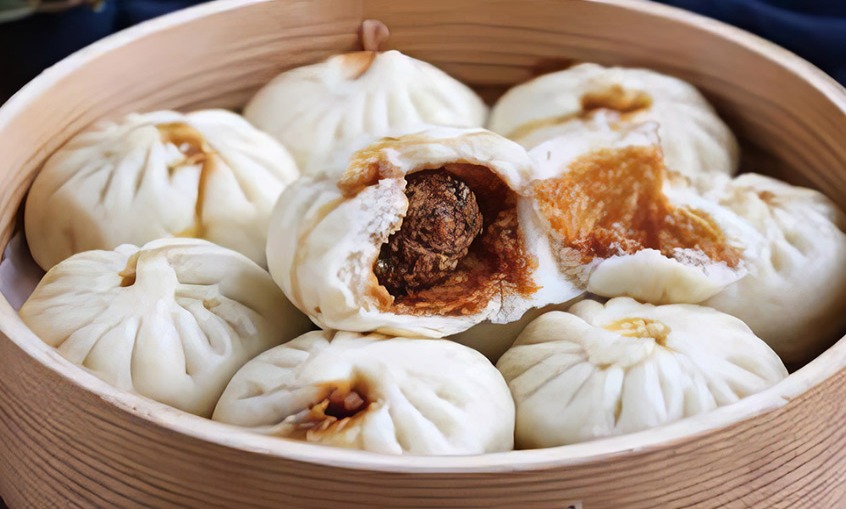
A skilled baozi folder can shape roughly 180 to 250 pieces per hour. That same hour, an automatic encrusting machine produces 2,000 to 4,800 pieces with uniform weight, consistent pleat depth, and near-zero deviation in skin thickness. The gap is not marginal. It is structural.
Manual production imposes a hard ceiling on output that no amount of overtime or additional hires can breach without multiplying labor costs. Worse, hand-folding introduces variability. Dough hydration, ambient kitchen temperature, and the fatigue of the worker all compound throughout a shift. By the third hour of production, bun texture drifts measurably—tighter crumb, uneven steam absorption, thicker skins. Automation addresses both constraints simultaneously: it removes the per-unit labor dependency while locking process parameters into repeatable mechanical actions.
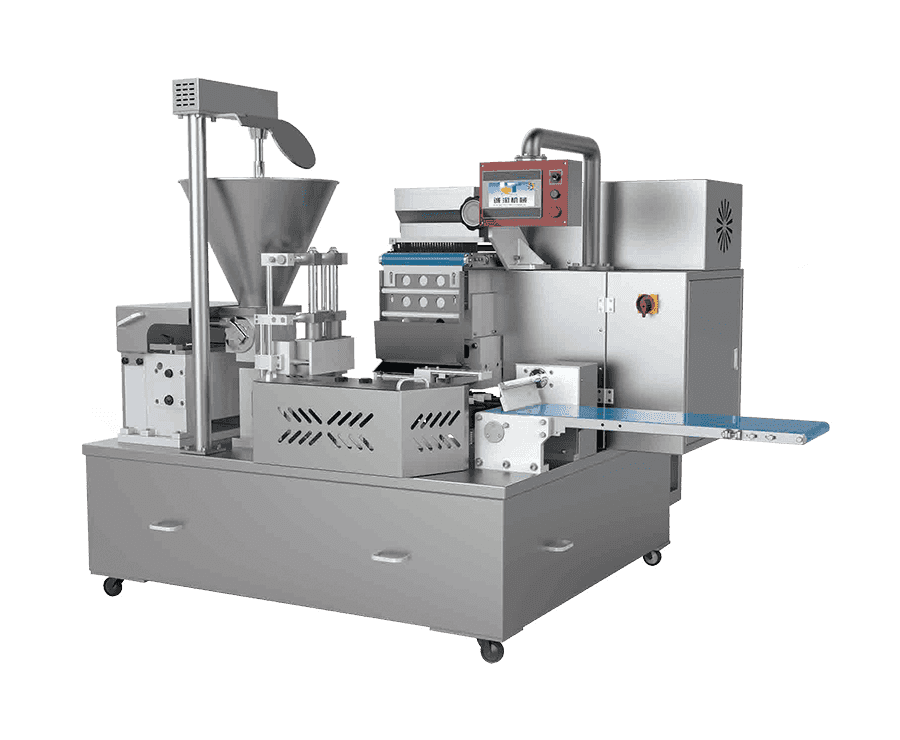
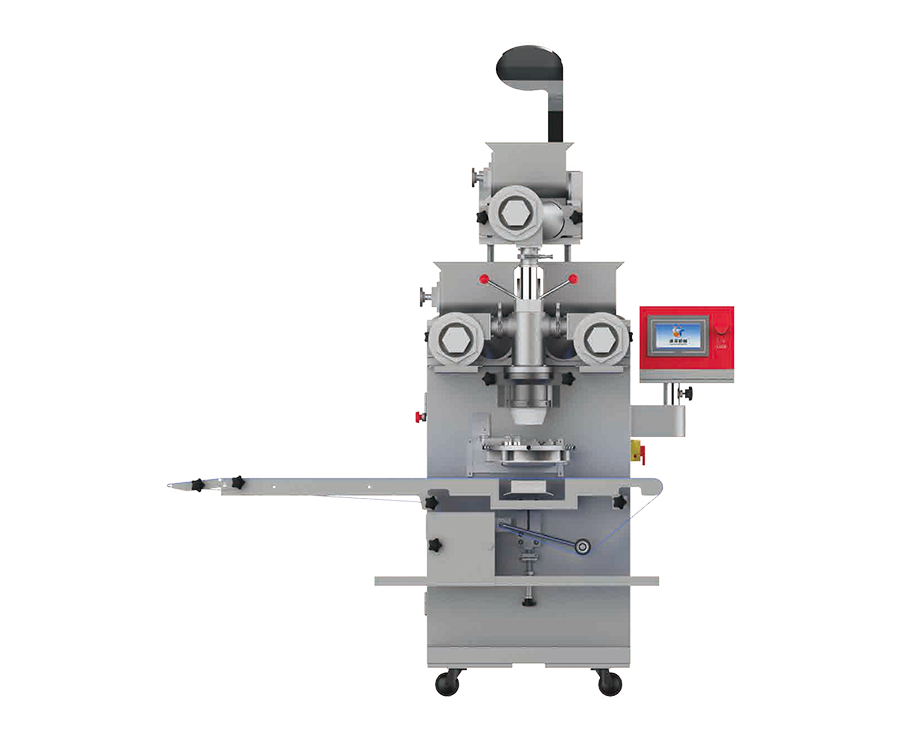
The math is straightforward. A small workshop employing three folders at $2,800 monthly each spends $8,400 on forming labor alone. A single-head automatic machine like the ST168 Plus encrusting machine replaces two to three operators while doubling output. The payback period typically lands between 8 and 14 months, depending on product mix and shift utilization.
The Three Pillars: Output, Texture, and Labor
Every automation decision forces a trade-off, but not a zero-sum one. The three variables—production volume, bun texture quality, and labor cost—interlock. Push one without adjusting the others, and the system breaks. A factory chasing raw output without reconfiguring proofing time will ship buns with collapsed skins. A line that cuts labor to the bone but ignores maintenance schedules will see texture drift back toward manual inconsistency.
The table below maps the three pillars across common production modes. It is not theoretical. These figures come from factory floor audits conducted across small, medium, and high-capacity setups.
| Production Mode | Output (pcs/hour) | Texture Consistency (CV%) | Labor Cost per 1,000 pcs | Investment Range |
|---|---|---|---|---|
| Manual (3 operators) | 500–700 | 12–18% | $18–22 | $0–2,000 |
| Semi-automatic (single-head) | 1,800–2,500 | 5–8% | $6–9 | $8,000–15,000 |
| Fully automatic (dual-head) | 3,600–4,800 | 3–5% | $3–5 | $22,000–45,000 |
The Coefficient of Variation (CV%) for texture—measured as the standard deviation of crumb hardness across a 100-piece sample—drops sharply once mechanical forming replaces hand-folding. Manual CV% routinely exceeds 12%, while dual-head machines hold it below 5%. That difference is detectable by consumers. In blind sensory panels, panelists rate buns with CV% under 6% as “consistently soft” 87% of the time; above 10%, the score drops to 62%.
Labor cost per thousand pieces tells the rest of the story. Manual mode demands 1.8 to 2.4 labor hours per thousand pieces. Semi-automatic mode cuts that to 0.5 to 0.7 hours. Fully automatic lines drive it below 0.25 hours. The savings compound with volume. A line producing 50,000 buns daily saves $280 to $410 per day in labor alone when switching from manual to semi-automatic.
Key Process Parameters for Consistent Texture
Automation does not eliminate the need for process control. It transfers control from the operator’s hands to machine settings. That shift is powerful but demands rigor. Five parameters govern baozi texture more than any others, and each must be dialed in for the specific dough formulation and filling type.
- Dough hydration (water absorption rate): 52–58% for standard wheat flour doughs. Lower hydration (50–52%) produces denser skins suited for pan-fried sheng jian bao. Higher hydration (56–58%) yields softer, fluffier steamed buns. Automatic dough mixers with timed water addition hold hydration variance to under 0.5%, versus 2–3% with manual water measuring.
- Proofing temperature: 34–38 degrees Celsius. Temperatures below 32 degrees Celsius slow yeast activity and extend proofing time by 30–40%. Above 40 degrees Celsius, yeast begins to die off and bun volume drops by 15–20%. A fermentation cabinet with PID temperature control maintains setpoint within 0.5 degrees Celsius, eliminating the ambient fluctuations that plague open-room proofing.
- Proofing humidity: 75–85% relative humidity. Below 70% RH, bun skins dry and form a crust that restricts expansion during steaming. Above 90% RH, condensation droplets pit the dough surface. Integrated humidity control in proofing cabinets prevents both defects automatically.
- Steaming temperature: 98–102 degrees Celsius at the bun surface. Steam chamber temperature must remain above 98 degrees Celsius for proper gelatinization of wheat starch. Drops below 95 degrees Celsius produce gummy, under-gelatinized centers. Modern steamers with automatic pressure regulation hold temperature within a 1.5 degrees Celsius band across the entire chamber.
- Steaming duration: 12–18 minutes depending on bun size. A 50g bun requires approximately 13 minutes; an 80g bun needs 16–18 minutes. Undershooting by 10% leaves centers raw. Overshooting by 15% increases moisture loss by 3–4% and toughens the skin. Automated timers linked to conveyor speed on continuous steamers eliminate the stopwatch variability of batch steaming.
Research published in Foods (2026) tracked quality changes during the steaming process and confirmed that moisture migration and starch gelatinization rates are highly time-temperature dependent. Their data showed a 12% increase in bun volume between minutes 4 and 12 of steaming, followed by a plateau. Automated steamers that hold consistent thermal profiles reproduce that expansion curve identically across every batch. Manual batch steaming, by contrast, showed volume variation of up to 9% across five consecutive batches in the same study due to door-opening heat loss.
Equipment Comparison: Single-Head vs. Dual-Head Forming Machines
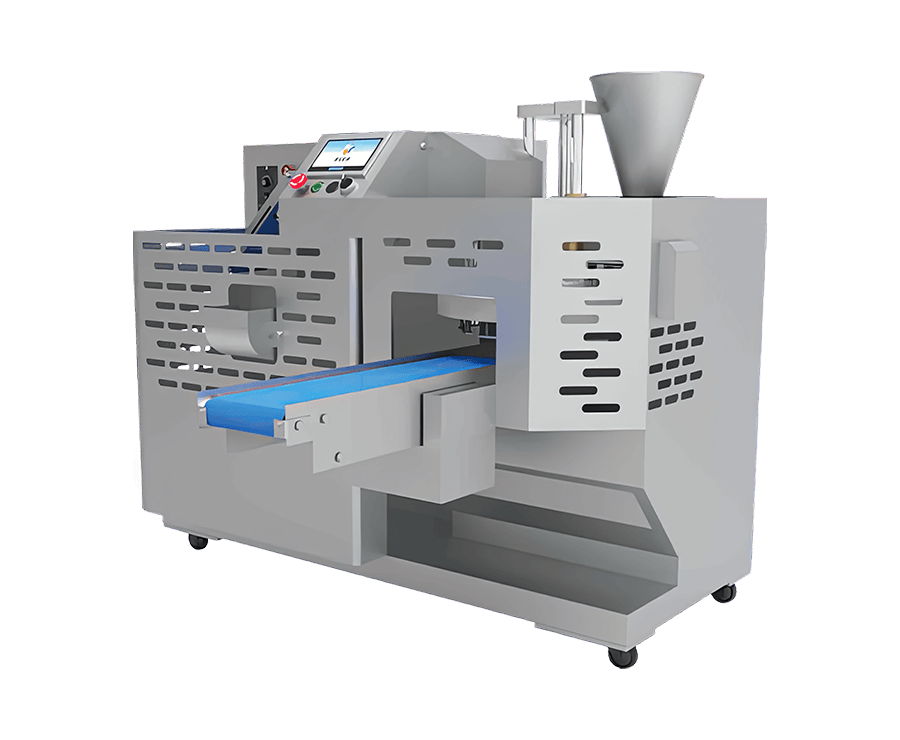
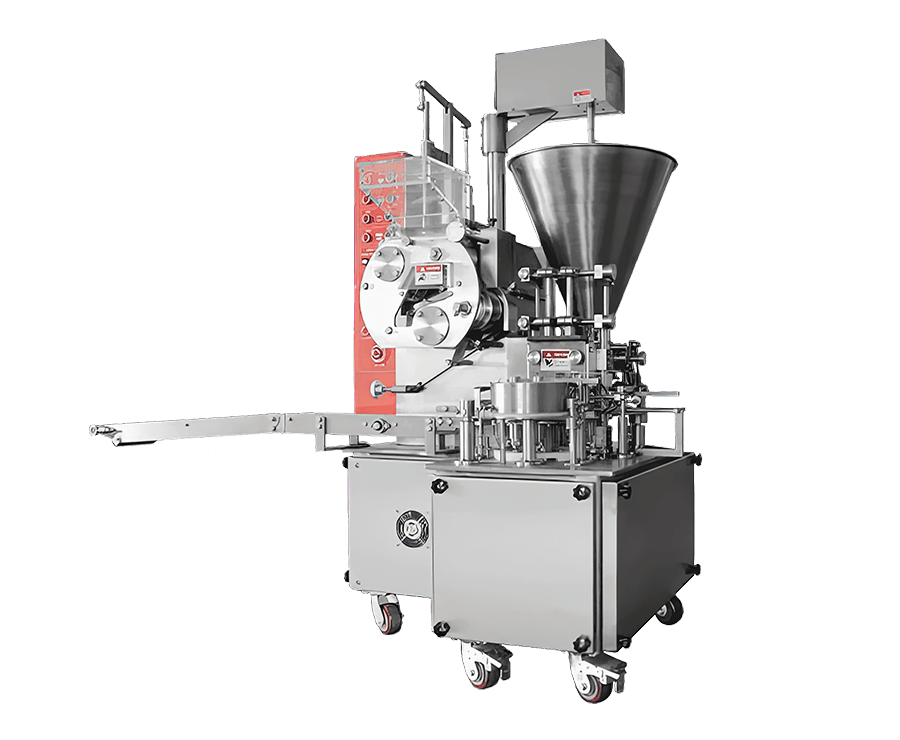
The forming machine is the heart of the automated baozi line. Two configurations dominate the market: single-head models like the ST168 series, and dual-head platforms such as the CT288. The choice between them hinges on current output requirements, product variety, and capital budget. A single-head machine works well for startups producing 1,500 to 2,500 pieces per hour across three to four SKUs. Dual-head machines handle 3,600 to 4,800 pieces per hour and can run two different products simultaneously on separate lanes.
| Parameter | Single-Head (ST168 Plus) | Dual-Head (CT288 Series) |
|---|---|---|
| Max output (pcs/hour) | 2,500 | 4,800 |
| Applicable product range | 20+ (baozi, momo, filled buns, cookies) | 30+ (includes double-color, laminated dough) |
| Mold changeover time | 8–12 minutes | 5–7 minutes per head |
| Independent motor control | Yes (variable frequency) | Yes (dual independent drives) |
| Ice-water cooling system | Optional add-on | Integrated standard |
| Floor space (sq meters) | 1.8 | 3.2 |
| Price range (USD) | $8,000–12,000 | $25,000–45,000 |
The independent variable frequency drive on both machine types warrants particular attention. Traditional forming machines run at fixed RPM, which limits the operator’s ability to adjust dwell time for different dough consistencies. Variable frequency drives let the operator slow the forming head for high-hydration doughs that need longer shaping, or speed it up for stiff cookie doughs. This single feature eliminates the texture compromises that plagued earlier-generation machines when switching between baozi dough and pastry dough on the same equipment.
Mold changeover time has a direct impact on small-batch viability. A single-head machine switching from 50g baozi molds to 25g soup dumpling molds takes roughly 10 minutes. In an 8-hour shift running four products, that adds 40 minutes of downtime—about 8% of productive time. Dual-head machines can run one product on the left lane while the right lane undergoes mold change, reducing effective downtime to near zero for high-mix environments. For operations that run more than six SKUs daily, that capability alone often justifies the dual-head investment.
The 3-Phase Automation Roadmap
Full automation does not happen in one capital expenditure. It unfolds in three logical phases, each delivering immediate returns while building the foundation for the next. This phased approach reduces risk, preserves cash flow, and allows the production team to absorb new workflows before adding complexity.
Phase 1: Single-Machine Forming Replacement
Start with one automatic forming machine to replace manual folding. Target the highest-volume SKU first—typically classic pork baozi or vegetable buns. Install a forming machine with variable frequency drive and at least two mold sets. Train one operator to run the machine and a second to handle filling supply and tray loading. Expect output to rise from 500–700 to 1,800–2,500 pieces per hour. Labor per thousand pieces drops from $18–22 to $6–9. Investment: $10,000–15,000 including installation and initial training. Payback period: 6–12 months depending on shift utilization.
Phase 2: Inline Proofing and Steaming Integration
Connect the forming machine to an automated proofing cabinet and continuous steamer. This step eliminates the manual transport of trays between stations—a major source of proofing inconsistency and labor waste. Conveyorized proofing cabinets with multi-zone temperature and humidity control replace static rack proofing. Continuous steamers with adjustable belt speed synchronize with the forming machine output. Output remains steady at 2,000–3,000 pieces per hour, but direct labor drops by an additional 30–40%. Texture CV% falls below 5% for the first time because proofing and steaming parameters become locked to conveyor timing rather than operator judgment. Investment: $35,000–60,000 for the full line. Payback period: 18–24 months.
Phase 3: Full-Line Integration with Data Monitoring
Add inline weighing, vision inspection, and centralized SCADA data logging. Inline checkweighers reject underweight buns before steaming. Vision cameras scan for surface defects—cracks, uneven pleating, foreign material. Production data streams to a dashboard showing real-time OEE (Overall Equipment Effectiveness), downtime reasons, and texture trendlines. This phase does not necessarily increase output further, but it raises first-pass yield from 94–96% to above 99%. For a line producing 50,000 buns daily, a 3% yield gain translates to 1,500 fewer rejects—roughly $300 per day in recovered product. Investment: $20,000–40,000 for sensors and software. Payback period: 12–18 months from waste reduction alone.
Real-World Case: From 200 to 2,000 Buns per Hour
A medium-scale baozi producer in Vancouver operated with four hand-folders producing 800 buns per hour across two shifts. Dough preparation and filling were done manually. The owner faced a 15% weekly labor cost increase over the prior year and a 22% turnover rate among folders. Product consistency was erratic; customer complaints about “thick skin days” and “flat buns” averaged six per week.
The upgrade followed the 3-phase roadmap. Phase 1 deployed one ST168 Plus encrusting machine with two mold sets (50g and 65g). One folder was retained for specialty decorative buns; the other three were reassigned to packing and quality inspection. Output rose to 2,100 buns per hour with two operators. Labor cost per thousand pieces fell from $21 to $7.40.
| Metric | Before (Manual) | After (Phase 1 Automation) |
|---|---|---|
| Output per hour | 800 | 2,100 |
| Direct labor per shift | 4 | 2 |
| Labor cost per 1,000 pcs | $21.00 | $7.40 |
| Texture CV% | 14.2% | 5.8% |
| Customer complaints (monthly) | 24 | 4 |
| Monthly profit increase | — | $4,200 |
Phase 2 added an automated proofing cabinet and continuous steamer six months later. Output stayed at 2,100 per hour but direct labor dropped to one operator. Texture CV% tightened to 4.1%. Customer complaints fell to near zero. The owner expanded the customer base to include two supermarket chains requiring consistent product specifications—a market segment previously inaccessible due to texture variability. Total investment across both phases was $48,000. Cumulative monthly profit increase reached $7,800, yielding a full payback in just over six months.
How to Measure and Validate Texture Quality
Subjective assessment—“it feels soft”—cannot anchor a quality program. Two methods, one instrumental and one sensory, provide reliable texture validation for automated baozi production. Use them together, not in isolation.
Instrumental Texture Analysis
A texture analyzer such as the TA.XT Plus with a 25mm cylindrical probe performs Texture Profile Analysis (TPA) on steamed bun samples cooled to 25 degrees Celsius. Three parameters matter most:
- Hardness: Peak force during first compression. Target range: 1,200–1,800g for standard steamed baozi. Values above 2,200g indicate under-proofing or over-steaming.
- Springiness: Ratio of recovered height after first compression. Target: 0.85–0.95. Values below 0.80 signal gluten network damage or excessive mixing.
- Chewiness: Product of hardness, cohesiveness, and springiness. Target: 800–1,400. This single number correlates most strongly with consumer preference scores (r = 0.83 in published sensory studies).
| Parameter | Optimal Range | Sensory Descriptor | Out-of-Range Indication |
|---|---|---|---|
| Hardness (g) | 1,200–1,800 | Soft, yielding | <1,200: fragile skin; >2,200: tough, leathery |
| Springiness (ratio) | 0.85–0.95 | Bouncy, resilient | <0.80: doughy, dense |
| Chewiness (g) | 800–1,400 | Pleasant chew, not gummy | <800: dissolves too quickly; >1,800: gummy, sticky |
Sensory Panel Correlation
Train a panel of five to eight individuals using reference samples that span the TPA ranges above. Run a blind evaluation weekly. Ask panelists to rate buns on a 9-point scale for softness, resilience, and overall mouthfeel. Track the correlation between instrumental TPA data and panel scores. When the two diverge by more than one point, investigate—it usually signals a processing variable that the texture analyzer does not capture, such as filling moisture migration into the skin during steam-holding. Automated lines that log TPA data alongside production parameters can trace texture variation back to specific machine settings within minutes.
Related Products
Copyright © Shanghai Chengtao Machinery Co., Ltd. All rights reserved.  Food Machinery Manufacturers
Contact Us