
 en
en English
 Español
 Français
 русский
 عربى
عربى
How Automation Solves Labor Shortage in Food Factories
Content
- 1
- 2 The Labor Problem Is Not Going Away
- 3 Where Automation Has the Biggest Impact
- 4 Automation Does Not Mean Losing Product Quality
- 5 The Real Cost of Staying Manual
- 6 Flexible Automation: One Machine, Multiple Products
- 7 Hygiene and Compliance: An Underestimated Benefit
- 8 How to Evaluate Whether Automation Is Right for Your Operation
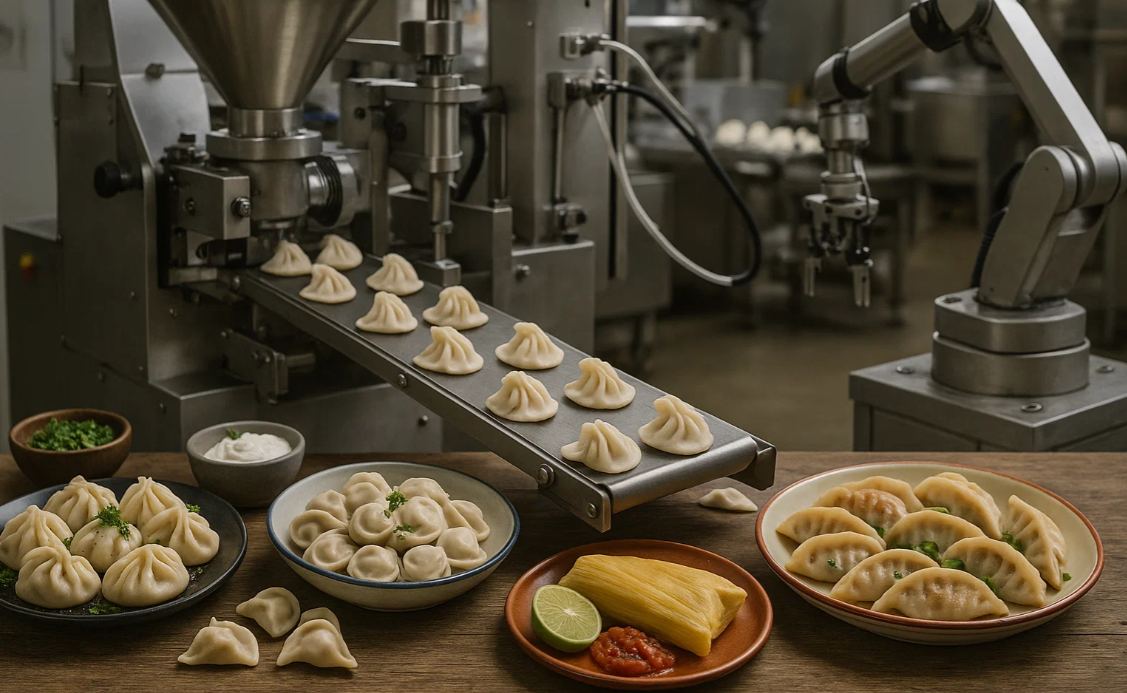
The Labor Problem Is Not Going Away
Food manufacturing has always been labor-intensive, but the pressure has intensified in recent years. Recruiting and retaining workers for repetitive tasks like dough wrapping, filling, and forming has become increasingly difficult across markets in Asia, Europe, and North America. Turnover rates in food processing plants commonly exceed 30–40% annually, and seasonal demand spikes make the situation worse. The result: production targets missed, quality inconsistent, and costs climbing.
From our experience working with food factories across more than 60 countries, we've seen this challenge play out in remarkably similar ways regardless of the region. The solution increasingly points in one direction: replacing or supplementing manual labor with purpose-built food machinery.
Where Automation Has the Biggest Impact
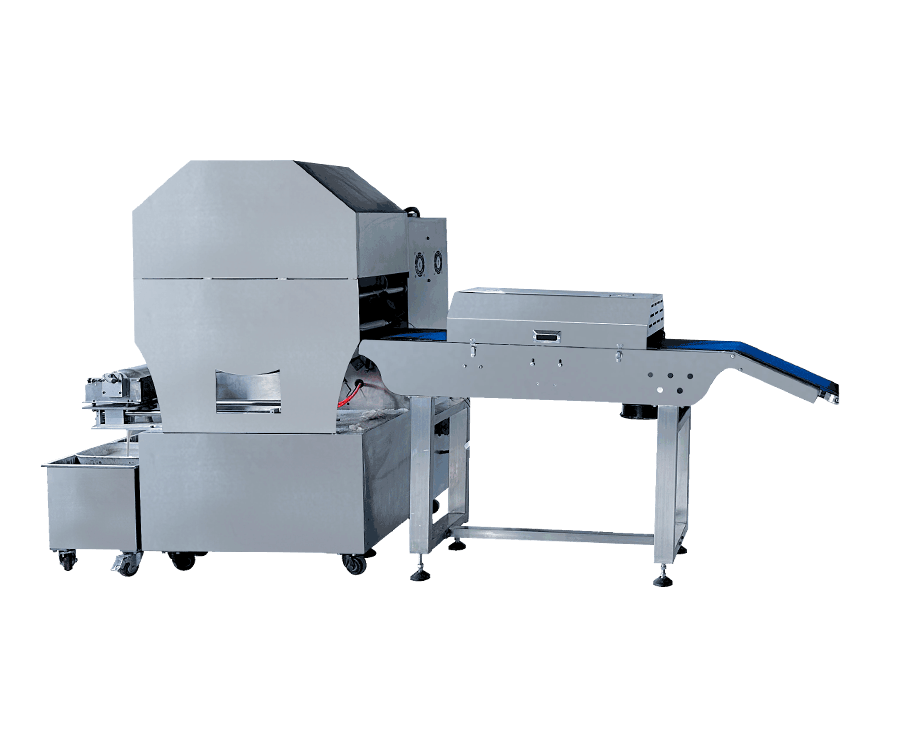
Not every step in food production is equally difficult to automate. The highest-value opportunities tend to be in forming, filling, and wrapping—tasks that require precision, repetition, and speed. These are also the steps that are hardest to staff reliably.
| Production Task | Manual Output (per worker/hr) | Automated Output (per machine/hr) | Labor Reduction |
|---|---|---|---|
| Dumpling / Wonton Forming | ~600–800 pcs | 3,600–6,000 pcs | Up to 80% |
| Spring Roll Wrapping | ~400–600 pcs | 2,000–4,000 pcs | Up to 75% |
| Steamed Bun Shaping | ~500–700 pcs | 3,000–5,000 pcs | Up to 85% |
| Mooncake / Cookie Pressing | ~300–500 pcs | 2,500–5,000 pcs | Up to 80% |
These numbers reflect real-world performance from factories that have transitioned from manual lines to automated equipment. The productivity gap is substantial—and it widens further when you factor in consistency, food safety compliance, and the elimination of downtime caused by worker absence.
Automation Does Not Mean Losing Product Quality
One of the most common concerns we hear from customers is that automated machines cannot replicate the texture and appearance of handmade products. This was a valid concern a decade ago. It is much less so today.
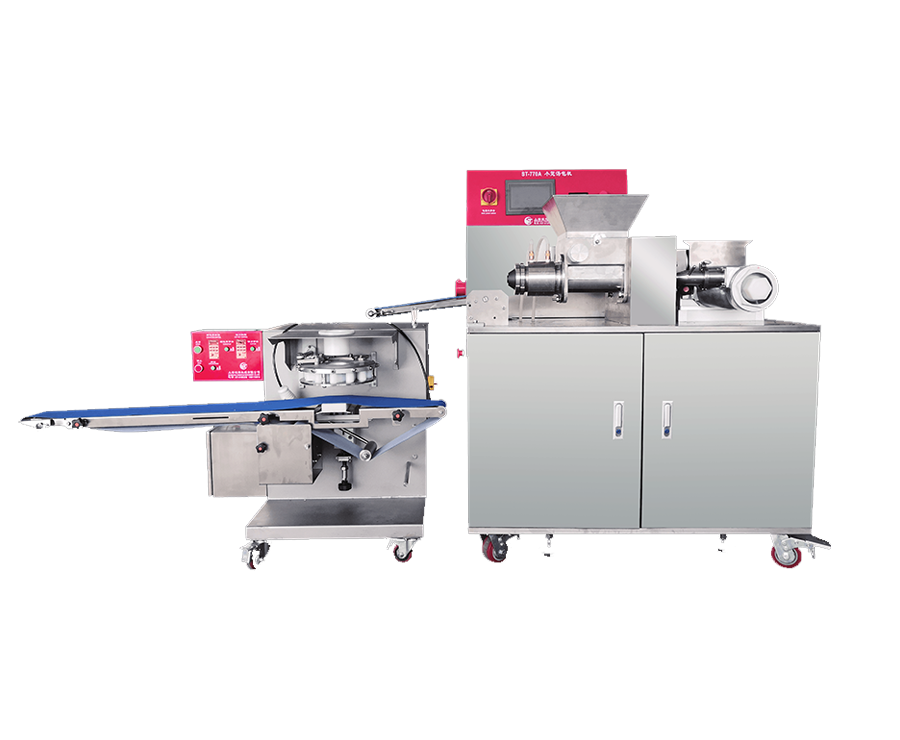
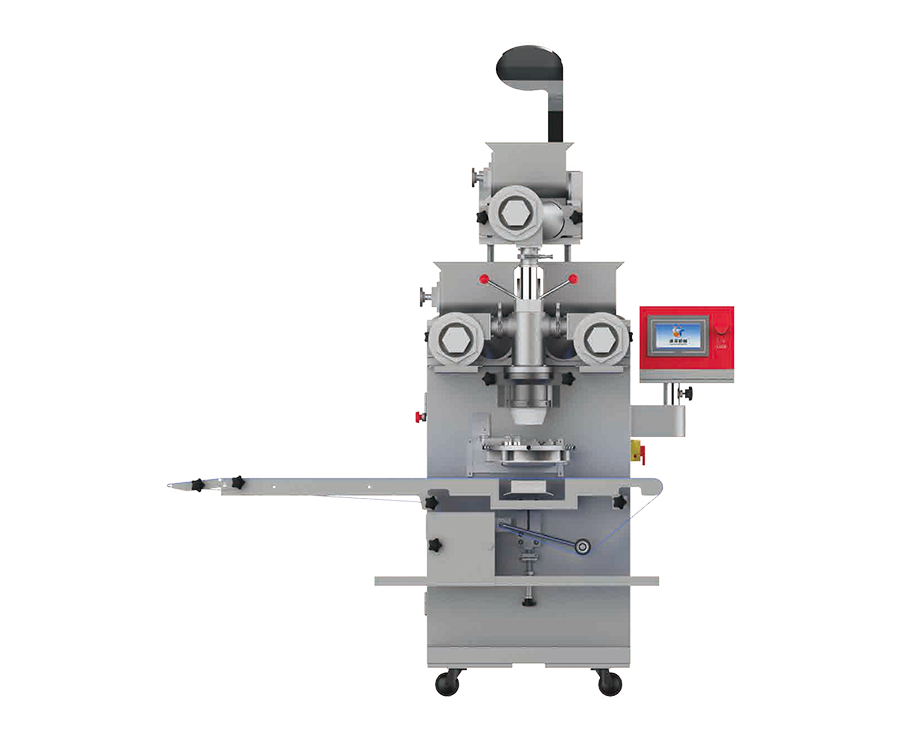
Modern food forming machines use imitation handcraft mechanisms—controlled pressure, synchronized dual-feed systems, and microcomputer adjustment—to reproduce the characteristics of hand-shaped products at scale. For example, our automatic dumpling and wonton forming machine uses a bidirectional synchronous quantitative feeding system that maintains consistent skin thickness and filling ratio across every single piece, something that's nearly impossible to guarantee with manual labor alone.
The key is matching the machine's design to the specific product. A generic machine will produce generic results. Purpose-built equipment, tuned to the dough properties and filling viscosity of your recipe, delivers results that are both consistent and commercially appealing.
The Real Cost of Staying Manual
Labor costs in food manufacturing are rarely just wages. Consider the full picture:
- Recruitment and onboarding costs for high-turnover roles
- Training time before a worker reaches consistent output quality
- Rework and waste caused by human inconsistency, particularly in filling weight and seal integrity
- Production halts due to illness, absence, or resignation
- Difficulty scaling output for peak seasons without overstaffing during slow periods
When these hidden costs are totaled, many factories find that the payback period for an automated production line is 12 to 24 months—sometimes shorter when labor markets are especially tight. After that point, every unit produced represents a direct margin improvement.
Flexible Automation: One Machine, Multiple Products
A concern for smaller or mid-sized factories is that automation requires committing to a single product line. In practice, modern food machines are designed with changeover flexibility in mind. Swappable molds allow a single machine to produce dumplings, wontons, siomai, or similar products without major reconfiguration. This makes automation viable even for factories with diverse SKUs or seasonal product rotations.
For facilities producing multiple food categories—such as both frozen items and baked goods—a modular approach works well. You can automate the highest-volume or most labor-intensive line first, then expand. Our complete production line solutions are designed to be scaled in stages, so capital investment matches your actual capacity growth rather than requiring a full plant overhaul upfront.
Hygiene and Compliance: An Underestimated Benefit
Labor reduction in food factories isn't only about cost—it also directly reduces contamination risk. Every additional person on a production line introduces a potential hygiene variable. Automated systems with stainless steel 304 food-contact surfaces, enclosed forming chambers, and CIP-compatible (clean-in-place) designs significantly reduce this risk.
For factories exporting to markets with strict food safety requirements—EU, North America, the Gulf states—this compliance benefit has real commercial value. Passing audits becomes less stressful when the process itself is engineered for hygiene rather than relying on worker discipline and PPE.
How to Evaluate Whether Automation Is Right for Your Operation
Not every factory is at the same stage of readiness. Before committing to equipment, it helps to work through a few practical questions:
- Which production steps currently require the most workers or cause the most downtime?
- What is your current rejection or rework rate, and how much of it is attributable to manual inconsistency?
- What is your projected volume over the next 2–3 years, and can your current workforce realistically support it?
- Are there product quality standards—weight tolerance, seal integrity, shape consistency—that you struggle to maintain manually?
- What is the true fully-loaded cost per worker in your current operation?
These questions help prioritize where to automate first and build a realistic business case. From there, matching the right equipment to your specific product—dough type, filling, desired output rate—is a conversation we have with every customer before recommending any solution.
If you're working through this assessment, our team is available to walk through the options based on your product type and production volume. You can explore our range of food forming machines or reach out directly to discuss your specific situation.
Related Products
Copyright © Shanghai Chengtao Machinery Co., Ltd. All rights reserved.  Food Machinery Manufacturers
Contact Us