
 en
 English
 Español
 Français
 русский
 عربى

Industrial Mixer for Bakery: Spiral, Planetary, and Dough Handling Guide
Content
- 1 What a Bakery Mixer Is Actually Doing to Your Dough
- 2 Spiral, Planetary, or Continuous: Matching the Machine to the Dough
- 3 Getting Capacity Right Before You Compare Prices
- 4 Dough Temperature and the Mixing Method
- 5 When One Mixer Has to Cover Many Products
- 6 Installation and Daily Care Details That Get Overlooked
- 7 From Mixer to Proof: Keeping the Rhythm
- 8 A Practical Trial Plan for Your Own Recipes
- 9 Let's Talk About Your Dough
Walk into any working bakery at five in the morning and you can usually tell how the day will go from one thing: the sound of the mixer. A dough that comes out warm, slack, or unevenly hydrated will fight you through dividing, shaping, and proofing, no matter how good the rest of the line is. We have spent years building food and bakery machinery for plants that run everything from single-shift pastry shops to round-the-clock frozen dough operations, and the same lesson keeps coming back. When you choose an industrial mixer for bakery production, you are not buying a bowl and a motor. You are setting the physical limits for everything that happens downstream.
What a Bakery Mixer Is Actually Doing to Your Dough
Mixing looks simple from the outside, but four things happen at once inside the bowl, and each one has a cost if it goes wrong.
- Hydration. Flour particles need time and mechanical contact to absorb water evenly. Dry pockets that survive mixing become hard specks in the final crumb.
- Gluten development. The hook stretches and folds the mass until the protein network can hold gas. Too little and the dough tears; too much and it turns tight, hot, and short.
- Aeration. Some products want air folded in, such as sponge batters and creams. Yeast doughs generally want less air and more controlled gluten.
- Temperature. Every minute of friction adds heat. On a warm day, a mixer can push a dough two or three degrees past target before the operator notices.
That last point is where most bakery mixing problems start, and it is also where mixer design matters most. Bowl shape, hook geometry, speed control, and cooling all decide how much heat you put into the dough before fermentation has even begun.
Spiral, Planetary, or Continuous: Matching the Machine to the Dough
Three families of mixer cover most bakery work. None of them is universally better; the right answer depends on what you make, in what batch size, and how often you change recipes.
Spiral mixers
A rotating bowl and a fixed spiral hook fold the dough gently instead of tearing it. That makes spiral mixers a natural fit for bread, baguette, ciabatta, and high-hydration formulas where you want strong gluten with minimal air. Because the action is comparatively kind to the dough, they also handle laminated bases and whole-grain blends that tend to break down in a faster machine.
Planetary mixers
A planetary head moves the attachment around the bowl while the bowl stays still, so you can swap a hook for a beater or a whisk. One machine can run bread dough, cake batter, fillings, and creams. For a bakery with a broad menu and limited floor space, that flexibility is often worth more than raw bread throughput.
Horizontal and continuous mixers
When a plant runs one or two recipes at high volume, horizontal or continuous mixing keeps a steady flow of developed dough moving to the divider. The trade-off is changeover time, which is why these machines thrive on long runs rather than short ones.
| Mixer type | Best suited to | Daily strengths | Points to watch |
|---|---|---|---|
| Spiral | Yeast doughs, high hydration, laminated bases | Gentle gluten development, low aeration, good temperature behavior | Friction heat climbs quickly at higher speeds |
| Planetary | Cakes, batters, creams, small yeast batches | One machine covers several product families | Usable bread batch is smaller than the bowl suggests |
| Horizontal / continuous | High-volume single-recipe lines | Steady throughput with less operator handling | Recipe changes take longer to manage |
Getting Capacity Right Before You Compare Prices
Bowl capacity is one of the most misread numbers in bakery equipment. A 100-liter bowl does not hold 100 liters of bread dough at full working load. Most bakers run flour at roughly half to two-thirds of bowl capacity, then check the result against dough density and hydration. A stiff bagel dough and a wet focaccia dough behave very differently in the same machine.
Work backwards from the oven, not forwards from the mixer. If your deck oven can bake 200 loaves an hour and your proofer holds 150, a mixer sized for 600 loaves an hour will simply create waiting dough. Match batch size to the smallest bottleneck in the chain, then add one batch of headroom for changeovers.
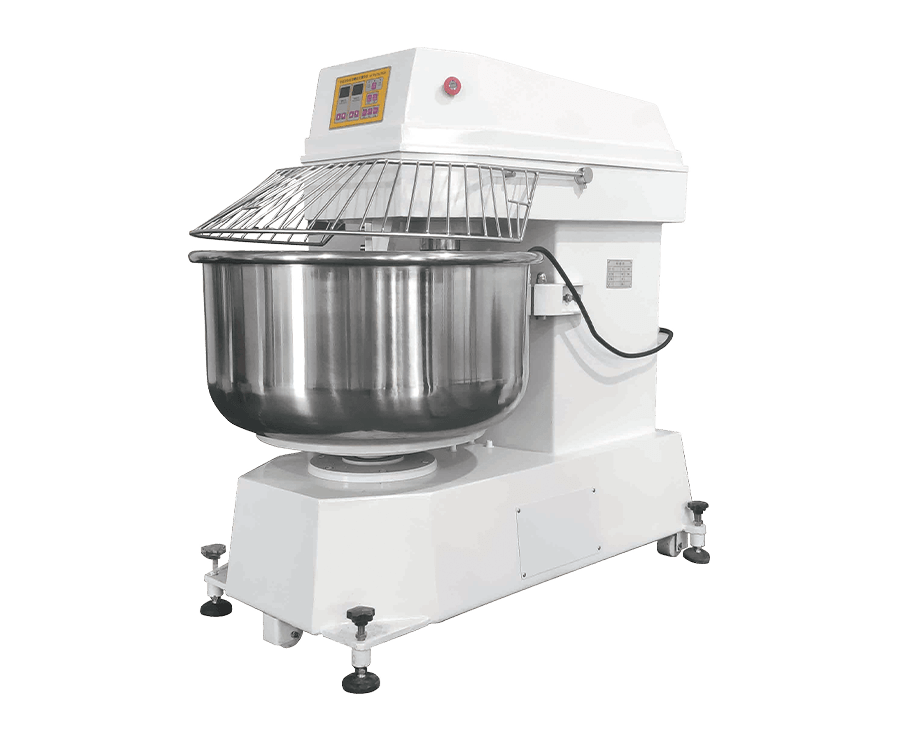 Chengtao Vertical Dough Mixer SeriesOffers 48–300 L bowl capacities and dough capacities from 18–125 kg to match batch size to oven and proofer bottlenecks.View Product →
It also helps to think about the working day. Two or three larger batches usually beat six small ones, because each mix carries fixed labor: weighing, loading, unloading, and cleaning. But large batches leave less room to react when orders shift, so many bakeries settle on a mid-size bowl with a second machine for small or experimental runs.
Dough Temperature and the Mixing Method
Desired dough temperature, or DDT, is the practical tool here. The classic calculation takes your target temperature, multiplies by three, and subtracts flour temperature, room temperature, and a friction factor for the machine. Water temperature is the variable you adjust.
Friction factors vary widely. A slow spiral on a cool morning might add only a few degrees, while a fast planetary running a stiff dough can add considerably more. If you change speed or batch size, recalculate rather than assuming the old water temperature still applies. In summer, ice or chilled water is often the simplest fix; in winter, the same recipe may need warm water to reach the same target.
Mixing method matters too. Autolyse, delayed salt, and bassinage all change how the dough accepts water and how much heat it accumulates. A mixer with reliable speed control lets you build those steps into a repeatable routine instead of leaving them to feel.
When One Mixer Has to Cover Many Products
Not every bakery can dedicate a machine to one dough. Smaller pastry shops, hotel kitchens, and central kitchens producing both bread and cakes often need a single unit that adapts. In that case, look at how quickly attachments change, whether the bowl is easy to reach, and whether the speed range stays controllable at low settings, since batters and fillings are less forgiving than bread dough.
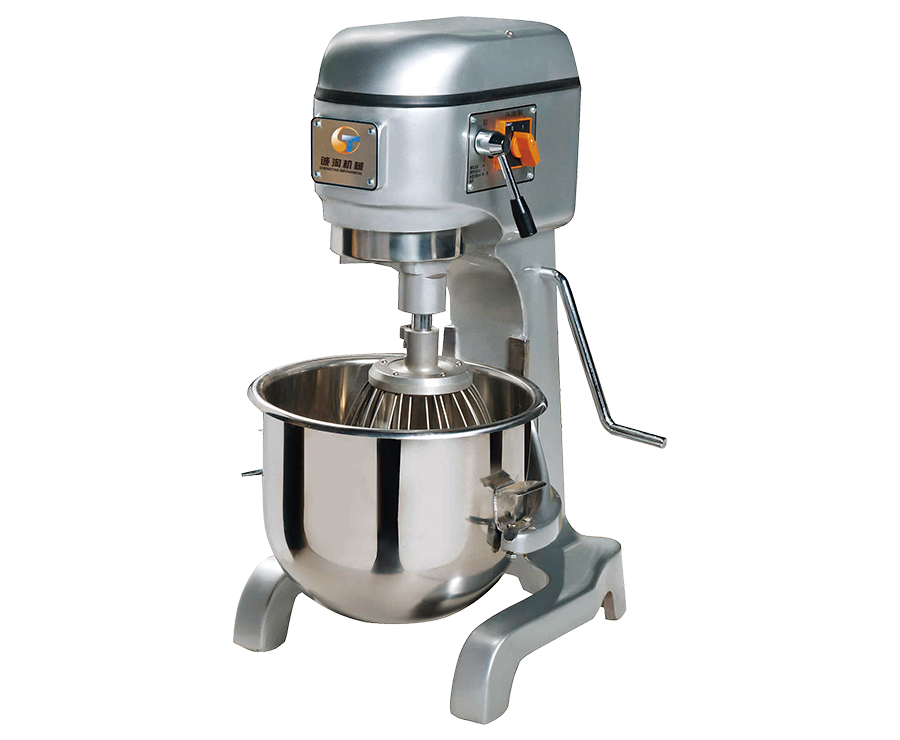 Chengtao Planetary Mixer for Bakery and PastryWith 7–60 L bowls and hook, fan, and spherical beaters, it adapts to bread, fillings, cream, and other mixing tasks.View Product →
Our own experience building customized food machinery has taught us that the most useful question here is not "which mixer is best" but "which ten products will this machine see most often". Answer that honestly and the specification usually writes itself.
Installation and Daily Care Details That Get Overlooked
A mixer is heavy, and a full bowl is heavier. Before delivery, check floor loading, door widths, and the clearance needed to tilt or remove a bowl. Confirm the power supply, phase, and breaker size against the nameplate rather than against the sales sheet.
- Dough contact surfaces. Ask which stainless grades and food-contact materials are used, and how the bowl and hook are finished.
- Cleaning access. Look for removable guards, smooth welds, and no exposed lubricants near the bowl.
- Bowl clearance. Hook-to-bowl distance affects how cleanly the dough moves; too tight and you wear the bowl, too loose and you leave unmixed patches.
- Spare parts. Belts, seals, and attachments should be identifiable from the manual, with a realistic lead time.
None of this is glamorous, but these are the details that decide whether a mixer runs for twelve years or starts causing downtime in month eight.
From Mixer to Proof: Keeping the Rhythm
Mixing is the front of a chain that continues through dividing, shaping, and proofing. If your dough leaves the mixer at the right temperature but the proofing room swings several degrees, the work you did in the bowl is wasted. Fermentation cabinets that hold both temperature and humidity within a narrow band make dough behavior predictable, which in turn makes mixer settings repeatable.
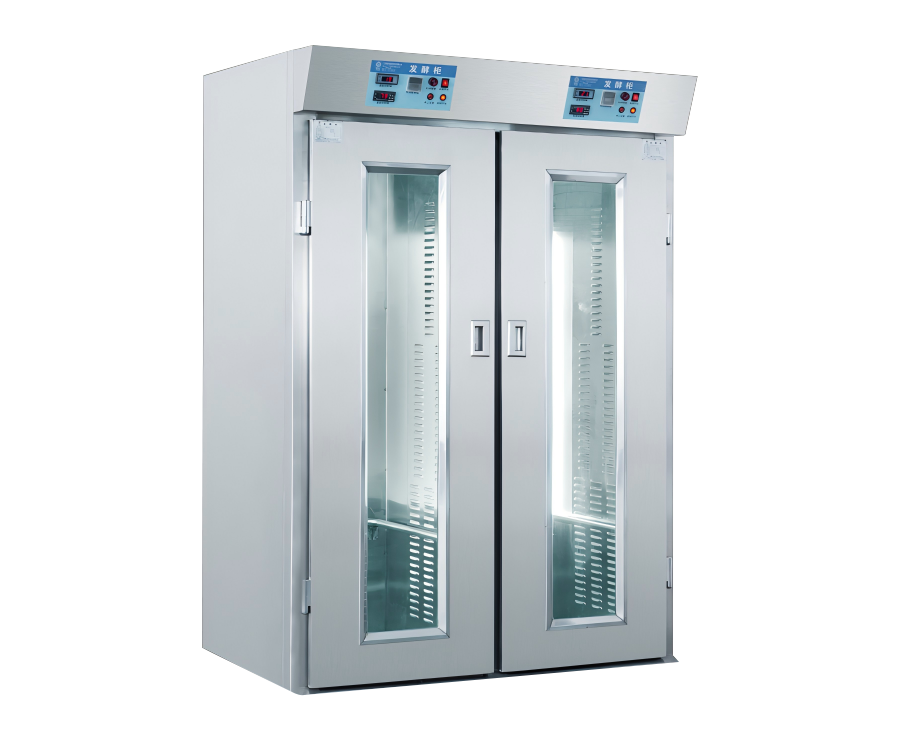 Fermentation Cabinet with PLC Temperature and Humidity ControlPLC control and convective air circulation support uniform temperature and humidity, helping make fermentation behavior more predictable for downstream mixing settings.View Product →
For bakeries planning a fuller line, our bakery food production line overview shows how mixing, forming, proofing, and baking stages connect, and where buffer capacity is worth building in.
A Practical Trial Plan for Your Own Recipes
Specification sheets are useful, but dough is the only honest test. Before committing to a machine, ask for a trial using your flour, your hydration, and your schedule.
- Run your most common recipe at the batch size you expect to use daily.
- Record dough temperature at the start and end of mixing, plus mix time to full development.
- Repeat with your most difficult dough, typically the wettest or the stiffest.
- Run a changeover from one product to the next and time the cleaning in between.
- Check the dough after proofing and baking, not just after mixing.
Keep notes on speed settings and water temperature alongside the results. Those records become the foundation of your standard operating procedure, and they make future mixer purchases far easier to justify.
Let's Talk About Your Dough
Choosing an industrial mixer for bakery production is a decision about consistency, labor, and the kind of products you want to be known for. Since 2010 we have built food and bakery equipment for customers in more than sixty countries, and we still start every project the same way: with the recipe, the batch, and the working day. If you are weighing up spiral against planetary, or wondering whether your current bowl is really the bottleneck, our team is glad to look at the details with you. Reach out through our contact page and tell us what you bake.
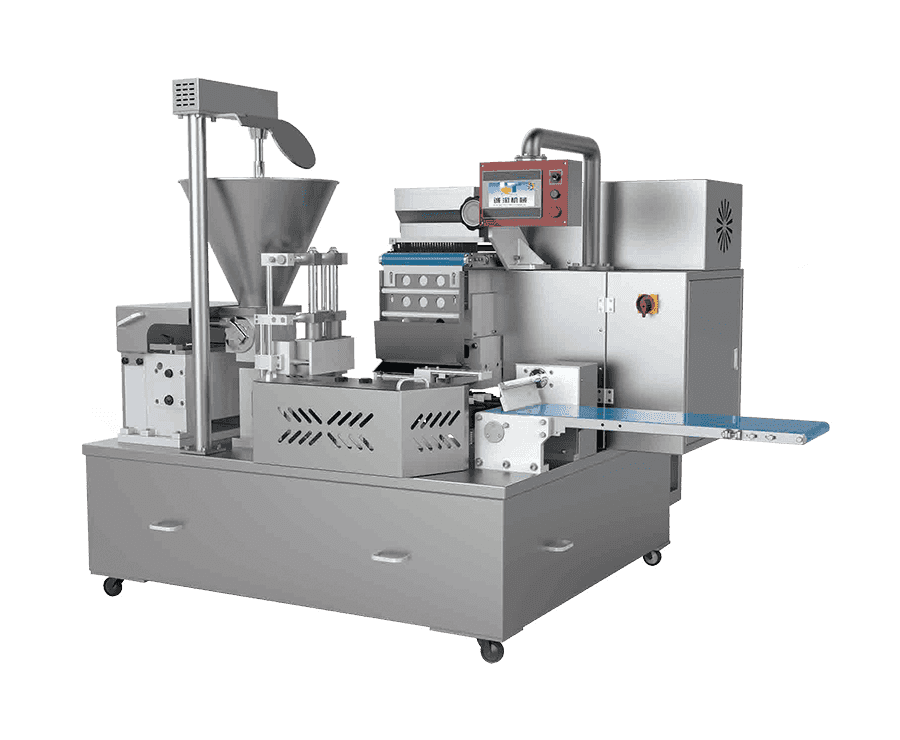
Related Products
Copyright © Shanghai Chengtao Machinery Co., Ltd. All rights reserved.  Food Machinery Manufacturers
Contact Us