
 en
en English
 Español
 Français
 русский
 عربى
عربى
Is It Truly Cleanable? Acceptance Criteria from Materials to Hidden Corners
Content
- 1 Why “Cleanable” Matters: The Cost of Hidden Contamination
- 2 The 5 Hidden Corners in Food Processing Equipment
- 3 Material Acceptance Criteria: Stainless Steel Grades & Surface Finish
- 4 Design Acceptance Criteria: Welds, Seals & Corners
- 5 How to Validate Cleanability: 3 Quantifiable Tests
- 6 Cleanability as a Procurement Decision Factor: A Buyer’s Checklist
Why “Cleanable” Matters: The Cost of Hidden Contamination
The first visual pass on a production line often tells a comforting story. Stainless steel gleams. Conveyors look spotless. But what hides behind a fixed guard, inside a seam weld, or beneath a seal ring that nobody removes until the quarterly maintenance window? That’s where the real verdict on cleanability is written.
In food processing, the difference between “visually clean” and “validated clean” carries a price tag measured in product recalls, sanitation shutdowns, and regulatory fines. A single residual niche in a forming machine that harbors dough and moisture can escalate into an all-night deep clean after a positive Listeria swab. Across the industry, the numbers add up fast.
| Hidden Contamination Failure | Operational Consequence | Estimated Cost Impact (USD) |
|---|---|---|
| Pathogen harborage in seal groove | Product recall, line stoppage | $150,000–$2M per event |
| Product buildup on dead-end pipe branch | Micro-screening failure, HACCP deviation | $25,000–$80,000 in loss and rework |
| Corrosion under loose bolt heads | Metal contamination risk, equipment replacement | $40,000+ per unit replacement |
| Allergen cross-contact via porous gaskets | Allergen recall, brand reputation damage | $500,000+ direct recall cost |
These aren’t worst-case fantasies. They are what plant managers face when cleanability isn’t baked into the equipment at the design stage. That’s why a structured set of acceptance criteria—covering materials, geometry, and verification—matters well before the first production run.
The 5 Hidden Corners in Food Processing Equipment
Ask a sanitation supervisor where the battles are lost, and the list starts not with open surfaces but with interfaces where materials meet. On an automatic encrusting machine, for instance, the area between the filling pipe collar and the hopper wall can develop a coating of protein-rich paste that spray balls never reach. Elsewhere, on a continuous cookie line, a support bracket welded to the frame creates a narrow crevice that captures sugar and oil. These are the hidden corners that turn clean-in-place (CIP) protocols into guessing games.
Each corner carries a distinct risk profile. The following five locations surface again and again across bakery, meat, dairy, and ready-meal operations.
- Seal and gasket grooves. O-rings that sit in rectangular grooves allow material to compact into the bottom radius. Even with CIP, the static gap acts as a micro-holding tank. Cleanability Difficulty Score — High.
- Threaded connections and exposed bolts. Threads collect product fibres and moisture, and a simple screw head can be the nucleation point for corrosion. Cleanability Difficulty Score — Very High.
- Weld undercut and tack-weld pockets. Incomplete weld penetration leaves a fine crevice where bacteria can lodge. On enclosure-style dough handling equipment, these pockets often go unnoticed until a positive ATP test stops production. Cleanability Difficulty Score — High.
- Belt-to-sidewall interfaces. The small gap between a plastic modular belt and its stainless-steel side guard traps particle fines and fats. Even with dry cleaning, residue transfers back onto product if the gap isn’t opened daily. Cleanability Difficulty Score — Medium.
- Product contact points inside hollow roller shafts. A dead-ended support roller on a forming line can draw moisture inside through micro-cracks. Once wet product enters, no CIP circuit can penetrate. Cleanability Difficulty Score — Extreme.
Knowing these corners is the first half of the puzzle. The second is defining the material and design criteria that either eliminate them or make them verifiable.
Material Acceptance Criteria: Stainless Steel Grades & Surface Finish
Not all stainless steel is equal under a microscope. The alloy composition directly dictates pitting resistance, passivity, and the ability to maintain a required surface roughness after repeated chemical and thermal cycling. In the U.S., FDA 21 CFR 110.40 requires that food-contact surfaces be corrosion-resistant and maintained in a smooth, easily cleanable condition. What “smooth” means, however, is often left to the equipment buyer to define.
The following table provides a practical comparison of common food-grade stainless steels used in high-washdown environments.
| Property | AISI 304 | AISI 316L | AISI 430 |
|---|---|---|---|
| Typical surface finish (Ra) | 0.8–1.2 μm (food contact) | 0.4–0.8 μm (dairy/meat grade) | 0.8–1.6 μm |
| Pitting resistance (PREN) | ~19 | ~25 | ~16 |
| Corrosion resistance in acidic/high-salt products | Moderate | High (molybdenum content) | Low |
| Cost index (relative) | 1.0 | 1.4–1.6 | 0.7 |
| Best-suited food applications | Bakery, dry goods, low-acid wet products | Meat, dairy, acidic sauces, brine environments | Cabinetry, low-moisture areas |
A surface roughness of Ra ≤ 0.8 μm is generally accepted as the benchmark for wet-process food zones. Anything rougher provides enough topography for biofilms to anchor, even after chemical sanitation. In high-risk dairy and infant formula applications, many engineering specifications now push for electrolytically polished 316L with Ra ≤ 0.4 μm. The extra cost is routinely offset by reduced cleaning time and lower sanitizer consumption.
Design Acceptance Criteria: Welds, Seals & Corners
A plant can spec the best metal on the market and still fail a cleanability audit if the design forces product into stagnant zones. The single most expensive design oversight in food machinery is the sharp internal corner. When two flat plates meet at 90 degrees, the resulting crevice creates a low-flow zone that defies the turbulence needed to lift away residues. That’s why modern hygienic design standards, from EHEDG to 3-A, mandate minimum internal radii.
Three measurable criteria separate a cleanable design from one that will haunt the sanitation shift:
- Internal corner radius (R ≥ 3 mm). A radius of 3 mm or larger transforms a dead zone into a scourable curve. In practice, moving from a square corner to R=5 mm can reduce manual cleaning time by approximately 30 percent on typical dough and filling equipment, based on field timing studies conducted across multiple bakeries.
- Continuous, flush-ground welds with no undercut. Welds on the food-contact side must be free of pits, cracks, and undercut. The acceptance check: run a gloved finger across the weld; if the nail catches, the defect is unacceptable. For high-acid environments, post-weld passivation and pickling are essential to restore the passive chromium oxide layer.
- Tool-free removable seal carriers. Any seal that requires a screwdriver to remove will not be removed frequently enough. A well-designed seal mount allows a gloved hand to extract the O-ring in under 20 seconds. If the removal takes longer, the component stays in place, and cleaning becomes a guess.
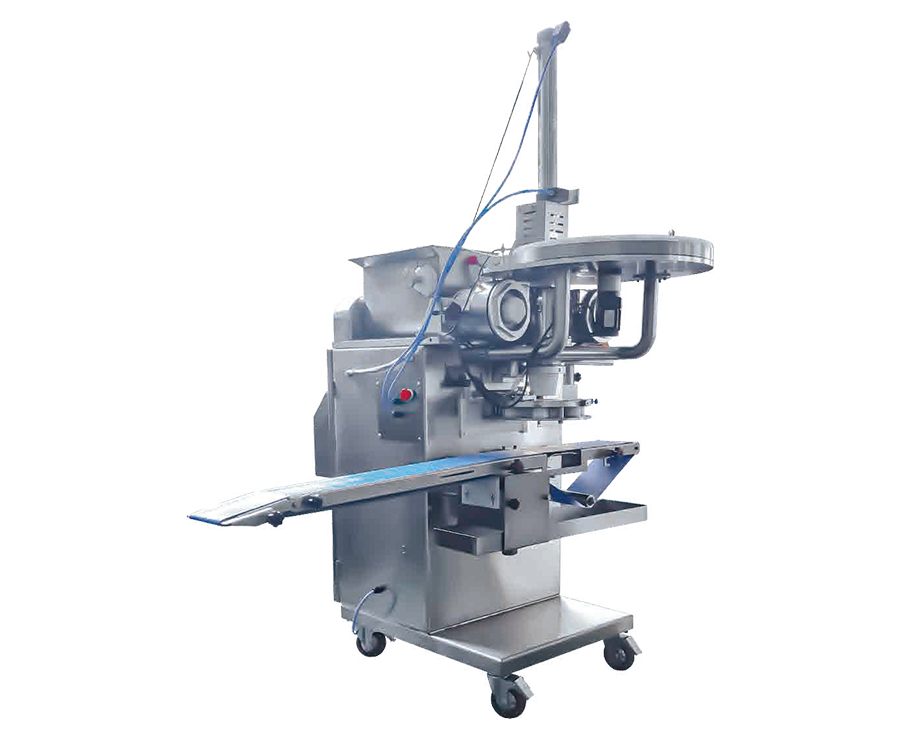
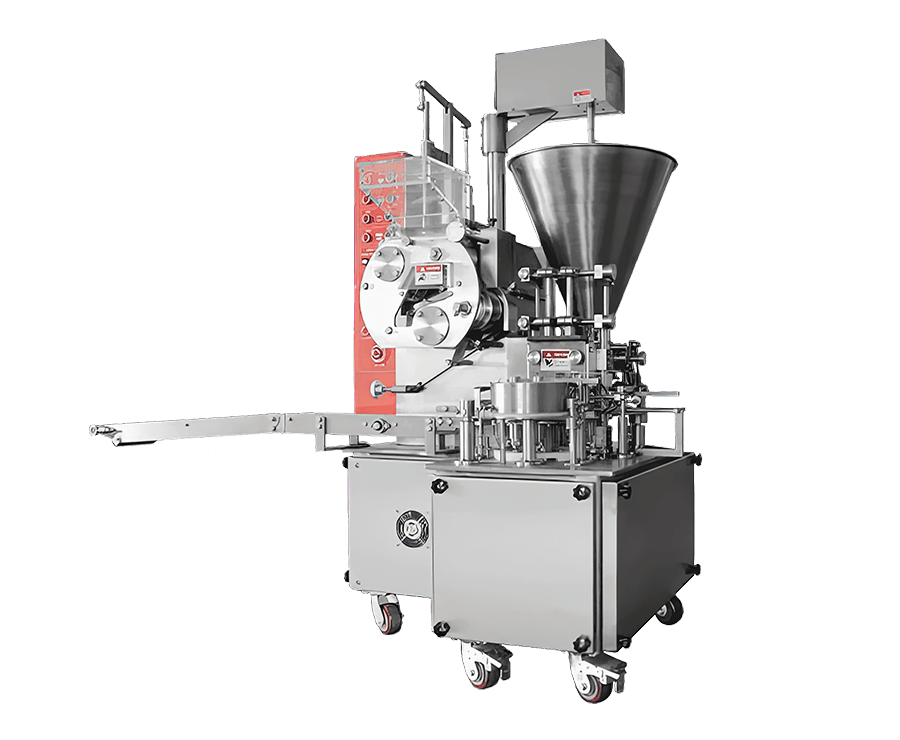
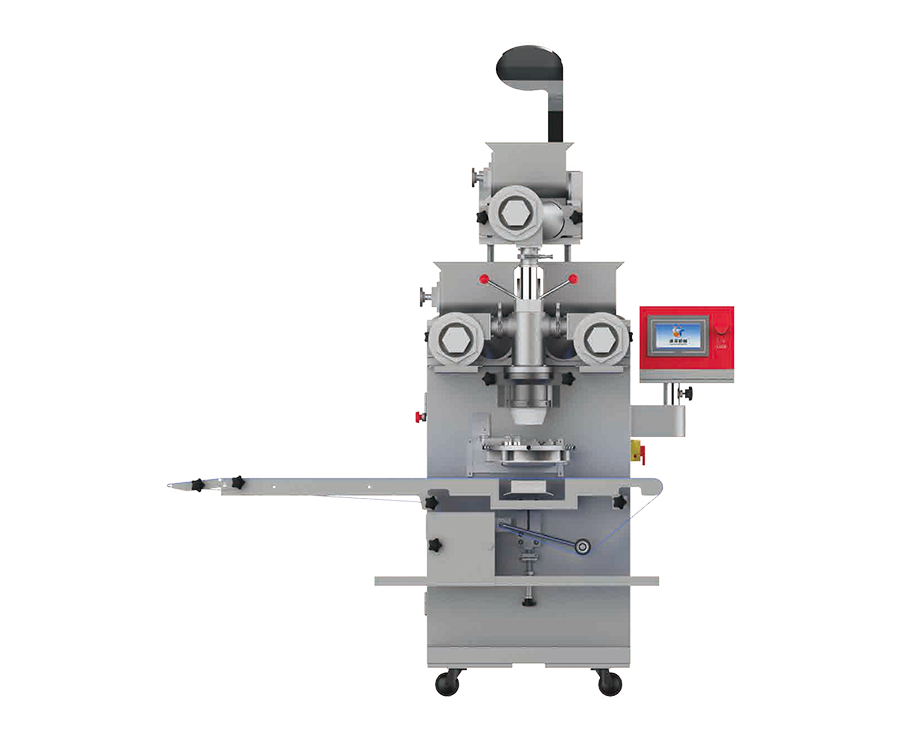
These criteria aren’t academic. Equipment platforms like the range of automatic forming machines that incorporate quick-release chutes and continuous seams between the filling tube and the main body illustrate how small geometry decisions translate into verifiable daily sanitation outcomes. The best time to audit these details is during the factory acceptance test, when you can still request a corner-radius gauge and a torch light.
How to Validate Cleanability: 3 Quantifiable Tests
Visual inspection alone can miss contamination at the molecular level. A surface that looks spotless under fluorescent lighting may still carry protein films that fuel bacterial regrowth during the next production window. A multi-layered validation approach eliminates that false confidence. The three methods below move from rapid field verification to laboratory-grade evidence.
| Method | What It Detects | Pass Threshold | Typical Time | Best Used For |
|---|---|---|---|---|
| Visual inspection (enhanced) | Visible residue, debris, discoloration | No residue on any contact surface (use borescope for hidden areas) | 1–2 minutes per zone | Daily pre-op check |
| ATP bioluminescence | Organic residue (food soils, microbial cells) | RLU < 100 on most standard system swabs | 15–30 seconds per swab | Post-CIP validation, allergen clearance |
| Microbial swab culture | Viable bacteria (aerobic plate count, specific pathogens) | < 10 CFU/cm² (general hygiene) or < 1 CFU/cm² for high-risk zones | 24–48 hours incubation | HACCP verification, trending over time |
ATP testing has become the frontline tool for cleanability verification because it gives real-time, numerical feedback. A reading above 150 RLU on a post-wash die cavity tells the sanitation lead to reclean immediately, rather than wait for a culture that won’t deliver results until tomorrow’s production is already underway. For the hidden corners described earlier, a borescope combined with a flexible ATP swab reaches into seal grooves and behind guides where the eye cannot follow.
The validation frequency should match the product risk. Low-risk dry mixes may rely on weekly microbial monitoring, while high-risk wet protein processing demands daily ATP swabbing at multiple control points, especially on multi-product lines where allergens must be completely cleared between runs.
Cleanability as a Procurement Decision Factor: A Buyer’s Checklist
During equipment trials, performance specs like throughput and piece weight accuracy dominate the conversation. Cleanability often surfaces only as an afterthought—until the first sanitation clash. The ten questions below put hygienic design back where it belongs: at the center of the procurement discussion.
- Are all food-contact welds ground flush and free of pits? Inspect with a flashlight and feel for snags. Rough welds are the first sign of cost-saving fabrication shortcuts.
- What is the minimum internal corner radius on product-contact zones? Ask for a drawing with radius callouts; anything below 3 mm needs justification.
- Can seals and scrapers be removed without tools? Simulate the removal during the demo under typical line conditions. Time it.
- Does the supplier provide surface roughness certification for critical parts? Request an Ra measurement trace on the hopper, die plates, and filler tubes.
- Are there any horizontal hollow sections or dead legs in the product path? Point at the equipment and trace the flow path. If there is a closed loop where CIP turbulence cannot guarantee coverage, reject it or demand a drainable solution.
- Have all threaded connections on product-contact areas been eliminated? Bolts in food zones should be replaced by sanitary studs with smooth heads or moved entirely outside the splash zone.
- What is the documented cleaning time for a full changeover, and which components add the most time? This forces the supplier to quantify the design’s efficiency. If a single component adds 20 minutes, ask if it can be redesigned.
- Can we see the ATP validation data from a similar installation? A reputable builder will have before-and-after ATP readings from field trials. Absence of such data is a gap.
- How are belt lifters and tensioners protected from product ingress? These hidden areas should be open-framed or fully sealed—no hollow tube designs that act as reservoirs.
- Are the cleaning protocol and verification points clearly marked on the equipment diagrams? The OEM should provide labelled images indicating every CIP spray zone and manual disassembly point.
Treat this checklist as a pass/fail gate. If a supplier cannot answer half of these with specific data, the equipment’s true cleanability—not its claimed one—remains unverified. That uncertainty lands on the production floor, and it shows up in every swab test that fails.
Related Products
Copyright © Shanghai Chengtao Machinery Co., Ltd. All rights reserved.  Food Machinery Manufacturers
Contact Us