
 en
en English
 Español
 Français
 русский
 عربى
عربى
Automatic Bread Forming: Selecting the Right Machine for Your Line
Content
- 1 What “Automatic Bread Forming” Should Deliver on the Factory Floor
- 2 Forming Mechanisms That Influence Texture, Gluten Structure, and Appearance
- 3 Key Specs That Actually Matter When Selecting an Automatic Bread Forming Machine
- 4 How to Size Capacity Using Realistic OEE (Not Only Nameplate Speed)
- 5 Changeover and Multi-SKU Flexibility Without Compromising Consistency
- 6 Hygiene and Cleanability: What to Verify Before You Buy
- 7 Line Integration: Upstream Dough Prep and Downstream Handling
- 8 Commissioning and Acceptance Testing: What to Ask for in a Factory Trial
- 9 Conclusion: A Practical Shortlist Standard for Automatic Bread Forming
Automatic bread forming is most valuable when your operation needs consistent weight, shape, and throughput across long runs—without turning sanitation and changeover into the real bottlenecks. This article focuses on practical selection and line-integration criteria used in commercial bakeries and food factories, with real specification examples from an automatic bread forming machine.
What “Automatic Bread Forming” Should Deliver on the Factory Floor
In production terms, automatic bread forming is the controlled conversion of prepared dough (and optional fillings) into repeatable pieces—defined by weight, length/diameter, surface tension, and downstream handling stability. In well-designed lines, the forming station improves four measurable outcomes:
- Lower weight variation to reduce giveaway and stabilize baking time and yield.
- Throughput you can schedule (capacity that remains stable after warm-up, not only at start-up).
- Product integrity during transfer (pieces keep shape through conveying, proofing, freezing, steaming, or baking).
- Predictable sanitation and reset so cleaning is planned, not improvised.
If your business is growing SKUs like hot dog buns, hamburger buns, toast pieces, filled buns, or pastry-style bread items, the correct forming mechanism matters more than the “headline speed” printed on a brochure.
Forming Mechanisms That Influence Texture, Gluten Structure, and Appearance
Bread texture and appearance are shaped by how the dough is reduced, rolled, and finished. For example, the ST-868 uses a three-stage progressive reduction approach to press dough to target thickness, then forms strips via rollers and finishes pieces with kneading/pinch knives for ball or strip shapes. This method aims to shape dough without excessive tearing, supporting a more “handmade-like” eating experience.
Three-stage reduction (progressive thinning)
Progressive thinning helps reduce sudden stress on dough. In practical trials, this approach can improve surface uniformity and reduce edge cracking versus single-step compression—especially for doughs with higher hydration or stronger gluten development.
Feeding and optional filling control
If you produce filled items (e.g., red bean bread, meat/vegetable buns, pastry-style products), stable feeding prevents “center drift” and uneven filling ratio. The ST-868 integrates an automatic feeder and supports adjustable filling quantity; optional modules can be added when faster replenishment or separate filling handling is required.
Rollers and finishing knives
Rollers define strip geometry; finishing knives define the end shape and seam. When evaluating any automatic bread forming machine, ask the supplier to demonstrate a long-run stability test (30–60 minutes) to confirm that seam quality and surface tension remain consistent, not only during the first few minutes.
Key Specs That Actually Matter When Selecting an Automatic Bread Forming Machine
Specifications should be interpreted as an operating window—not a promise that every product will run at the maximum rate. Start with weight range, capacity band, and adjustability, then verify line fit (footprint, power, and sanitation access).
| Selection item | What to verify on-site | Why it matters | ST-868 example value |
|---|---|---|---|
| Product weight range | Run your smallest and largest SKUs for 20–30 minutes each | Confirms stability and shape integrity across SKUs | 15–150 g |
| Capacity band | Validate output with realistic cleaning and feeding assumptions | Avoids oversizing or discovering bottlenecks after installation | 1200–6000 pcs/hour |
| Adjustability | Change size/weight/filling during a supervised trial | Determines how fast you can respond to order mix changes | Speed, size, weight, filling adjustable |
| Footprint and access | Confirm clearance for cleaning, maintenance, and upstream/downstream conveyors | Poor access increases sanitation time and downtime risk | 3350×730×1630 mm |
| Power and utilities | Verify plant electrical standards and protection requirements | Reduces commissioning delays and electrical faults | 3 kW, 3P, 380V, 50/60Hz |
If you are shortlisting multiple forming solutions (not only bread), it can be helpful to benchmark against a broader forming equipment selection guide and then return to your bread-specific handling and texture requirements.
How to Size Capacity Using Realistic OEE (Not Only Nameplate Speed)
Buyers often compare “pcs/hour” without accounting for sanitation, changeover, and upstream feeding. A practical sizing method is to plan for OEE (Overall Equipment Effectiveness) and then confirm whether the machine still meets demand.
Worked example for daily demand planning
Assume you need 24,000 pieces/day of 60 g rolls across 1 shift (8 hours). If a forming machine runs at 4,000 pcs/hour during production but loses 20% to sanitation, small stops, and changeovers, effective output is:
4,000 × 8 × 0.80 = 25,600 pieces/shift, which covers demand with a buffer. If you instead sized purely from maximum nameplate speed, you might under-estimate the impact of dough replenishment, cleaning, and SKU changes.
- Use a long-run test to confirm stable output across a full sanitation cycle (produce → stop → clean → restart).
- Confirm whether adjustments (weight, size, filling quantity) can be completed with predictable time and minimal trial waste.
- Document operator tasks: feeding, monitoring, conveyor handling, and QC checks should be practical with your staffing model.
Changeover and Multi-SKU Flexibility Without Compromising Consistency
Flexibility is only valuable if it reduces total operating cost—fewer dedicated machines, fewer stops, and fewer “operator-feel” dependencies. For bread forming, the most useful flexibility features are predictable adjustments and maintenance-friendly design.
Practical changeover targets to request from suppliers
- Weight/size change completed with controlled trial waste (define an acceptable limit, such as ≤1–2% of a batch).
- Sanitation and re-assembly that reliably returns to target settings (repeatability matters more than speed alone).
- Modular options for filling or replenishment if your SKU mix includes filled buns or pastry-style items.
On the ST-868, for example, production speed, product size, weight, and filling quantity are designed to be adjustable during operation, and optional parts (including separate filling support and an independent knife base concept) can reduce maintenance complexity and cleaning effort in daily use.
Hygiene and Cleanability: What to Verify Before You Buy
Bread lines can still present hygiene risk—especially when fillings are involved or when sticky dough accumulates in corners and interfaces. A buyer should evaluate hygiene as an engineering feature, not a cleaning “habit.”
Hygienic design checkpoints
- Tool-less or low-tool disassembly for food-contact parts that need daily washing and inspection.
- Smooth, cleanable surfaces and accessible seams where flour paste or fillings can accumulate.
- A cleaning SOP that can be executed consistently across shifts, with clear re-assembly and reset steps.
If you want a broader sanitation framework applicable to multiple forming categories (bread, dumplings, encrusted items, sheet products), review the hygiene and line setup guidance here and adapt the checklist to your site’s cleaning validation requirements.
Line Integration: Upstream Dough Prep and Downstream Handling
Forming performance is rarely limited by the forming station alone. Post-installation issues typically originate from upstream inconsistency (dough temperature, hydration, mixing time) or downstream congestion (proofing, freezing, tray arranging, packaging).
Integration checklist to reduce commissioning risk
- Confirm space and access around the forming station for cleaning and service; for reference, ST-868 footprint is 3350×730×1630 mm.
- Validate electrical compatibility early (e.g., 3 kW, 3-phase, 380V, 50/60Hz in the ST-868 example) and ensure proper protection and grounding.
- Define the handoff method: belt transfer, tray placing, or direct cooking/freezing. Preventing deformation at this interface often improves yield more than small speed increases.
- Align changeover expectations across the line (forming, conveyors, trays, packaging). The slowest changeover step sets the real SKU flexibility.
If your facility runs multiple forming products beyond bread, a supplier with a broader forming portfolio can simplify spare parts planning and interface design. You can view related categories in the forming equipment range.
Commissioning and Acceptance Testing: What to Ask for in a Factory Trial
A proper trial should prove stable output at your target parameters using your dough (and filling, if applicable). The objective is repeatability and sanitation practicality—not simply seeing the machine “run.”
Recommended trial protocol
- Start-up stability test: confirm weight and shape settle quickly after start and after short stops.
- Long-run test: run 30–60 minutes and record weight variation, defect rate, and downstream deformation.
- Adjustment demonstration: change product size/weight (and filling quantity if used) and document time-to-stable output.
- Sanitation demo: disassemble, clean, re-assemble, and restart to verify repeatable reset and realistic cleaning labor.
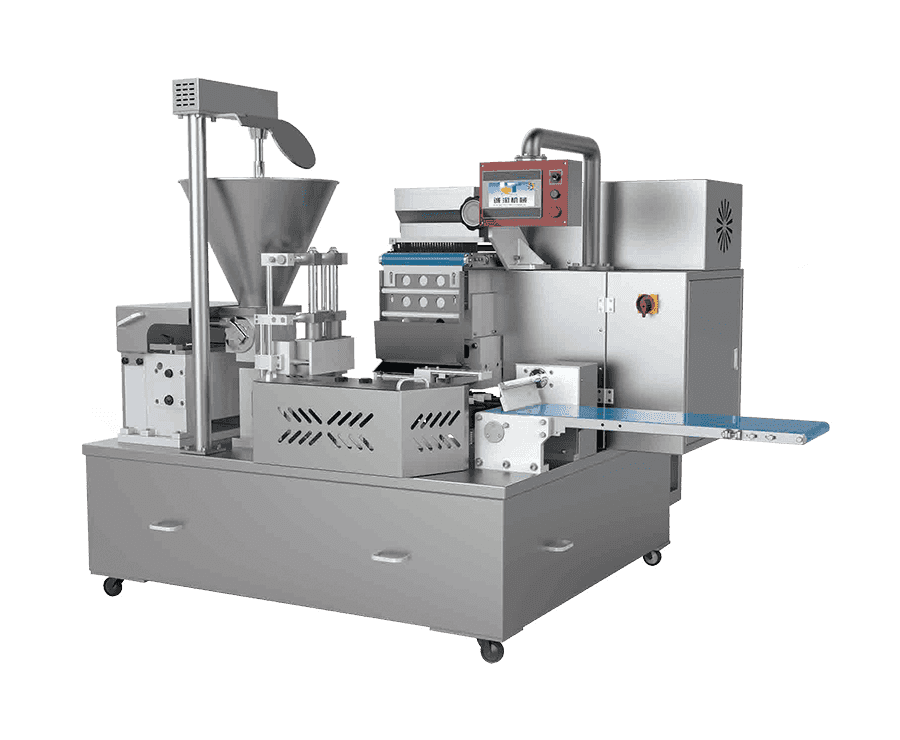
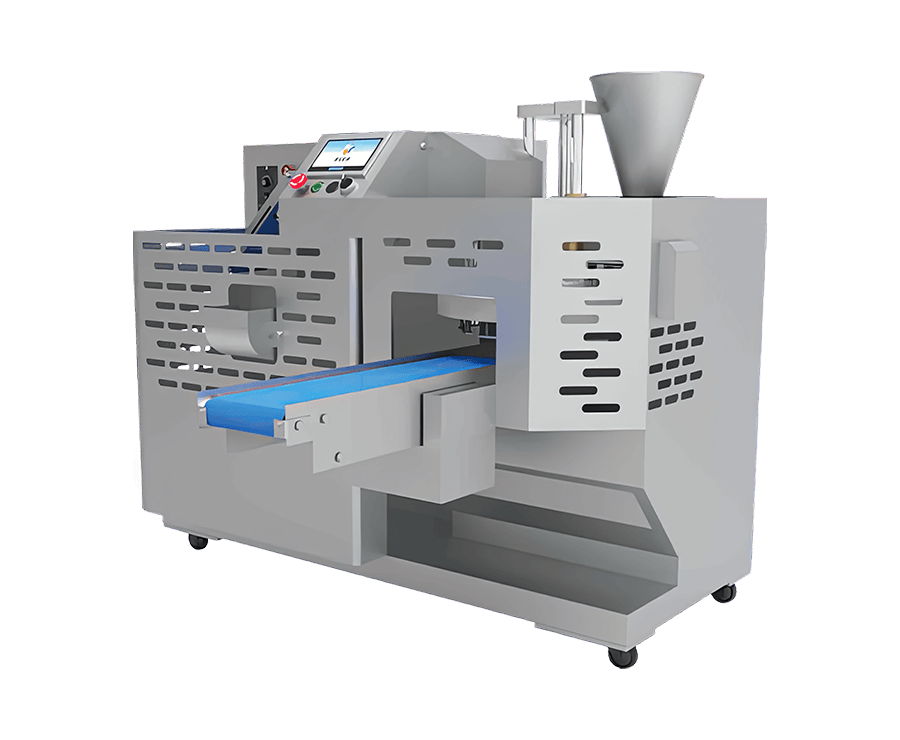
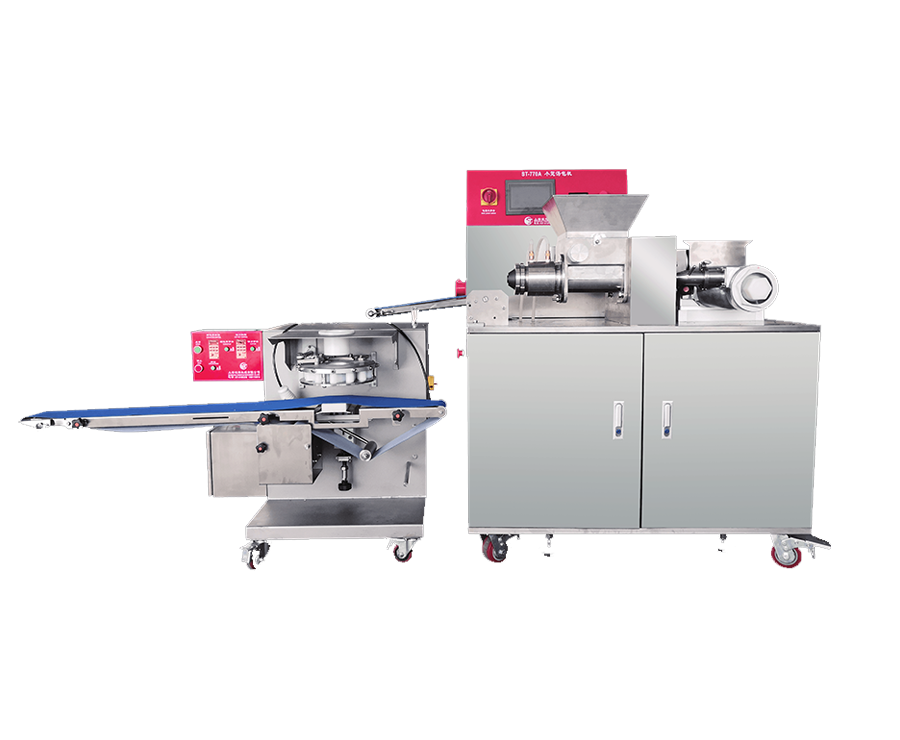
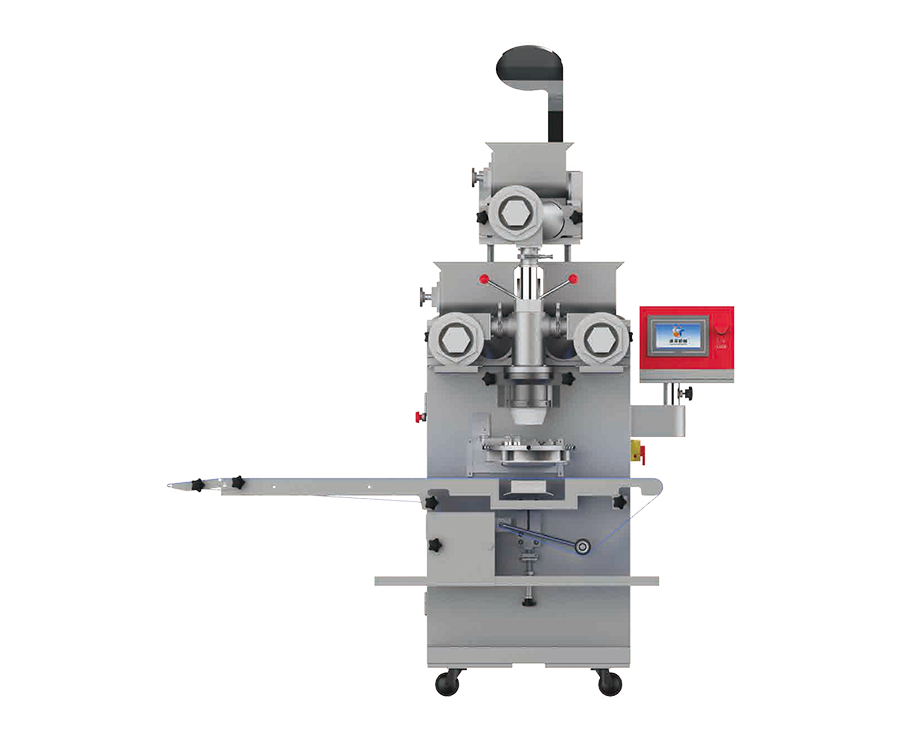
For bread and pastry lines that require forming into balls or long strips with adjustable parameters, the ST-868 automatic bread forming machine is designed around progressive dough thinning, automatic feeding, roller forming, and finishing knives—while allowing operators to adjust production speed and product specifications as demand changes.
Conclusion: A Practical Shortlist Standard for Automatic Bread Forming
A dependable automatic bread forming solution is the one that consistently meets your weight range, throughput, sanitation, and changeover targets with minimal operational complexity. In procurement, prioritize machines that demonstrate:
- Stable operating windows (validated with your dough) rather than relying on maximum nameplate speed.
- Predictable cleaning and reset so sanitation is controlled and repeatable.
- Practical adjustability for size/weight (and filling, if used) without excessive trial waste.
If your target products fall within a common commercial range—such as 15–150 g pieces and a capacity band up to 6000 pcs/hour—a forming system like the ST-868 can be a strong fit, especially when your line benefits from progressive dough handling and forming into balls or long strips.
Related Products
Copyright © Shanghai Chengtao Machinery Co., Ltd. All rights reserved.  Food Machinery Manufacturers
Contact Us