
 en
en English
 Español
 Français
 русский
 عربى
عربى
Food Forming Machine Guide: Specs, Hygiene, and Line Setup
Content
- 1 What a Food Forming Machine Should Deliver in Real Production
- 2 Key Specs to Compare When Shortlisting a Food Forming Machine
- 3 Consistency: Weight, Filling Ratio, and Sheet Thickness Control
- 4 Flexibility and Changeover: When “Multi-Purpose” Is Actually Useful
- 5 Hygiene and Food-Safe Engineering: What to Verify Before You Buy
- 6 Integration Checklist: Making the Food Forming Machine Fit Your Line
- 7 Validation and Supplier Due Diligence: Reducing Commissioning Risk
What a Food Forming Machine Should Deliver in Real Production
A food forming machine converts prepared dough, paste, or mixed fillings into repeatable shapes and weights at scale. In practice, buyers are not just purchasing “output”—they are purchasing repeatability, hygienic uptime, and fast changeover across SKUs.
In the forming category, common end products include dumplings/siomai/wontons, filled balls, encrusted bakery items, and sheet products (such as spring roll wrappers). If your product mix spans multiple shapes, start by reviewing a supplier’s forming portfolio rather than a single model; for example, our food forming machine range covers multiple forming principles (encrusting, dumpling forming, and sheet forming) to match different product structures.
A practical definition of “good forming”
- Target weight stays stable across a shift (not only at startup), especially for mixed fillings and sticky doughs.
- Shape integrity survives downstream handling (conveying, freezing, steaming, frying) with minimal deformation.
- Cleaning and re-assembly are predictable (quick disassembly, repeatable reset) so sanitation does not become the bottleneck.
Key Specs to Compare When Shortlisting a Food Forming Machine
Shortlisting becomes straightforward when you compare machines using the same operational metrics. Below is an example comparison using real parameters from several forming models.
| Model (Example) | Typical Product Type | Product Weight Range | Capacity | Notable Controls / Notes |
|---|---|---|---|---|
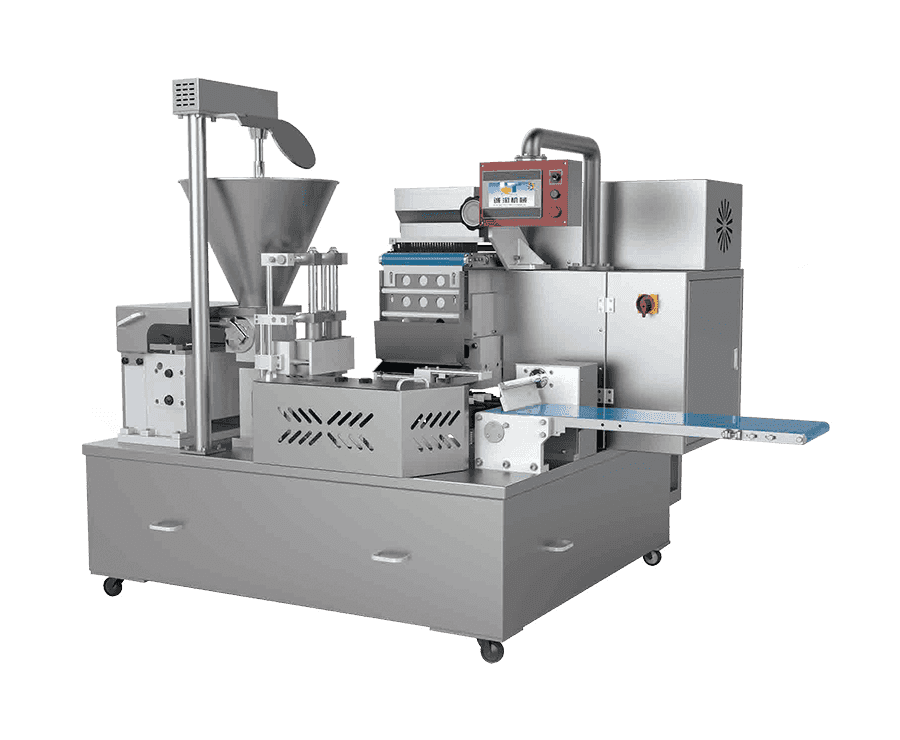
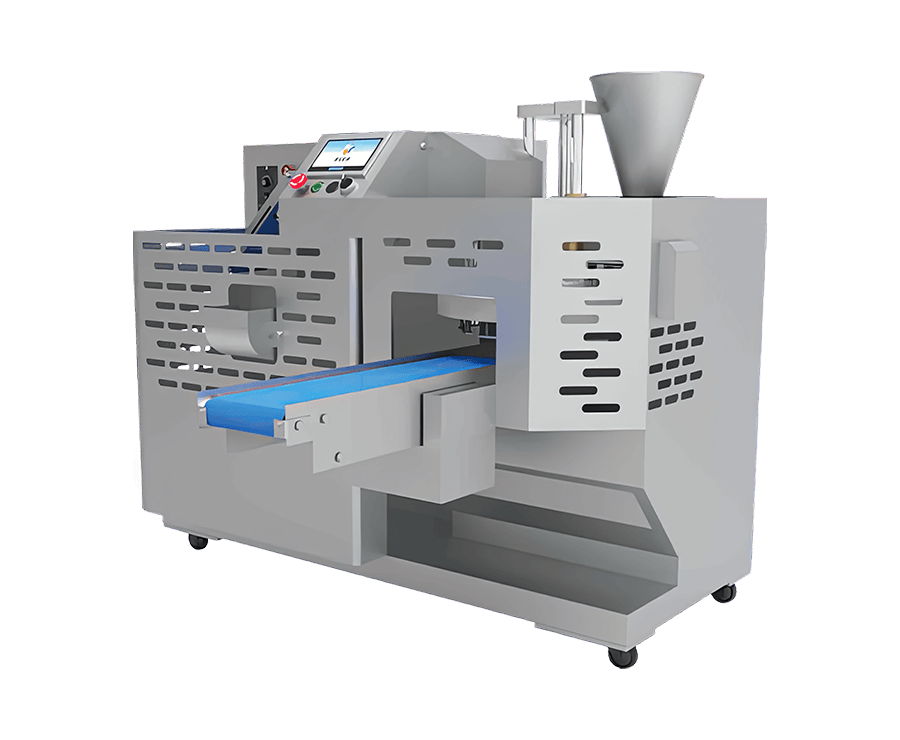
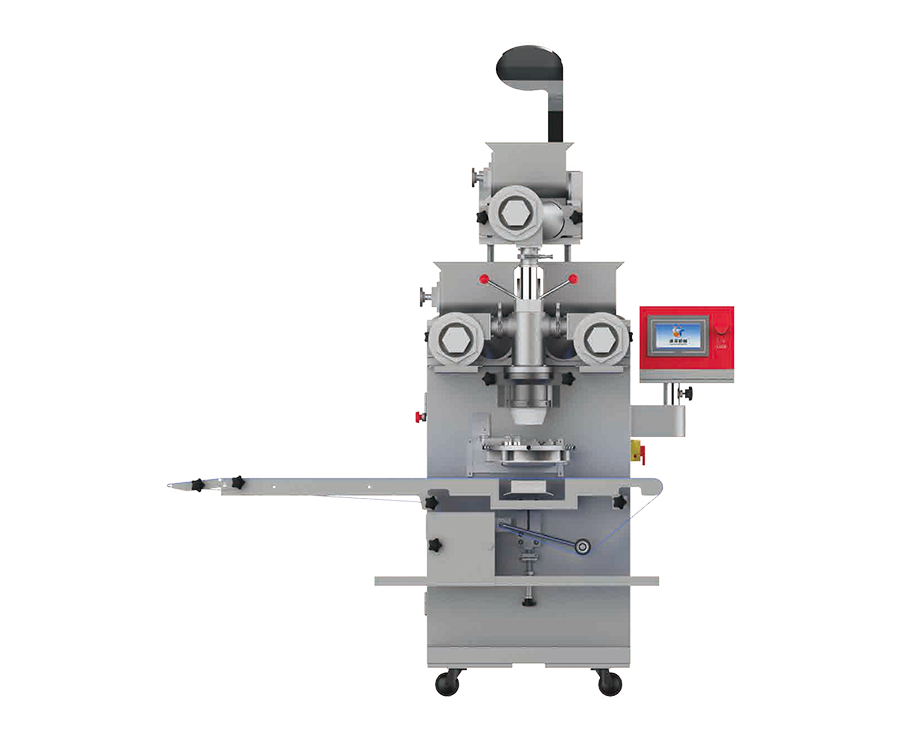
| ST-168 Series Automatic Encrusting Machine | Multi-purpose forming (balls/rods/strips) for bakery & filled items | 20–80 g | 80–100 pcs/min | Touch screen + PLC, stores 100 formulas |
| ST-001A Automatic Encrusting Forming Machine | Compact encrusting for sticky or thin-skin products | 10–150 g | 30–120 pcs/min | 304 stainless construction, compact footprint |
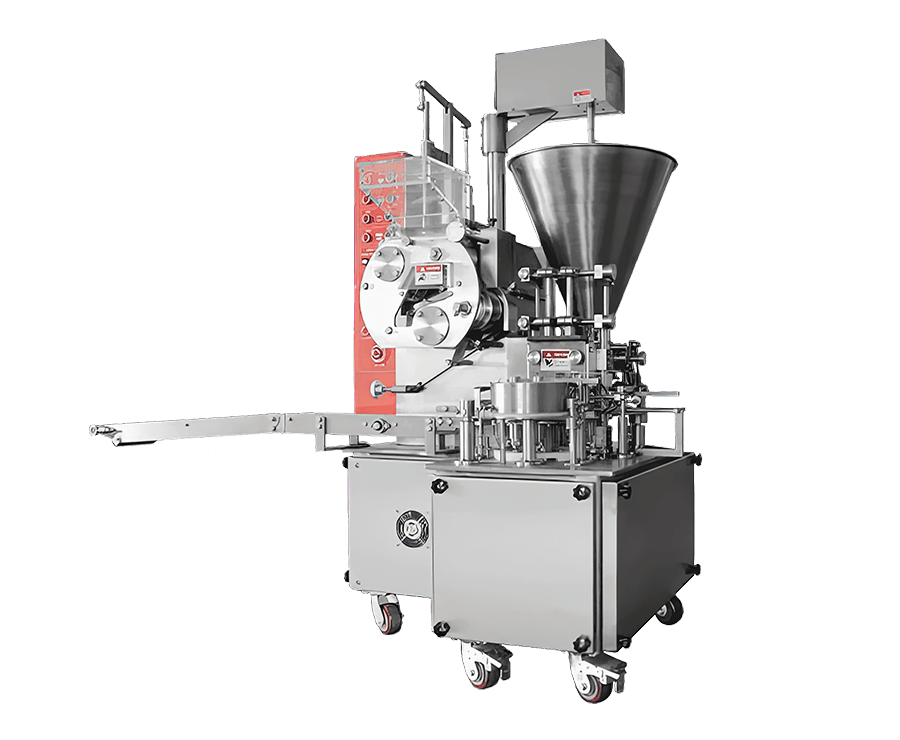
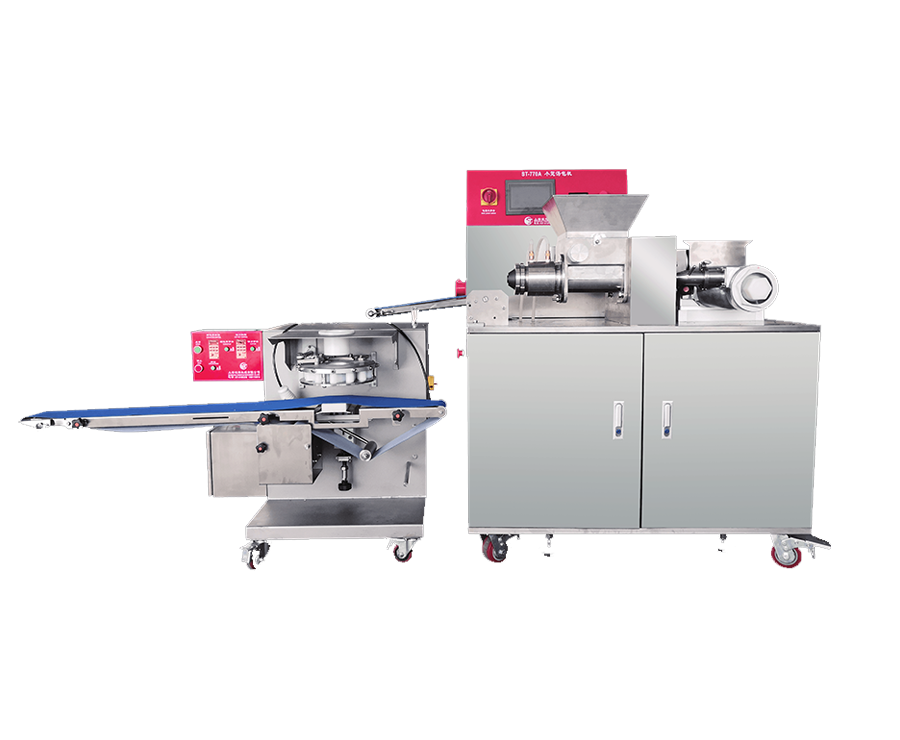
| ST-770 Automatic Dumpling/Soup Dumpling Machine | Dumplings & soup dumplings (mold-based shapes) | 15–60 g | Dumplings: 4000–8000 pcs/h Soup: 4000–6000 pcs/h |
Cool water recycling; automatic oil filling; 304 stainless |
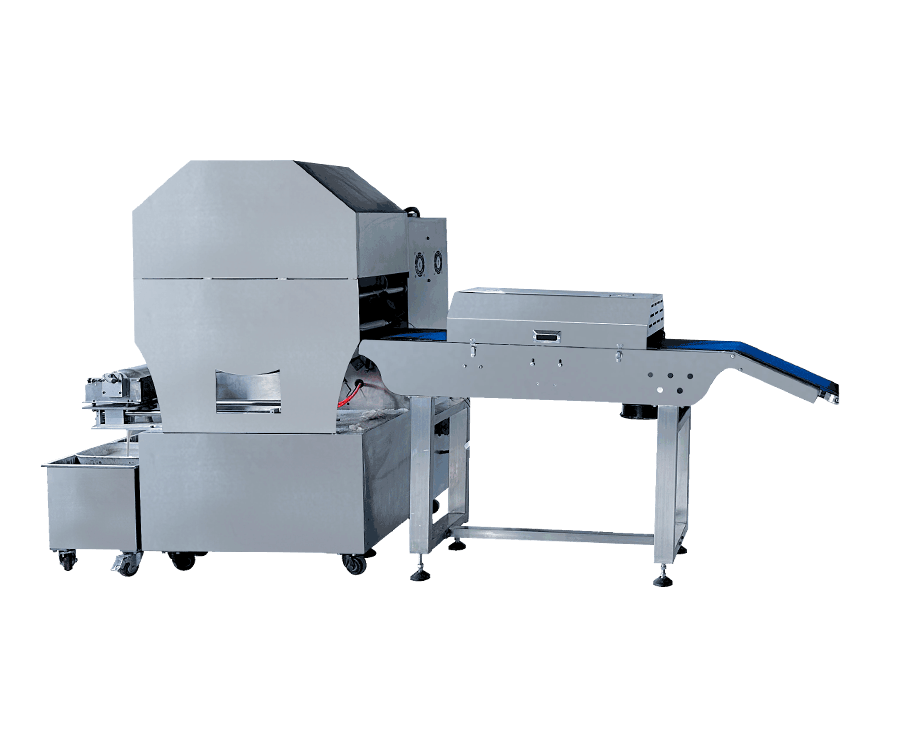
| ST-610 Automatic Spring Roll Sheet Machine | Sheet forming (spring roll wrappers and similar flakes) | Thickness: 0.28–0.6 mm | 500–10,000 pcs/hour | Auto temperature control ±1℃; heat wire up to 480℃ |
How to use this table in procurement
- Lock the product weight range and shape requirements first; this determines whether you need encrusting, mold-based dumpling forming, or sheet forming.
- Size capacity to your real OEE assumptions (cleaning, changeover, upstream feeding), not only the nameplate rate.
- Confirm controls and repeatability features (recipe memory, PLC, stable feeding principle) to reduce reliance on “operator feel.”
Consistency: Weight, Filling Ratio, and Sheet Thickness Control
Most quality complaints in formed foods are traceable to one of three variables: under/over-weight pieces, unstable filling ratio, or thickness drift (especially in sheet products). A capable food forming machine manages these variables through stable feeding and controllable adjustments.
Filling and dough control for formed items
For dumplings and similar filled products, independent control of filling and pastry makes it easier to tune thickness and filling weight without creating secondary defects. For example, a high-speed dumpling/siomai/wonton machine can be designed for accurate quantitative output and convenient adjustment of pastry thickness and filling weight.
Thickness and temperature stability for sheets
Sheet forming is sensitive to temperature and viscosity. If you manufacture spring roll skins, focus on the machine’s temperature stability and thickness range. A sheet system with ±1℃ automatic temperature control and a thickness range of 0.28–0.6 mm is designed to reduce drift during long runs—especially when paired with practical cooling measures to avoid paste issues. If spring roll sheets are your primary SKU, review the spring roll wrapper machine specification and validate sheet width and downstream stacking requirements early.
Flexibility and Changeover: When “Multi-Purpose” Is Actually Useful
Flexibility matters only when it reduces your total cost of operation (fewer dedicated machines, fewer line stops, fewer tooling constraints). In our experience, the most practical flexibility features are recipe memory, fast mold changes, and a forming mechanism that can support multiple shapes without rebuilding the line.
- Recipe management: a PLC system that stores up to 100 formulas helps standardize settings across shifts and sites.
- Tooling strategy: self-replaceable molds support different shapes and specifications on one machine, reducing procurement and floor-space pressure.
- Forming modes: machines that support ball forming, rod forming, and continuous strip forming can cover a wider SKU mix without adding separate forming stations.
If your product roadmap includes both bakery-style encrusted items and savory filled items, it is worth reviewing a multi-purpose option such as the ST-168 series encrusting forming platform and matching its output range and capacity to your SKU plan.
Hygiene and Food-Safe Engineering: What to Verify Before You Buy
Food forming machines operate at the intersection of raw ingredients, temperature, and mechanical motion. That makes hygienic design non-negotiable, particularly for protein fillings and sticky doughs. In supplier evaluation, verify both materials and serviceability.
Material selection and washdown readiness
- Food-contact construction in 304 stainless steel supports sanitation and corrosion resistance in daily cleaning cycles.
- Design for disassembly: removable conveying and filling parts allow operators to wipe and clean thoroughly, then re-assemble with reliable reset.
Control components and reliability
Beyond stainless steel, reliability is strongly influenced by electrical component quality and control stability. Machines using PLC control, touch-screen HMI, and branded electrical components are typically easier to standardize, troubleshoot, and support globally.
Integration Checklist: Making the Food Forming Machine Fit Your Line
A food forming machine rarely operates alone. Most performance issues after installation come from upstream feeding instability (dough consistency, filling temperature) or downstream congestion (cooling, freezing, tray arranging, packaging). Use the checklist below during layout and FAT/SAT planning.
Pre-installation checklist
- Utilities: confirm voltage and power (e.g., 220V/3P options where applicable), and plan for stable temperature control if you are sheet-forming or handling heat-sensitive fillings.
- Space and access: verify machine dimensions and reserve access for sanitation, mold change, and maintenance (rear/side clearance is often underestimated).
- Product handling: define how formed items move next—belt transfer, tray placing, or direct cooking/freezing—to prevent deformation and bottlenecks.
- Changeover plan: document mold sets, cleaning steps, and target changeover time per SKU; recipe storage (where supported) should match your SOP.
If you are mapping multiple forming stations (dumplings plus encrusting plus sheets), start from the forming category and define interfaces across stations; this is where a supplier that supports multiple forming types under one roof—see forming equipment selection—can simplify layout decisions and spare parts planning.
Validation and Supplier Due Diligence: Reducing Commissioning Risk
To reduce commissioning risk, validate the forming machine using your real dough/filling and your real downstream constraints. The goal is to prove stable output at target parameters, not just to see the machine “run.”
What to ask for in a trial
- A short run to confirm start-up stability, followed by a longer run to confirm drift control and cleaning practicality.
- A changeover demonstration (mold swap + sanitation reset) to verify repeatability and operator workload.
- Evidence of production experience and export support; a manufacturer founded in 2010 with deliveries to 60+ countries and regions typically has more mature documentation and service workflows for international projects.
Conclusion: the “best” food forming machine is the one that meets your weight range, capacity, hygiene, and changeover targets with minimal operational complexity. If you are balancing multiple SKUs (dumplings, soup dumplings, encrusted items, or sheets), prioritize platforms with controllable settings, practical sanitation design, and proven throughput bands—then select the specific forming type that matches your product structure.
Related Products
Copyright © Shanghai Chengtao Machinery Co., Ltd. All rights reserved.  Food Machinery Manufacturers
Contact Us