
 en
en English
 Español
 Français
 русский
 عربى
عربى
Small Size Automatic Encrusting Forming Machine: Practical Guide
Content
- 1 What “Small Size” Should Mean for an Automatic Encrusting Forming Machine
- 2 Key Specifications That Actually Predict Performance
- 3 ST-001 vs. ST-001A: A Practical Comparison for Small-Space Production
- 4 Product Fit: Sticky Dough, Thin Skin, and Juicy Fillings
- 5 Hygiene, Reliability, and Daily Maintenance in Small Facilities
- 6 Capacity Planning and Energy Use: Simple Calculations You Can Apply
- 7 How to Specify the Right Configuration (and Avoid Costly Mismatches)
What “Small Size” Should Mean for an Automatic Encrusting Forming Machine
When buyers search for an automatic encrusting forming machine (small size), they usually need more than “compact.” In real production, “small size” should translate into three measurable advantages: a manageable footprint, utilities that fit standard workshops, and fast changeover for frequent SKUs.
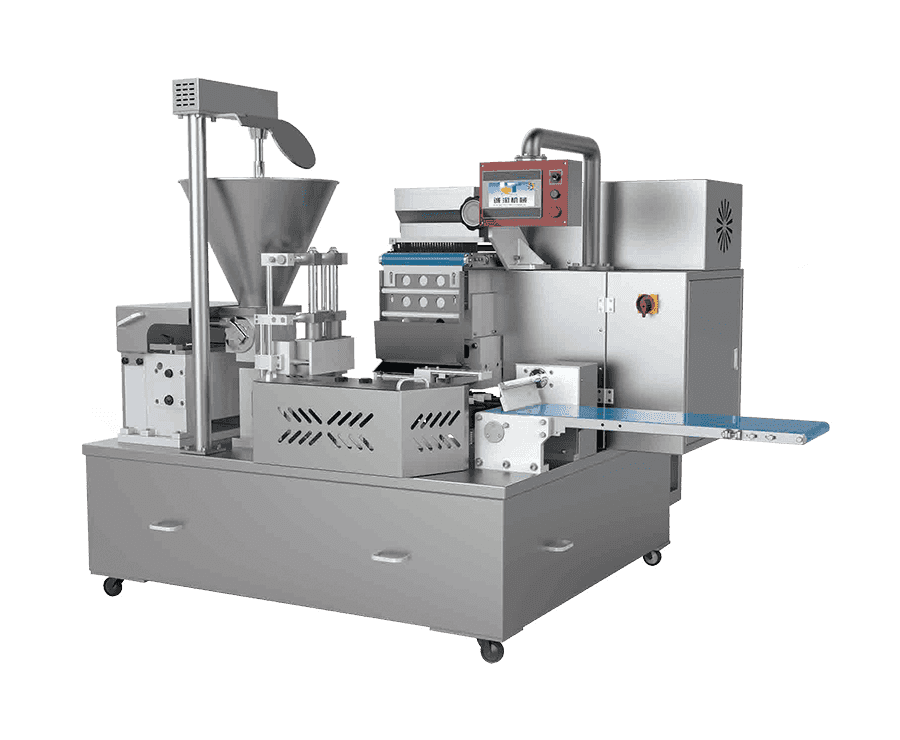
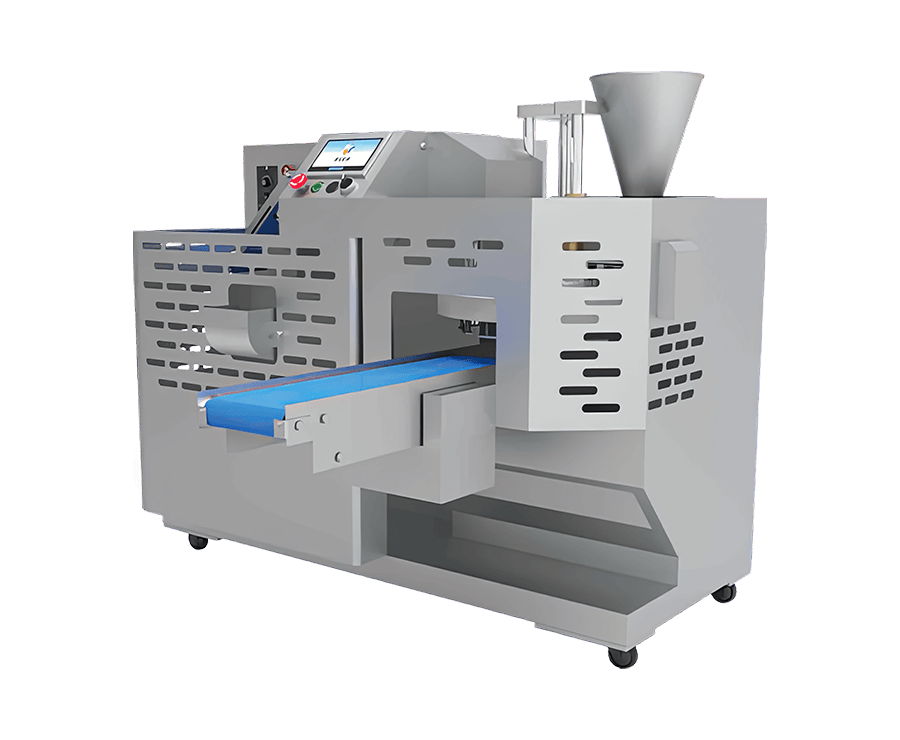
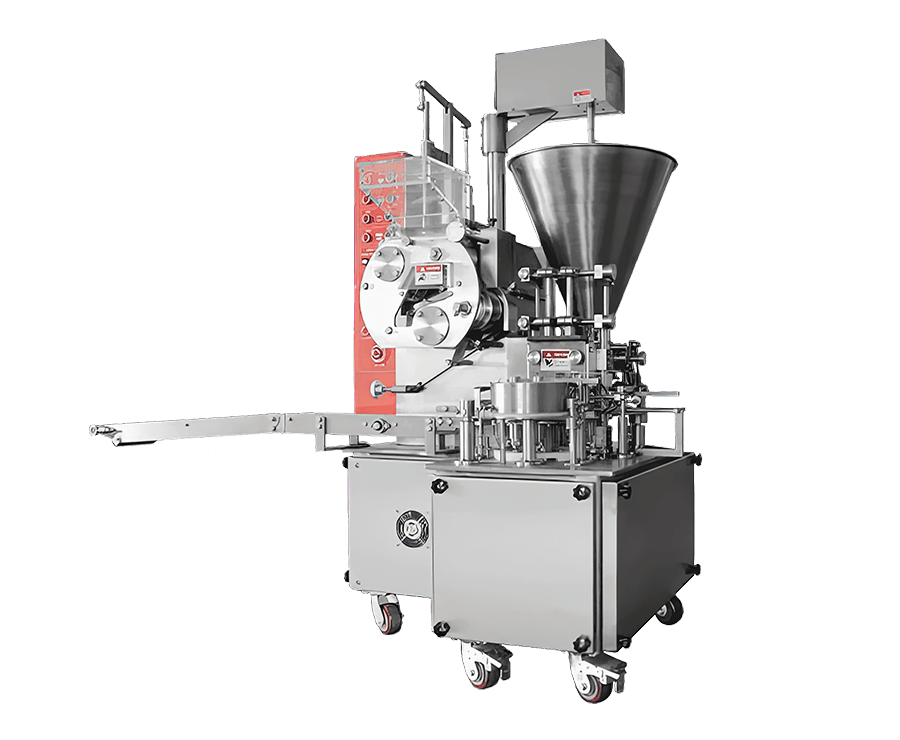
For example, the ST-001/ST-001A class equipment is designed for limited floor space while maintaining industrial output. The footprint is approximately ~1.5 m² (based on 1.68 m × 0.89–0.91 m), which is often compatible with small kitchens, central kitchens, bakery backrooms, and pilot lines.
- Footprint and access: allow clearance for hopper loading, cleaning access, and product discharge.
- Utilities: confirm the machine matches your plant voltage/frequency and power capacity (e.g., standard 220V, 50/60Hz and ~1.2–1.3 kW).
- Output stability: “small size” should not sacrifice consistent forming, especially for sticky dough or thin-skin products.
Key Specifications That Actually Predict Performance
A compact automatic encrusting forming machine is typically chosen to produce filled products with repeatable weight and shape. To evaluate fit, focus on specs that directly affect throughput, portion control, and product quality.
Throughput and product weight range
Capacity (pcs/min) should be reviewed together with the target piece weight. As a practical rule, higher speed is only valuable if the product remains stable (no cracking, leakage, or deformation).
Control of thickness and cutting size
For encrusted foods, stable shell thickness and consistent cut length/size help reduce giveaway and rework. Machines that allow operators to adjust quantification, thickness, and cutting size help teams tune for different recipes and seasonal ingredients.
Material and hygiene design
Food-contact material selection matters in daily sanitation. A 304 stainless-steel build and a structure that supports disassembly/cleaning can reduce downtime and support food hygiene programs.
If you want a concrete reference point, review the published specifications and features on the ST-001/ST-001A small size automatic encrusting forming machine page to benchmark output range, piece weight range, and power requirements.
ST-001 vs. ST-001A: A Practical Comparison for Small-Space Production
The most efficient purchase decisions come from matching a machine’s rated range to your real operating target. Below is a clear comparison of two common configurations used for compact encrusting/forming applications.
| Item | ST-001 | ST-001A |
|---|---|---|
| Product weight range | 10–100 g | 10–150 g |
| Capacity | 30–80 pcs/min | 30–120 pcs/min |
| Machine dimensions | 168 × 89 × 192 cm | 1680 × 910 × 1480 mm |
| Power | 1.2 kW, 220V, 50/60Hz | 1.3 kW, 220V, 50/60Hz |
| Machine weight | 180 kg | 250 kg |
To translate capacity into planning numbers, 80 pcs/min equals 4,800 pcs/hour, while 120 pcs/min equals 7,200 pcs/hour (before changeover, sanitation, and upstream/downstream constraints). This makes the ST-001A a logical choice when you need higher throughput or heavier pieces up to 150 g, while the ST-001 can be an efficient match for lighter products and moderate output targets.
Product Fit: Sticky Dough, Thin Skin, and Juicy Fillings
A compact automatic encrusting forming machine should be evaluated on its ability to handle “difficult” textures—not only standard dough. In many factories, the highest scrap rates occur when recipes vary in moisture, fat content, or particle size.
Dough and shell behavior
If you produce sticky products or thin-skin items, stable feeding and forming are essential to prevent tearing and sticking. Designs using synchronized quantitative feeding control can improve repeatability when the dough rheology changes between batches.
Shape flexibility without adding new machines
For small-space operations, it is typically more economical to change tooling than to add equipment. A mold/self-replacement approach supports multiple shapes and specifications on one machine, which can reduce procurement cost when your product mix expands.
If you are comparing multiple compact models, it can help to browse a broader set of forming equipment for context and line planning at the forming machine category and then shortlist the “small size” options based on piece weight range and target capacity.
- Typical validation test: run at least two dough moisture levels and two filling viscosities to verify shell integrity.
- Check leakage risk: thin skin + juicy filling requires consistent thickness control and clean cutting.
- Confirm weight range: if you plan to introduce a heavier SKU later, select a model with headroom rather than operating at the limit.
Hygiene, Reliability, and Daily Maintenance in Small Facilities
In compact plants, the cost of ownership is often driven by sanitation time and unplanned stoppages. A small size automatic encrusting forming machine should therefore be assessed as a “daily-use system,” not just a forming unit.
Food-contact materials and cleanability
Stainless steel 304 construction supports routine washdown and food safety expectations. Practical details—ease of disassembly, cleaning access, and reassembly—directly affect changeover time when you run multiple fillings or allergen-containing SKUs.
Electrical component quality and stability
For automation equipment, component quality impacts long-term stability. Using recognized electrical brands (for example, Schneider components are referenced for the ST-001/ST-001A) helps reduce failures and supports consistent performance in continuous production.
- Establish a sanitation standard: define acceptable residue level for dough/filling contact points after cleaning.
- Track weight deviation: record first-piece and steady-state weights after cleaning and after mold changes.
- Keep critical spares: seals and wear parts should be stocked based on your weekly operating hours.
Capacity Planning and Energy Use: Simple Calculations You Can Apply
Buyers frequently overestimate output by multiplying “pcs/min × hours” without accounting for sanitation, upstream feeding, and downstream handling. Use the machine’s rated range as an upper bound, then apply conservative assumptions for a planning baseline.
Example: daily output baseline
If a line runs at 90 pcs/min for 6 effective hours (after breaks and cleaning), the day’s output is 32,400 pcs/day. This is often a realistic planning baseline for a compact line with frequent changeovers.
Example: energy estimation
Power rating is useful for estimating electricity consumption. A 1.3 kW machine running 8 hours consumes roughly 10.4 kWh (1.3 × 8), excluding auxiliary equipment. This helps small facilities confirm utilities capacity and operating cost.
A compact automatic encrusting forming machine delivers the best ROI when it reduces labor variability and rework while keeping changeover fast. In that context, “small size” is an advantage only when the machine remains stable at your target recipe and speed.
How to Specify the Right Configuration (and Avoid Costly Mismatches)
To purchase the right small size automatic encrusting forming machine, clarify your product boundaries first, then align the configuration (capacity, mold set, and control settings) to those boundaries.
- Target product: piece weight, diameter/length, shell-to-filling ratio, and allowable tolerance.
- Recipe constraints: stickiness, inclusions/particles, oil content, and temperature sensitivity.
- Changeover reality: how many SKUs per shift and how quickly you must switch molds and recipes.
- Line integration: upstream feeding consistency and downstream handling (tray arranging, cooking/freezing, packaging).
If your conclusion is that a compact, flexible system is the best fit, the ST-001/ST-001A platform is a solid reference because it combines small-space practicality with industrial parameters and multi-product capability. For technical discussion (mold selection, sample trials, and configuration), use the contact channel to align machine settings with your product and sanitation requirements.
The most reliable way to finalize selection is a structured test: run your dough and filling through the machine at two speeds and confirm shape stability, sealing integrity, and weight repeatability before you lock the specification.
Related Products
Copyright © Shanghai Chengtao Machinery Co., Ltd. All rights reserved.  Food Machinery Manufacturers
Contact Us