
 en
 English
 Español
 Français
 русский
 عربى

Commercial Bread Machine Guide: How to Choose Bakery Equipment That Fits
Content
If you have been searching for a commercial bread machine, you have probably noticed that the term covers two very different kinds of equipment. In a cafe it may mean a countertop bread maker with a bigger motor. In a bakery plant it means a group of machines that mix, divide, form, proof and bake at volume. Both carry the same label, and that is where much of the buying confusion starts.
We build food machinery for bakeries and frozen-food producers, and the pattern we see is steady: the right answer depends far less on the machine itself than on how much bread you make, in which shapes, and how often you change products. Here is how the stages fit together, and what is worth checking before you invest.
What a Commercial Bread Machine Can Mean
In small retail settings, a commercial bread machine is usually a single appliance: load the ingredients, choose a program, take out a loaf. Capacity is measured in one or two loaves per cycle, and batch dough weight often stays under a couple of kilograms. For display baking, small cafes and shops where fresh bread is part of the offer, that can work well. It is a poor fit for supplying other outlets, because one appliance cannot keep weight, crumb and crust stable across several hundred loaves a day.
In production settings the same phrase refers to equipment inside a bread line. A dough mixer develops the gluten, a divider and rounder control portion weight, a former shapes the pieces, a fermentation cabinet proofs them, and an oven bakes them. Every stage is adjustable, which is exactly what makes consistency possible.
A simple rule: if you bake mainly for your own counter and output is counted in dozens per day, a compact unit may be enough. If you sell wholesale, freeze part of your production, or need pieces that look and weigh the same at the start of a shift and at the end, staged equipment is the realistic route.
Why Bread Is Normally Made in Stages
Bread is a chain of variables rather than a single action. Dough temperature, gluten development, gentle degassing, proof timing and oven spring all influence the finished loaf. A one-button appliance hides those variables. Production equipment exposes them, so you can hold them steady.
| Stage | Typical equipment | What to keep an eye on |
|---|---|---|
| Mixing | Spiral or planetary dough mixer | Final dough temperature, batch size against bowl capacity |
| Dividing and rounding | Divider, ball rounding machine | Portion weight accuracy, gentle handling that protects gas |
| Forming | Bread former or moulder | Degassing, shape repeatability, changeover time |
| Proofing | Fermentation cabinet | Temperature and humidity stability, timing you can repeat |
| Baking | Deck, rotary or tunnel oven | Heat distribution, loading rhythm, energy per batch |
| Cooling and packing | Cooling conveyor, packaging equipment | Hygiene, crust stability, shelf life |
When one stage is weak, the others rarely compensate. An accurate former will not rescue dough that left the mixer too warm, and a good proofer will not fix pieces that were divided to wildly different weights.
Mixing Sets the Ceiling for Everything After It
If we had to name the stage where most bread problems begin, it would be mixing. Dough that leaves the mixer too warm keeps fermenting on its way to the former. Dough that is under-developed tears during dividing. Dough that is over-mixed turns sticky and refuses to hold its shape.
Spiral mixers suit most bread and bun doughs because they handle firm, low-hydration dough without overheating it. Planetary mixers are more flexible for softer doughs, batters and smaller batches. The decision usually comes down to batch size: a bowl that is too large for your typical batch will not develop the dough properly, and one that is too small quietly caps your daily output.
Worth confirming before you choose: the dough weight you run most often, how you control dough temperature, and how easily the bowl, agitator and guards come apart for cleaning.
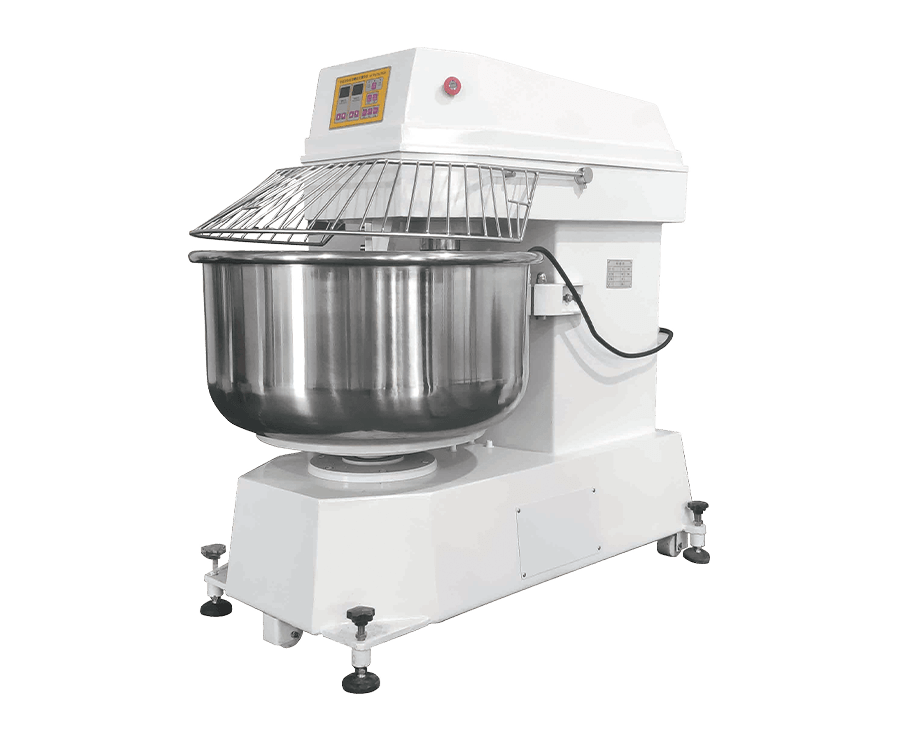 ST-210 Vertical Dough Mixer for Bakery Dough PreparationCheck the ST-210 for dough weights from 18 to 125 kg, stainless steel construction, and cleaning access before finalizing your mixing setup.View Product →
Proofing and Baking Decide How Even Your Bread Looks
Proofing is where bread becomes predictable, or does not. A fermentation cabinet holds temperature and humidity steady so pieces enter the oven at the same stage of development, batch after batch. Small humidity drifts show up later as dry skins, uneven rise or cracked tops.
Fixed tray loading patterns, a written proof schedule and regular cleaning around fans and covers all help air circulate evenly, which is often the difference between a good day and an inconsistent one.
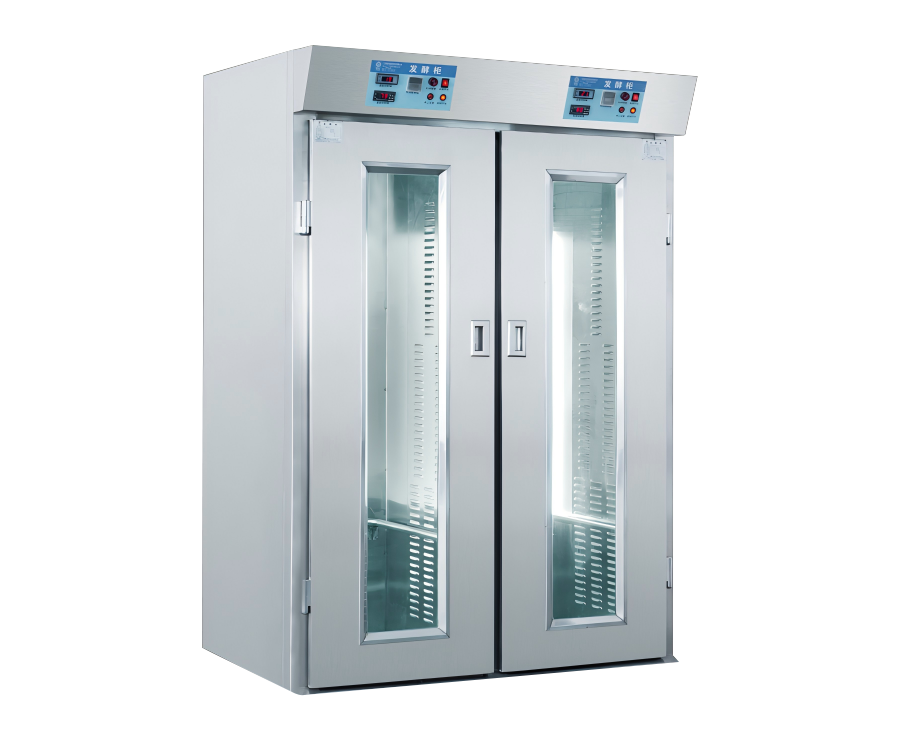 Customizable Fermentation Cabinet with PLC and Air CirculationCompare this fermentation cabinet if uniform temperature and humidity, PLC control, and accessible fan covers matter before dough goes to deck, rotary, or tunnel ovens.View Product →
For baking, deck ovens suit artisan loaves and small batches, rotary ovens handle larger tray volumes, and tunnel ovens make sense when one product runs continuously. Judge by your product range first and peak volume second, because a highly specialised oven is difficult to work around when that range changes.
Compact Setup or Full Bread Line?
When a compact setup is enough
- One or two products, sold mainly through your own shop
- Limited floor space and a straightforward power supply
- Manual handling that is still reliable and affordable
- Baking schedules you can move around customers instead of the other way round
When a full line starts to pay for itself
Wholesale accounts, frozen or par-baked products and several shapes in a single shift change the picture, because labour rather than equipment becomes the constraint. That is the point where connected machines, and the ability to add stages as demand grows, begin to make commercial sense. You can see the general shape of that approach in the bakery and frozen food lines we build.
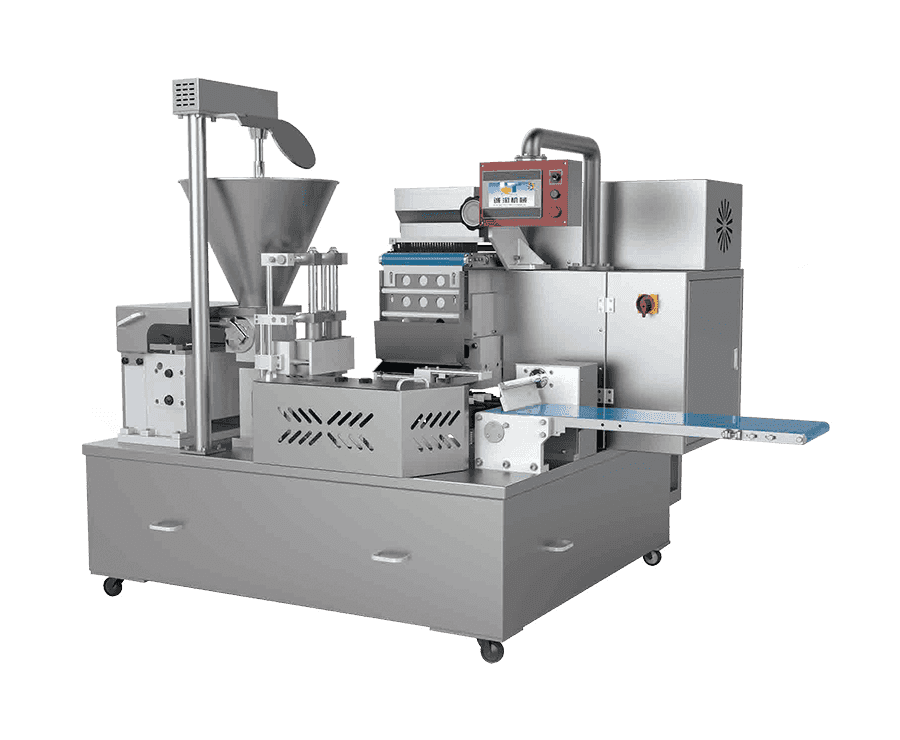
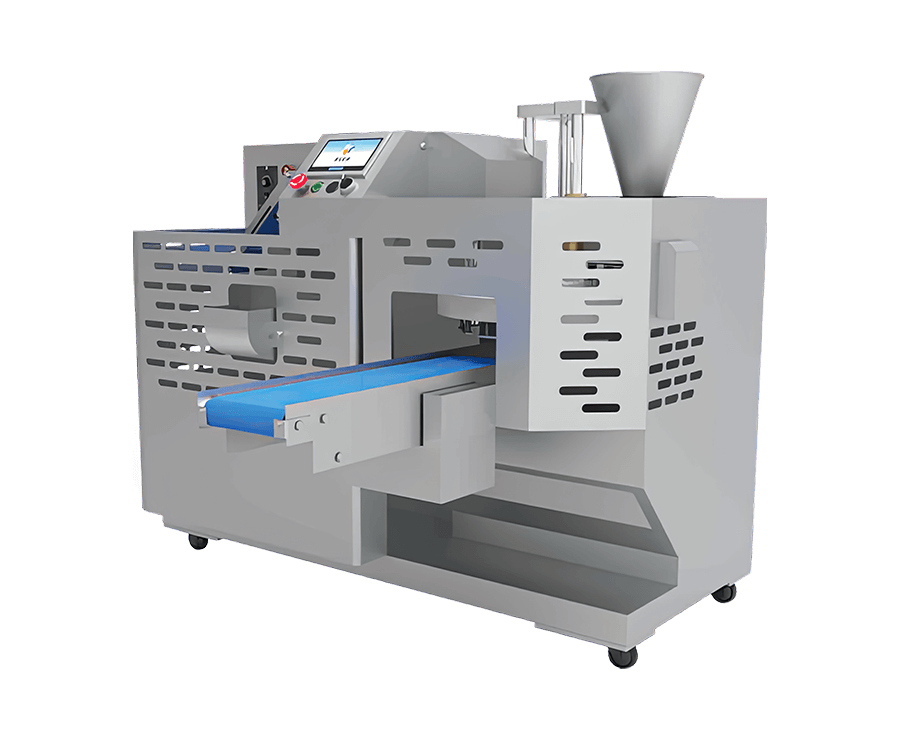
Most bakeries do not jump straight to a full line. They build modularly: mixer first, then a former such as an automatic bread forming machine, then a proofer, then an oven. Each step removes a manual bottleneck without locking the bakery into one fixed configuration.
A Practical Checklist Before You Buy
- Product range: list every bread type and dough hydration you expect to run over the next few years.
- Peak output: measure your busiest hour and week, not the average day.
- Changeover: count how often you switch shapes, and how long each switch takes.
- Hygiene: check how belts, covers and contact parts are cleaned, and whether they come off without tools.
- Utilities and layout: confirm power, steam and drainage, plus the space material flow needs, not just machine footprints.
- Support: ask about spare parts, operator training, remote help and who responds when a machine stops at six in the morning.
- Total cost: weigh equipment and maintenance against the labour hours the machine genuinely replaces.
How We Approach Bread Equipment
Chengtao has been manufacturing food machinery in Shanghai since 2010, with dedicated teams for machinery R&D, food R&D, small equipment, large equipment and packaging, alongside engineering design, manufacturing, installation and technical service.
For a bread project that means we start with your recipes, output and layout before recommending anything, and we customise machines to suit your product rather than asking your product to suit a catalogue. Our baking, frozen-food and agricultural processing equipment runs in China and in more than 60 export markets.
If you are still weighing a compact commercial bread machine against a staged line, that is a good conversation to have early, while your options are still open.
Related Products
Copyright © Shanghai Chengtao Machinery Co., Ltd. All rights reserved.  Food Machinery Manufacturers
Contact Us