
 en
en English
 Español
 Français
 русский
 عربى
عربى
Dumpling Production: Scaling Output with Consistent Forming & Hygiene
Content
- 1 Set Practical Targets for Dumpling Production Before You Scale
- 2 Control the Variables That Drive Yield: Dough, Filling, and Temperature
- 3 Choose Forming Technology That Matches Your Product Mix and Tolerance Needs
- 4 Plan Output Using Equipment Capacity, Not Assumptions
- 5 Hygiene, Materials, and Maintenance Design: Where Many Lines Fail
- 6 Where the ST-770 Fits in a Scalable Dumpling Production Line
- 7 Commissioning Checklist to Stabilize Dumpling Production in the First 30 Days
Set Practical Targets for Dumpling Production Before You Scale
In commercial dumpling production, scaling successfully is less about “making more” and more about keeping key quality metrics stable while output increases. The most reliable way to prevent waste, rework, and customer complaints is to define targets that can be measured on the line and audited during a factory acceptance test.
Quality metrics that correlate directly with profit
- Piece-weight tolerance (e.g., “target 30 g, keep the majority within a narrow band”) to control food cost and packaging compliance.
- Seal integrity and leakage rate (especially important for soup dumplings) to avoid steaming failures and frozen breakage.
- Wrapper thickness consistency to stabilize bite and reduce burst rates during cooking.
- Changeover time between SKUs (mold swaps, cleaning, re-setup) to protect effective hourly output.
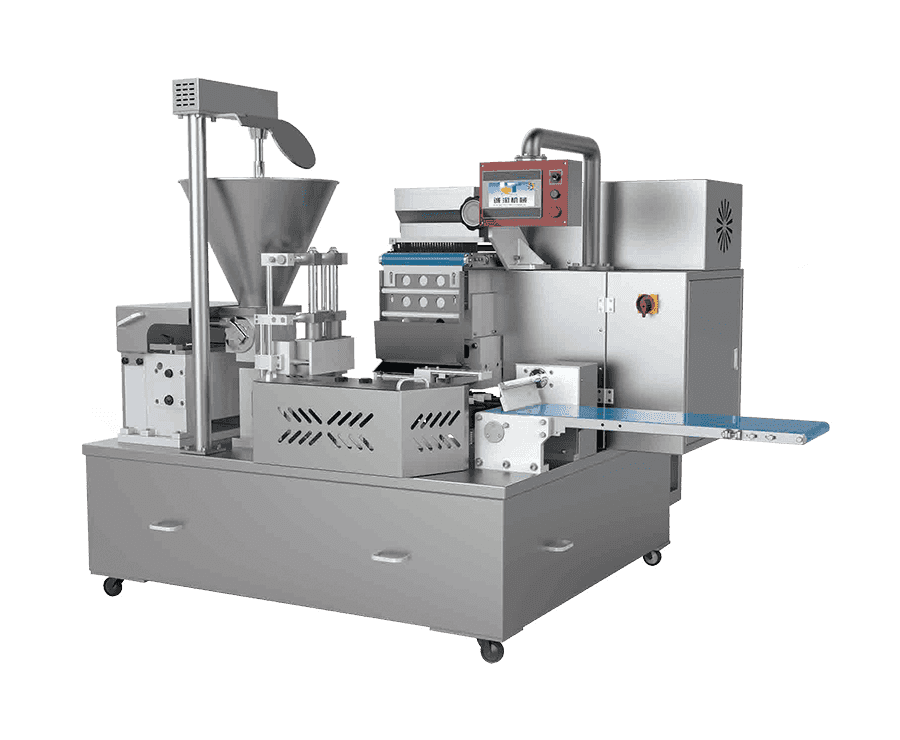
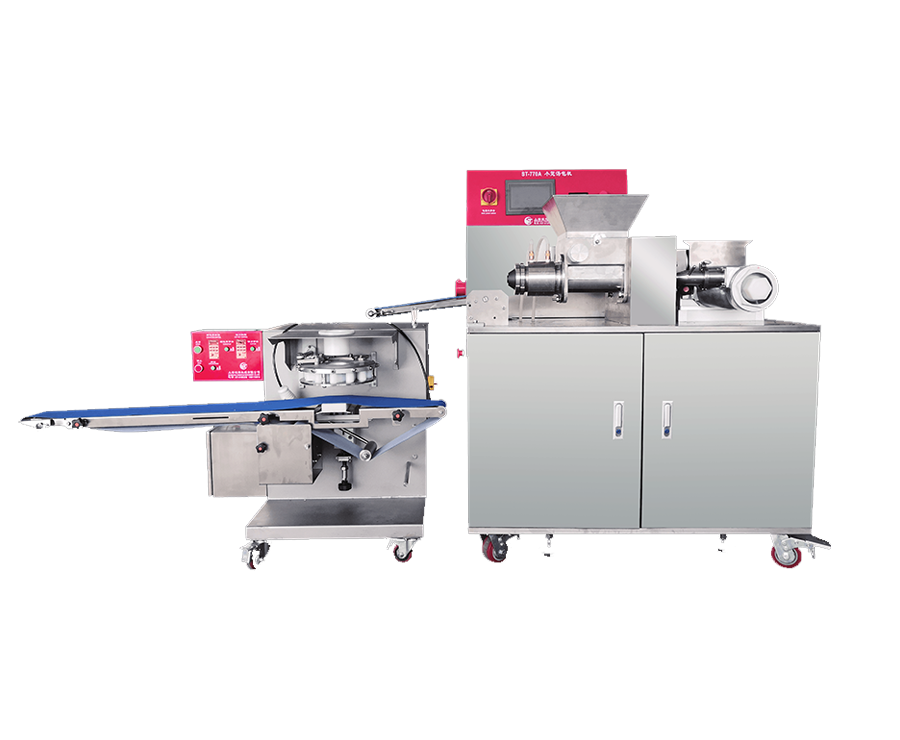
Once these targets are defined, you can map them to equipment capabilities. For example, if you run multiple shapes and sizes across a week, selecting a forming platform that supports mold changes can reduce capital duplication while keeping your SKU portfolio flexible. On multi-product lines, a forming machine designed for mold replacement—such as the ST-770 automatic dumpling/soup dumpling machine—is often a practical way to standardize dumpling production without committing to a separate machine per shape.
Control the Variables That Drive Yield: Dough, Filling, and Temperature
In dumpling production, most “mystery losses” come from a small set of controllable variables. When these are managed, scrap and downtime fall, and your line becomes predictable enough to plan labor, raw material delivery, and freezing capacity.
Dough handling that supports stable forming
- Maintain consistent dough hydration and rest time to avoid wrapper tearing or over-stretching during forming.
- Keep flour absorption stable by controlling room humidity and using a standardized mixing protocol (mix time, speed segments, and batch size).
- Feed dough at a stable temperature range to reduce thickness drift, especially if your output target is high.
Filling stability that prevents blockage and leakage
- Standardize grind size and particulate length (e.g., chive strands, cabbage cuts) so the filling deposits smoothly and seals cleanly.
- For soup dumplings, control gelatin set and temperature so the soup component stays stable during forming; the objective is to form without smearing or warming that reduces “soup retention.”
- Track filling temperature and hold time to reduce taste drift and microbiological risk on longer runs.
Where soup dumplings are involved, thermal management becomes a quality lever, not a convenience feature. A forming machine that uses a cooling strategy designed to protect taste—such as a cool-water recycling approach—helps reduce heat-related quality changes during extended dumpling production runs.
Choose Forming Technology That Matches Your Product Mix and Tolerance Needs
Not all automatic forming machines behave the same under real production conditions. The most important question is whether the forming principle can keep weight, thickness, and filling ratio stable as speed changes, operators change, and raw materials vary slightly across batches.
What to evaluate during a live trial
| Trial Item | What to Measure | Why It Matters |
|---|---|---|
| Weight repeatability | Weigh samples across speed changes and after warm-up | Controls food cost and pack-weight compliance |
| Seal quality | Burst/leak rate after steaming and after freezing | Protects yield and customer experience |
| Changeover stability | Time to swap molds and re-achieve spec | Determines effective output on multi-SKU schedules |
| Cleanability | Access to product-contact parts and corners | Shortens sanitation time and reduces contamination risk |
If you run both standard dumplings and soup dumplings, look for a forming approach designed for quantitative feeding and synchronized control. In practical terms, this reduces drift in filling ratio and supports consistent wrapper-to-filling balance across long production cycles—critical for dumpling production where customer expectations are sensory and immediate.
For buyers comparing multiple forming platforms, it can be useful to review a broader forming category to understand options and integration points. See the forming machine lineup to evaluate how a dumpling former fits with other shaping and forming equipment on your site layout.
Plan Output Using Equipment Capacity, Not Assumptions
Effective hourly output is always lower than nameplate capacity because of changeovers, cleaning, micro-stoppages, and upstream constraints (mixing, cutting, filling prep). A reliable planning method is to convert capacity into a conservative “scheduled throughput” using an efficiency factor.
A simple capacity planning model
- Start with machine capacity (pcs/hour) for your exact product type.
- Apply an efficiency factor for your operating reality (many plants begin with 70–85% until the team stabilizes).
- Confirm upstream and downstream constraints (mixing batches, filling prep, tray loading, freezing, steaming, packaging).
- Stress-test changeovers: the more SKUs you run per shift, the more changeover minutes dominate.
As an example of how to interpret capacity ranges in real dumpling production planning: a forming machine rated at 4,000–8,000 pcs/h for dumplings and 4,000–6,000 pcs/h for soup dumplings can be scheduled more conservatively by applying your site’s efficiency factor and sanitation schedule. This approach avoids over-promising to sales or under-sizing downstream processes like freezing and packing.
Hygiene, Materials, and Maintenance Design: Where Many Lines Fail
When dumpling production scales, sanitation time and maintenance access become core drivers of uptime. Buyers often focus on output first; however, the operational cost of poor cleanability typically shows up within weeks as longer washdowns, more residue-related defects, and increased mechanical wear.
Design elements that reduce downtime and risk
- Food-contact materials that resist corrosion and simplify cleaning (stainless steel is typically preferred for long-term hygiene performance).
- Accessible product-contact parts to minimize “blind corners” where filling can accumulate.
- Stable control of forming and feeding to reduce mechanical stress and keep product structure consistent over long runs.
- Lubrication strategy that supports service life and reduces unplanned stoppages.
In practice, prioritizing hygienic construction and controllability supports both food safety and consistent sensory quality. For example, a forming machine built with 304 stainless steel and designed for easier cleaning can reduce sanitation labor and shorten the time needed to return to specification after a washdown.
Upstream preparation also affects hygiene and stability. If you are optimizing the full dumpling production workflow (mixing, cutting, grinding), reviewing compatible prep equipment can help you standardize batch-to-batch inputs; see preparation equipment options as a reference for line balancing and sanitation planning.
Where the ST-770 Fits in a Scalable Dumpling Production Line
A common scaling path is to automate the forming step first, then systematically remove bottlenecks upstream (dough and filling preparation) and downstream (steaming/freezing/packing). In that context, a dumpling former should be evaluated not only for output, but for how smoothly it integrates into your space, utilities, and sanitation routine.
Specifications that are relevant to site planning
- Product range: 15–60 g piece weight supports common commercial SKU sizes.
- Footprint and handling: machine dimensions and weight should be checked against aisle width, drainage points, and cleaning access.
- Utilities: confirm voltage and power draw to avoid last-minute electrical changes during installation.
- Operational flexibility: mold replacement supports multiple shapes and helps reduce procurement costs for multi-SKU operations.
The ST-770 is positioned as a multifunctional dumpling and soup dumpling forming platform, with operator-adjustable settings (speed and related forming parameters) and a cooling approach intended to reduce taste impact during production. For plants scaling dumpling production, these characteristics can be useful when you need consistent output across longer shifts and frequent product switches.
If you want to validate fit for your specific dough and filling, the most productive next step is a targeted trial using your own recipe and a short SKU changeover test. Product details and baseline parameters are available on the ST-770 product page, which can also be used as a checklist for quotation alignment.
Commissioning Checklist to Stabilize Dumpling Production in the First 30 Days
Even strong equipment underperforms if commissioning is rushed. A structured start-up process can stabilize output quickly and reduce operator dependence.
Commissioning actions that pay back immediately
- Lock a standard recipe sheet (dough hydration, rest time, filling particle size, filling temperature) and train to it.
- Create “golden samples” for each SKU (target weight, wrapper thickness feel, seal appearance) to reduce subjective judgments.
- Document changeover steps with photos, including mold swap sequence and sanitation points.
- Set a preventive maintenance cadence (cleaning access points, lubrication checks, fastener inspection) and keep spares on-site for wear components.
- Track three numbers daily: planned output vs. actual, top three stop reasons, and defect/scrap categories.
A well-run commissioning cycle typically produces a measurable outcome: stable quality at your scheduled throughput and a clear list of the remaining line constraints (prep, tray loading, steaming/freezing, or packing). This creates a rational roadmap for the next investment step—rather than reacting to daily bottlenecks.
Related Products
Copyright © Shanghai Chengtao Machinery Co., Ltd. All rights reserved.  Food Machinery Manufacturers
Contact Us