
 en
en English
 Español
 Français
 русский
 عربى
عربى
Industrial Dumpling Machine — Buying, Specs & Operation Guide
Content
- 1
- 2 Overview: What an Industrial Dumpling Machine Does
- 3 Key Specifications to Compare
- 4 Selecting the Right Machine for Your Product
- 5 Factory Layout and Integration Considerations
- 6 Hygiene, Materials & Regulatory Compliance
- 7 Operation & Maintenance: Practical Procedures
- 8 Common Production Defects and Troubleshooting
- 9 Cost, ROI & Lifecycle Considerations
- 10 Final Recommendations & Procurement Tips
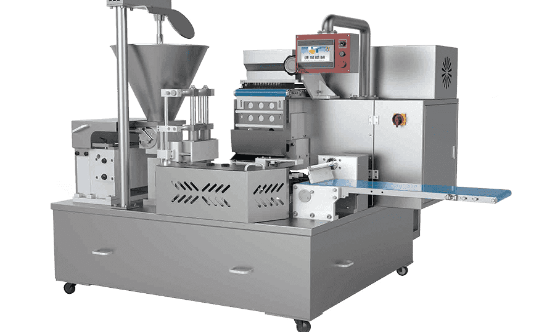
Overview: What an Industrial Dumpling Machine Does
An industrial dumpling machine automates forming, filling, sealing, and sometimes cooking dumplings at high throughput for commercial production. Machines range from semi-automatic tabletop units producing hundreds per hour to fully automated multi-head lines producing tens of thousands per hour. Understanding throughput, product format, and hygiene requirements is essential before specification or purchase.
Key Specifications to Compare
When evaluating machines, focus on technical specifications that directly affect product quality and operational cost: capacity (pieces/min), filling accuracy, dough thickness control, sealing method, footprint, and material construction. Below is a compact comparison table of typical specification categories and what they mean in practice.
| Spec | Why it matters | Target values |
| Throughput (pcs/min) | Determines daily production and labor needs | 200–10,000+ |
| Filling Accuracy (g) | Affects weight compliance and waste | ±0.5–3 g |
| Material (contact parts) | Food safety and cleanability | 304 or 316 stainless steel |
Selecting the Right Machine for Your Product
Not all dumplings are the same: potstickers, gyoza, wontons, and bao-style doughs have different dough elasticity, filling types (liquid vs. chunky), and sealing profiles. Match machine capabilities to your product by verifying: dough preconditioning needs, maximum filling viscosity, and whether the machine supports pleating, press-seal, or twist-seal methods.
Checklist before purchase
- Define daily and peak throughput targets (pcs/day).
- Specify final product weight tolerance and portioning accuracy.
- Confirm compatibility with your filling types (meat, vegetable, liquid gravy).
- Decide required sealing style (crimp, pleat, or hermetic seal) and pleat count.
- Check CIP or easy-clean design for hygiene.
Factory Layout and Integration Considerations
Industrial dumpling equipment is rarely standalone; it typically integrates with dough sheeters, filling hoppers, cooling belts, and packaging lines. Plan the line flow to reduce manual handling: dough feed → encrusting/filling → forming → quality inspection → flash-freeze (if frozen product) → packaging. Reserve service clearance around machines for maintenance and CIP operations.
Space, utilities and support
- Floor footprint and operator access: include 0.5–1 m clearance on service sides.
- Electrical: three-phase power, voltage and breaker sizing per OEM data sheet.
- Compressed air: for pneumatic actuators—specify psi and quality (dry, oil-free).
- Drainage and washdown: floor drains and splash protection for CIP cycles.
Hygiene, Materials & Regulatory Compliance
Food-grade construction and sanitary design reduce contamination risk and simplify cleaning. Prioritize machines with minimal horizontal surfaces, welded seams, and quick-disconnect components. Ensure contact parts are 304 or 316 stainless steel and that lubricant points use food-grade lubricants. Validate suppliers can provide documentation for HACCP, ISO 22000 compatibility, and local regulatory certifications.
Operation & Maintenance: Practical Procedures
Consistent operation depends on routine checks, staff training, and planned maintenance. Implement daily, weekly, and monthly checklists that cover cleaning, calibration, wear part inspection, and software backups for PLC-controlled machines.
Sample maintenance schedule
- Daily: clean contact surfaces after shift; check seals and hopper cleanliness.
- Weekly: verify portioning accuracy and adjust dosing pumps or augers as needed.
- Monthly: inspect bearings, belts, and PLC error logs; replace worn cutters or pleating dies.
- Annually: full preventative maintenance with OEM parts, safety interlocks test, and calibration records.
Common Production Defects and Troubleshooting
Typical defects include underfilled or overfilled pockets, poor sealing, tearing of dough, and inconsistent pleats. Troubleshoot using a methodical approach: check material feed properties, adjust feed rates, inspect sealing temperature/pressure (if heated), and verify die alignment.
Quick troubleshooting matrix
| Issue | Likely cause | Action |
| Sealing fails | Incorrect dough moisture or wrong sealing pressure | Adjust dough formula; recalibrate pressure/temperature |
| Inconsistent weight | Worn dosing pump or clogged nozzle | Clean nozzles; replace pump components; recalibrate dosing |
Cost, ROI & Lifecycle Considerations
Calculate ROI by considering machine cost, installation, utilities, labor savings, waste reduction, and maintenance over expected lifetime (typically 7–12 years for robust equipment). Include downtime risk and spare-parts availability—local OEM support shortens recovery and increases effective uptime.
Final Recommendations & Procurement Tips
Request live demos with your exact dough and filling, insist on a FAT (Factory Acceptance Test) and SAT (Site Acceptance Test) with agreed acceptance criteria, and negotiate warranty terms that include critical wear parts. Consider modular systems if you expect product range changes — modular heads and interchangeable dies reduce future capital expense.
Takeaway checklist
- Match machine capacity to realistic demand, not peak-only estimates.
- Prioritize sanitary design and easy-clean features for compliance and uptime.
- Validate OEM support, spare parts lead times, and training packages.
- Run acceptance tests with your actual recipe and packaging format.
An informed purchase and disciplined operation plan will turn an industrial dumpling machine into a reliable, high-throughput asset. Use the checklists and tables above when specifying machines, planning your line, and training staff to keep quality consistent and costs predictable.
Related Products
Copyright © Shanghai Chengtao Machinery Co., Ltd. All rights reserved.  Food Machinery Manufacturers
Contact Us