
 en
en English
 Español
 Français
 русский
 عربى
عربى
Practical Guide: Pastry Making Machine Applications
Content
- 1
- 2 Overview — what "Pastry Making Machine" means in practice
- 3 Primary pastry applications and workflows
- 4 Selecting the right machine — decision criteria
- 5 Practical machine settings and recipe scaling
- 6 Throughput planning — examples and a compact spec table
- 7 Integration into a production line
- 8 Maintenance, cleaning and hygiene protocols
- 9 Troubleshooting common production issues
- 10 Cost of ownership and ROI — worked example
- 11 Pre-purchase checklist
- 12 Final recommendations
- 13 Quick reference — standard operating parameters summary
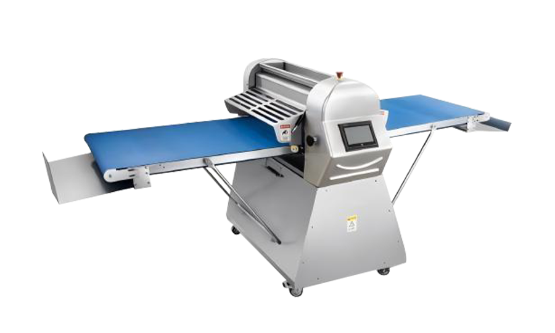
Overview — what "Pastry Making Machine" means in practice
A pastry making machine is any mechanized equipment used to automate one or more steps of pastry production: mixing, laminating, sheeting, portioning, depositing, forming, proofing and baking. This article focuses on practical applications — how to choose a machine for specific pastry types (croissants, danishes, tarts, choux), how to set operating parameters, integrate machines into small-batch and commercial lines, maintain hygiene, troubleshoot common faults, and calculate capacity and ROI with a worked example.
Primary pastry applications and workflows
Pastry machines are applied to distinct technical tasks. Match the machine to the workflow — mixing + resting, lamination, portioning, proofing, and baking. Below are common permutations and the precise value they add.
Dough mixing and resting (lean to high-fat doughs)
Application: consistent gluten development for baguette-like laminated bases and enriched doughs for brioche-based pastries. Key machine types: planetary mixers for small batches, spiral mixers for higher hydration, and programmable bowl mixers for timed rest cycles. Practical tip: use a programmable timer with staged speeds — low speed for initial 3–4 minutes, medium for development — followed by an automatic rest (autolyse) of 10–20 minutes for enriched doughs.
Lamination and sheeting (croissants, puff)
Application: even lamination and controlled butter layer distribution. Mechanical laminators with adjustable roller gap and reversing action reduce manual variance. Set roller gap in 0.1–0.5 mm increments depending on dough temperature and butter hardness; colder dough requires larger gaps to prevent tearing. Always cool the dough between folds to maintain butter integrity.
Portioning and forming (tarts, buns, choux)
Application: accurate portion sizes and repeatable shapes. Depositors and volumetric portioners give ±1–3% accuracy for batters and fillings. For choux, piston depositors with nozzle changeovers are essential to control ring height and oven spring. Use weigh checks every 30 minutes during production runs to verify calibration.
Selecting the right machine — decision criteria
Selection must be driven by pastry type, daily throughput target, available footprint, utilities (power, compressed air), and cleaning protocols. The decision should follow these steps: define product specs, calculate required hourly capacity, confirm machine capability for dough hydration/viscosity range, check sanitation features, and estimate total cost of ownership (purchase + consumables + maintenance).
Key technical specifications to compare
- Throughput (kg/hr or pieces/hr) — ensure peak demand < 80% of rated capacity to avoid stress.
- Cycle time and changeover time — shorter changeovers increase flexibility for multiple SKUs.
- Dough/ batter viscosity range — some machines specify 20–1500 Pa·s; confirm your recipes fall within that range.
- Sanitation features — CIP compatibility, quick-disconnects, and food-grade coatings.
- Spare parts availability and local service response time.
Practical machine settings and recipe scaling
Machines require recipe-specific parameters: bowl speed, knead time, sheeter roller gap, dough temperature control, proofing humidity and temperature, and bake profile. Always log and version-control parameters per SKU so production can be reproduced exactly.
Example parameters for laminated croissant dough (per 10 kg dough)
- Mix: slow 2 min + medium 6 min (target dough temp 24°C)
- Rest: 20 minutes refrigerated (4–6°C) between folds
- Sheeter: initial gap 2.5 mm, final roll to 0.8–1.2 mm depending on butter layer
- Proof: 30–50 minutes at 28–30°C with 75–85% RH
- Bake: 200–220°C deck or convection with steam first 3 minutes
Throughput planning — examples and a compact spec table
Below is a compact reference table to compare three hypothetical machine classes and their typical hourly outputs. Use it to map your daily production target to the machine class.
| Model / Class | Typical pieces/hr | Footprint (m²) | Power (kW) | Approx. CapEx (USD) |
| Bench/Small (tabletop depositor) | 500–1,200 | 0.8–1.5 | 0.5–1.5 | 3,000–12,000 |
| Mid-line (programmable depositor/sheeting) | 2,000–6,000 | 2–5 | 2–6 | 20,000–70,000 |
| High-capacity (continuous laminator + depositor) | 8,000–30,000+ | 8–25 | 10–40 | 80,000–400,000+ |
Integration into a production line
Practical integration covers layout, conveyors, timing buffers, and upstream/downstream synchronization. Key points: provide a 1.5–2.5 m operator access zone around machines, position proofers immediately after forming to minimize handling, and plan electrical/air services within 1–2 m of the machine base to reduce piping runs.
Material flow and traceability
Implement lot tracking at ingredient intake, then tie machine batches to finished-batch IDs. For automated lines, ensure the machine control system can export batch logs (mix times, temperatures, operator ID) for HACCP compliance.
Maintenance, cleaning and hygiene protocols
Hygiene is non-negotiable. Prefer stainless surfaces, rounded corners, and CIP-capable components. Establish daily, weekly, and monthly maintenance checklists and log them. Example: daily — remove product contact parts and sanitize; weekly — inspect belts and roller bearings; monthly — check motor brushes and gearbox oil level.
Troubleshooting common production issues
Below are high-frequency problems and specific corrective actions.
Uneven lamination or butter leakage
- Cause: dough too warm — action: reduce dough temp by 2–4°C and increase chill time between folds.
- Cause: roller gap incorrect — action: calibrate rollers and run test lamination at 0.2 mm increments.
Inconsistent portions/weights from depositor
- Cause: air in piston or hopper — action: purge air and reweigh a sample of 10 pieces to recalibrate.
- Cause: nozzle wear — action: replace nozzles after specified runtime or when deviation exceeds ±3%.
Cost of ownership and ROI — worked example
Estimate total annual benefits (labor + ingredient savings + incremental revenue). Use conservative values and compute payback and first-year ROI. Example scenario (rounded numbers):
- Machine purchase price (CapEx): $25,000.
- Annual labor savings: $6,000.
- Annual ingredient/overhead savings: $1,500.
- Additional annual revenue from expanded capacity: $8,000.
Annual benefit = 6,000 + 1,500 + 8,000 = $15,500. Payback period = 25,000 ÷ 15,500 ≈ 1.61 years. First-year ROI = (15,500 − 25,000) ÷ 25,000 = −0.38 (−38%) — note this shows negative ROI in year one because CapEx is front-loaded. From year two onward the annual net benefit is positive, giving cumulative ROI growth.
Pre-purchase checklist
- Define product SKUs and peak hourly demand (pieces/hr).
- Verify machine can handle your dough hydration and inclusions (nuts, fruit pieces).
- Confirm on-site utilities (voltage, phase, compressed air, water) and footprint clearance.
- Check spare parts lead times and local service network.
- Request a factory acceptance test (FAT) or on-site demo with your real recipe.
Final recommendations
Start with a clear mapping of product types to machine capabilities. For bakeries expanding SKUs, favor programmable mid-line equipment with modular attachments; for high-volume industrial lines, prioritize throughput, reliability and local service contracts. Always insist on recipe-based commissioning and a simple digital log of parameters so production quality is repeatable and auditable.
Quick reference — standard operating parameters summary
Keep a laminated recipe-and-parameter card beside each machine listing: mix times, target dough temperature, roller gaps, proof time & temperature, deposit size, and last calibration timestamp. This small ritual prevents costly variability and speeds troubleshooting.
Related Products
Copyright © Shanghai Chengtao Machinery Co., Ltd. All rights reserved.  Food Machinery Manufacturers
Contact Us