
 en
en English
 Español
 Français
 русский
 عربى
عربى
Scaling Isn't Adding Machines: Identify the True Bottleneck First
Content
A frozen dim sum factory added a second automatic forming machine to their gyoza line. Output the following week was almost identical to the week before. The machine was running. The operators were trained. Nothing was wrong with the equipment. The problem was that the dough preparation stage—a single mixer feeding both machines—could only produce enough dough for one machine running at full speed. The second machine sat at 40% utilization waiting for material that never came fast enough.
The factory spent the equivalent of six months' labor cost to solve a problem that didn't exist where they thought it did. This pattern repeats across food manufacturing more often than most production managers want to admit—and it happens because scaling decisions get made before the actual constraint is identified.
The Machine You Added Didn't Help. Here's Why.
The instinct to add equipment when output is insufficient is understandable. Machines are visible. Their specifications are measurable. A forming machine rated at 5,000 pieces per hour sounds like a straightforward solution to a 5,000-piece shortfall. But production systems don't work that way.
Every production line has a single slowest stage. That stage—and only that stage—determines the maximum output of the entire system. Every other stage, regardless of how fast it can run, is constrained by what the slowest stage can pass through. Adding capacity anywhere except at that specific point produces no increase in total throughput. It produces idle time, wasted capital, and the frustrating experience of a new machine that somehow didn't fix the problem.
In food manufacturing, this constraint can sit anywhere: in raw material preparation, in forming and shaping, in cooling or proofing, in portioning and tray arrangement, or in downstream packaging and labeling. Before any scaling investment makes sense, the constraint has to be located. Understanding how to match machine capacity to your actual production orders starts with this same premise: capacity numbers on a spec sheet are meaningless unless you know which stage they apply to relative to your line's slowest point.
What a Bottleneck Actually Means on a Food Line
A bottleneck is the stage in a production process with the lowest throughput rate. It sets the pace for every stage before and after it. Upstream stages accumulate work-in-progress waiting for it. Downstream stages run at below-capacity waiting for its output. The whole line moves at the speed of its slowest step.
In food production, bottlenecks tend to fall into four categories. Equipment bottlenecks occur when a machine physically cannot process material fast enough—its rated output is genuinely lower than what the line demands. Preparation bottlenecks occur when upstream processes (mixing, cutting, portioning ingredients) can't supply the forming or cooking stage at the required rate. Handling and transfer bottlenecks occur when the physical movement of product between stages—traying, cooling, conveying—creates delays that are invisible on any machine's utilization report. Quality-induced bottlenecks occur when a stage has adequate speed but inconsistent output forces rework or rejection, effectively reducing its net throughput.
The Theory of Constraints framework developed for production systems formalizes this logic: the constraint is the single resource that limits the system's overall output, and improving any non-constraint resource produces zero system-level benefit until the constraint itself is addressed. Identifying which of these four bottleneck types applies to your line determines whether the solution is a new machine, a process adjustment, a layout change, or something else entirely.
Five Signs You're Looking at the Wrong Constraint
Most production managers can feel a bottleneck before they can measure it. The following signals, when observed together, indicate that a constraint exists—and that it may not be where the initial diagnosis pointed.
Work-in-progress accumulates at one specific point. Material piling up before a station—trays stacking, dough resting, filling waiting—is the clearest visual indicator of where the constraint is. The pile grows at the constraint and is absent everywhere downstream of it.
Downstream equipment sits idle while upstream equipment runs. If your packaging line is waiting for product but your forming machine is running at full speed, the forming machine is not your bottleneck—something between forming and packaging is. If your forming machine is running at full speed but the dough feed is continuously empty, the constraint is upstream of forming.
Adding shifts increases input costs without proportionally increasing output. If a second shift produces 60% of what a first shift produces despite similar headcount and the same machines, a structural constraint is likely absorbing the additional capacity.
Your fastest machine has the longest queue. Counterintuitively, the machine with the most work waiting in front of it is often the constraint—not the machine that appears to be slowing everything down by running slower.
Output varies day to day without any obvious staffing or material reason. Inconsistent throughput often signals a quality-induced bottleneck: a stage that's producing at the right speed but generating enough rejects to unpredictably reduce net output.
A Simple Method to Map Your True Constraint
Sophisticated simulation tools exist for bottleneck analysis, but most food production environments don't need them. A straightforward stage-by-stage cycle time comparison will identify the constraint in most lines within a single production shift.
The method works as follows. For each stage in your production process, measure actual output per hour under normal operating conditions—not rated capacity, but what the stage actually produces in a representative hour. Record this number for every stage: dough mixing, filling preparation, forming, cooling or proofing, tray arrangement, packaging, labeling. The stage with the lowest number is your constraint. Every other stage is running with unused capacity relative to that limiting point.
The key word is "actual." Rated machine capacity is not actual throughput. Actual throughput includes changeover time, cleaning interruptions, minor stoppages, rework loops, and waiting time for material or operators. A machine rated at 4,000 pieces per hour that runs with 15 minutes of interruption per hour and produces 8% rejects has an actual net throughput of roughly 3,000 pieces per hour. That's the number that matters for bottleneck analysis.
Once you have the numbers for each stage, the comparison is immediate. If forming produces 4,200 net pieces per hour but dough mixing can only supply enough material for 2,800 pieces per hour, your forming machine is operating at 67% of its potential—not because anything is wrong with it, but because the upstream constraint is limiting it. Addressing layout tactics for fitting automation into compact production spaces often reveals this kind of imbalance: a second mixer placed closer to the forming line removes the transfer bottleneck that was masking as a capacity problem.
Where Bottlenecks Actually Hide in Food Production
Across food factories producing dumplings, encrusted pastries, spring rolls, steamed buns, and similar products, certain bottleneck locations appear with enough regularity to be worth checking first.
Dough and filling preparation is more often the true bottleneck than operators realize. A forming machine is the most visible piece of equipment on a line, so it draws attention. But a mixer with a 15-minute cycle time that produces a single 20kg batch can easily become the rate-limiting step for a forming machine capable of consuming material much faster. The mismatch often goes unnoticed because the forming machine is always "running"—it's just running on a diet.
Mold changeover time is a hidden throughput drain on multi-SKU lines. A forming machine switching between dumpling and wonton molds for two hours in an eight-hour shift is delivering four hours less of productive capacity than its rated specs suggest. This isn't a machine problem—it's a scheduling and setup problem, and it won't be solved by adding a second machine of the same type.
Cooling, proofing, and resting stages are frequently invisible bottlenecks. Products that require 20 minutes of rest after forming before they can be trayed for freezing are effectively creating a fixed inventory buffer that limits how fast the whole line can cycle. This constraint cannot be addressed with faster forming equipment. The fix is either more resting/cooling capacity, or a process change that reduces the required dwell time. Understanding the relationship between these stages is central to what drives output in frozen food lines—a topic covered in depth in the context of the frozen food efficiency triangle: throughput, hygiene, and stability.
Manual tray arrangement after automated forming is a surprisingly common bottleneck. A forming machine producing 5,000 pieces per hour feeding into two workers manually arranging product on trays can easily create a downstream queue—not because forming is too fast, but because the handoff between automated and manual stages was never designed to match speeds.
Matching the Fix to the Finding
Once the constraint is identified, the range of solutions broadens considerably. Not every bottleneck requires new capital equipment. Some of the most effective fixes cost almost nothing.
If the constraint is a preparation stage running at insufficient speed, the options include: a higher-capacity mixer or cutting machine, a second parallel preparation unit, or a pre-shift prep protocol that builds a buffer of prepared material before the line starts. The right choice depends on the magnitude of the gap and the cost of each option.
If the constraint is a quality-induced bottleneck—a stage producing adequate volume but too much rework—the fix is process calibration, not capacity addition. Adjusting filling ratios, dough hydration, or forming pressure to reduce the rejection rate may recover more net output than any new machine could add.
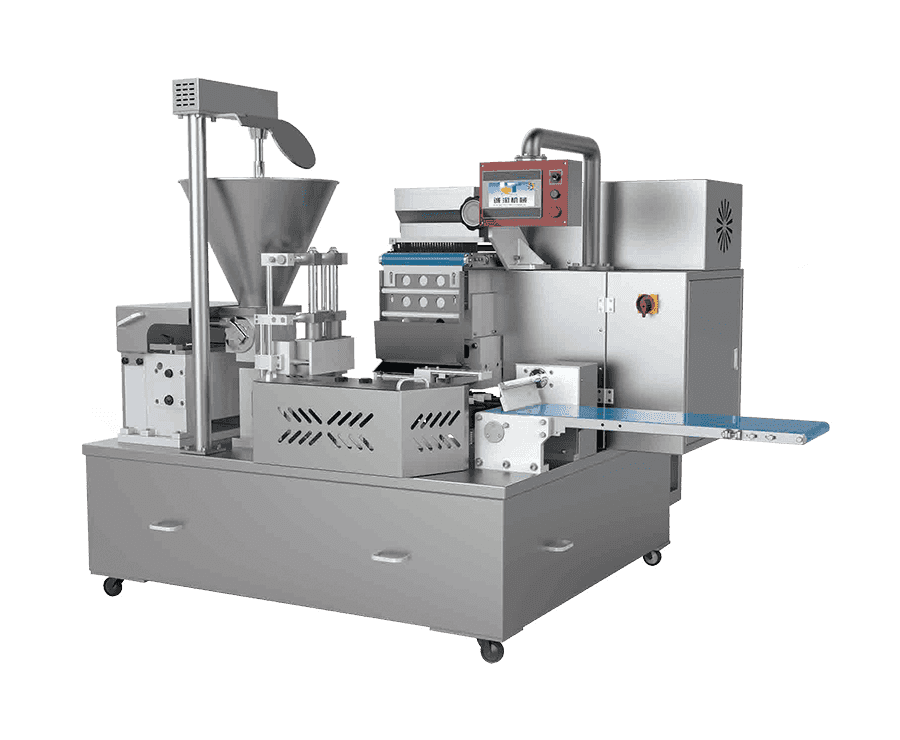
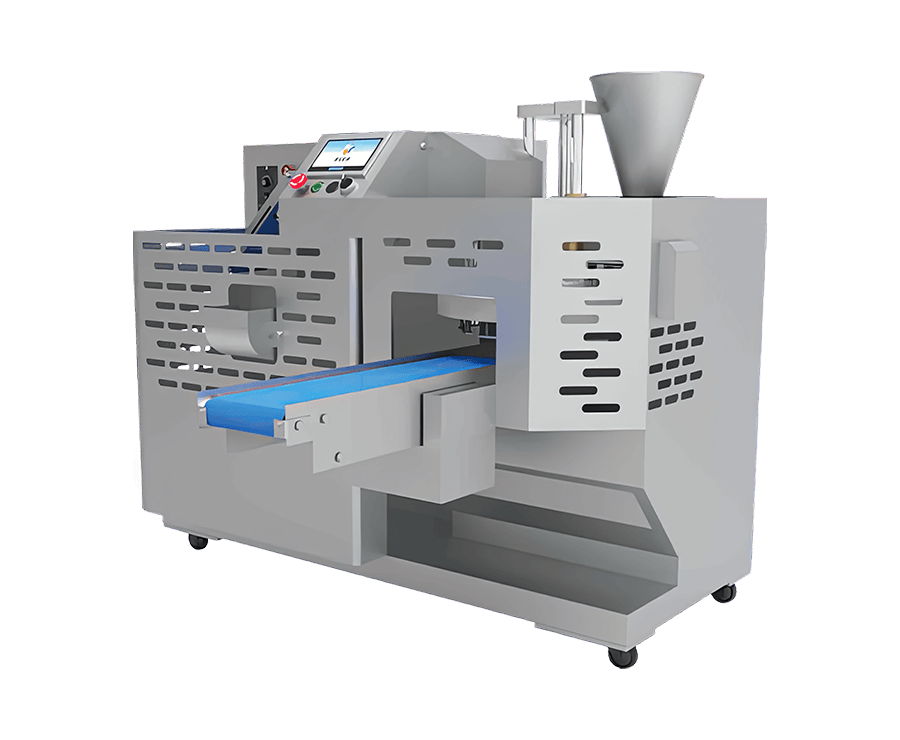
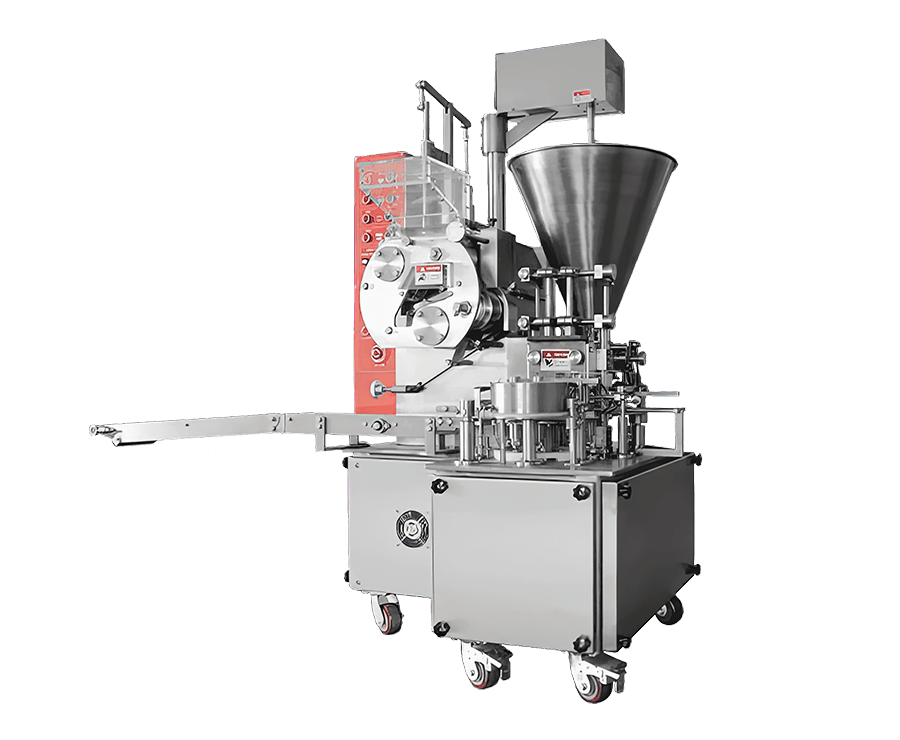
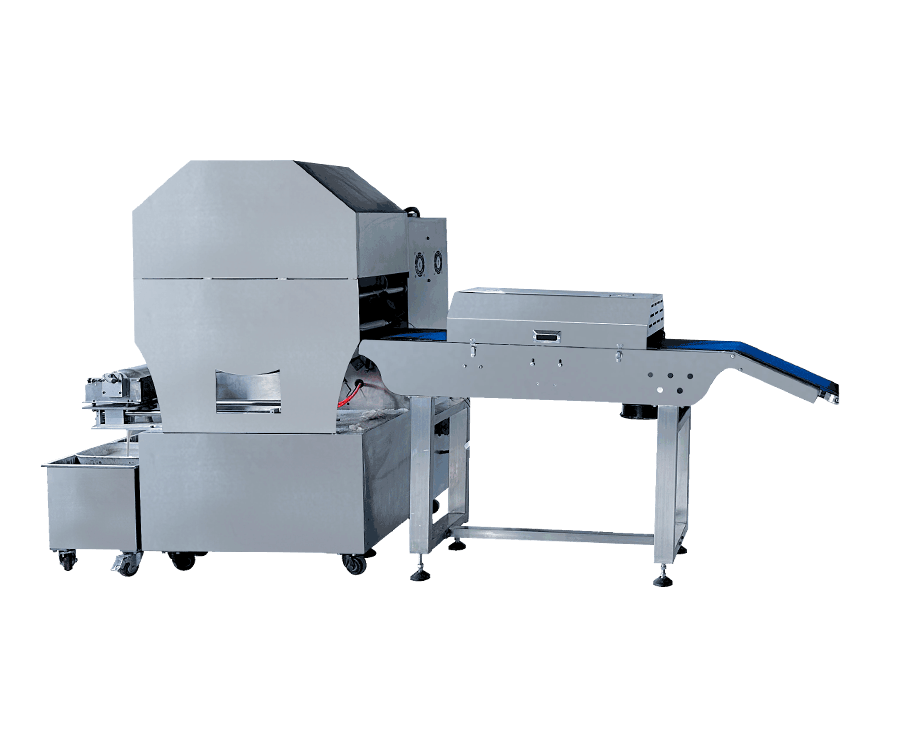
If the constraint is genuinely the forming or encrusting stage—where actual cycle time analysis confirms that the machine is the limiting step—then investing in forming capacity is justified, and the business case will be real rather than assumed. Exploring the range of food forming machines designed for consistent high-volume output makes sense at that point, with the specific selection guided by your measured throughput requirement rather than general specifications.
In every case, the constraint finding should precede the equipment decision—not follow it. Three practical ways to lift output speed and cut downtime consistently comes back to the same starting point: work on the constraint first, optimize everything else second. A factory that gets this sequence right spends less, scales faster, and avoids the expensive experience of a new machine that didn't help.
Related Products
Copyright © Shanghai Chengtao Machinery Co., Ltd. All rights reserved.  Food Machinery Manufacturers
Contact Us