
 en
en English
 Español
 Français
 русский
 عربى
عربى
Turn Minutes into Margin: Cut Changeover Cost in Multi-Product Plants
Content
- 1 Defining Changeover Cost in Real Production Terms
- 2 The Hidden Cost Categories Beyond the Stopwatch
- 3 Equipment Design Features That Directly Reduce Changeover Time
- 4 Speed, Retention, and Product Storage: The Supporting Cast
- 5 A Practical Playbook for Cutting Changeover Cost in Half
- 6 Measuring the Margin Improvement
- 7 Start with One Line, Measure Everything
For any food production facility running more than one SKU, the clock starts ticking the moment the last product leaves the former. Every minute spent swapping molds, rinsing hoppers, adjusting conveyor speeds, and re-calibrating depositors is a minute that generates zero output but still consumes labor hours and overhead. In multi-product plants, this changeover cost is often the single largest source of hidden profit leakage. The good news is that a structured approach to reducing setup time, paired with the right equipment design, can directly convert those lost minutes into recoverable margin.
Defining Changeover Cost in Real Production Terms
Changeover cost is not just the wage of the operator turning a wrench. It is the sum of idle labor, wasted raw material, discarded work-in-progress, reduced equipment utilization, and the opportunity cost of not running a profitable product. In a plant running three production lines with two shifts, a daily changeover that takes 45 minutes per line translates into hundreds of lost production hours annually.
Consider a typical bakery producing both soft buns and hard rolls on the same line. The changeover involves swapping forming plates, adjusting the dough hopper, waiting for the oven temperature profile to stabilize, and cleaning residual dough from the conveyor. Each step adds time, but more critically, each step adds variability. The first batch after every changeover often falls outside specification, meaning it must be reworked or scrapped. That scrap cost is part of the changeover bill, even though it does not appear on a standard labor report.
Why Multi-Product Plants Feel the Pain More
Facilities producing a single product all day can amortize setup time across a high volume. Multi-product plants, however, face frequent interruptions. A dumpling line switching from pork to vegetable filling requires a complete hopper washdown. A spring roll line moving from a thin wrapper to a thicker one needs a temperature adjustment and a test batch. The more SKUs a plant pushes through the same equipment, the higher the annual changeover cost becomes, often exceeding the cost of the equipment itself over a five-year horizon.
The Hidden Cost Categories Beyond the Stopwatch
Most managers measure changeover time from the last good piece of the previous run to the first good piece of the next run. That stopwatch is necessary but not sufficient. Three additional cost categories usually escape the tracking sheet.
- Material loss: Residual dough or filling left in hoppers, pipes, and depositors is often discarded. For high-value fillings like seafood or cheese, this can add up to meaningful monthly losses.
- Quality rework: The first 10 to 30 minutes after a changeover often produce out-of-spec items. These either become waste or require manual rework, both of which consume labor without adding saleable output.
- Labor inefficiency: A two-person changeover crew doing a job that standardized tooling could reduce to one-person introduces avoidable labor cost. Similarly, waiting for a maintenance technician to adjust a mold that should be tool-free is pure waste.
Calculating the Real Cost per Changeover
A practical formula for estimating the cost of a single changeover includes the following components:
| Cost Component | Calculation Basis | Cost per Changeover (USD) |
|---|---|---|
| Idle labor | 3 operators × 45 minutes × $25/hr | Approx. $56 |
| Scrap and rework | 15 kg of product × $3/kg | $45 |
| Lost production capacity | 0.75 hr × 1,200 pcs/hr × $0.10 margin | $90 |
| Utility and overhead | Oven idle, lighting, HVAC | $15 |
| Total estimated cost | $206 per changeover |
With 300 changeovers per year, that facility carries over $60,000 in annual changeover cost — for a single line. The margin impact is immediate: a 20% reduction in changeover time frees over $12,000 in annual profit for that line alone.
Equipment Design Features That Directly Reduce Changeover Time
Not all changeover waste is behavioral. Much of it is engineered into the machinery. Plants running older or poorly designed equipment often suffer from changeover designs that require multiple tools, manual alignment, and lengthy disassembly. Modern food forming equipment, by contrast, addresses changeover at the design stage.
Tool-Free and Quick-Release Mechanisms
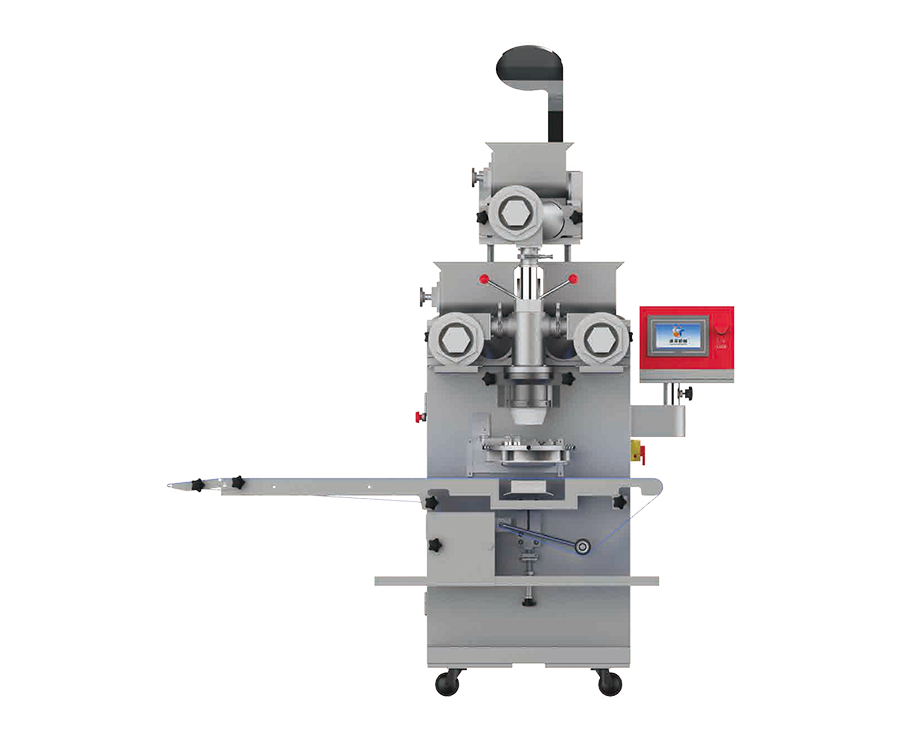
Machines that allow operators to swap forming plates or nozzles without a wrench reduce setup time from minutes to seconds. For example, an encrusting machine with a clamp-style mold release eliminates the need for alignment pins and threaded bolts. The operator simply pulls the old mold, slides in the new one, and locks the lever.
Independent Drive Adjustments
On equipment like the full-automatic wonton forming machine, the ability to adjust the wrapper thickness and filling amount independently allows operators to switch between product sizes without re-calibrating the entire drive train. The result is a short verification run rather than a full mechanical adjustment.
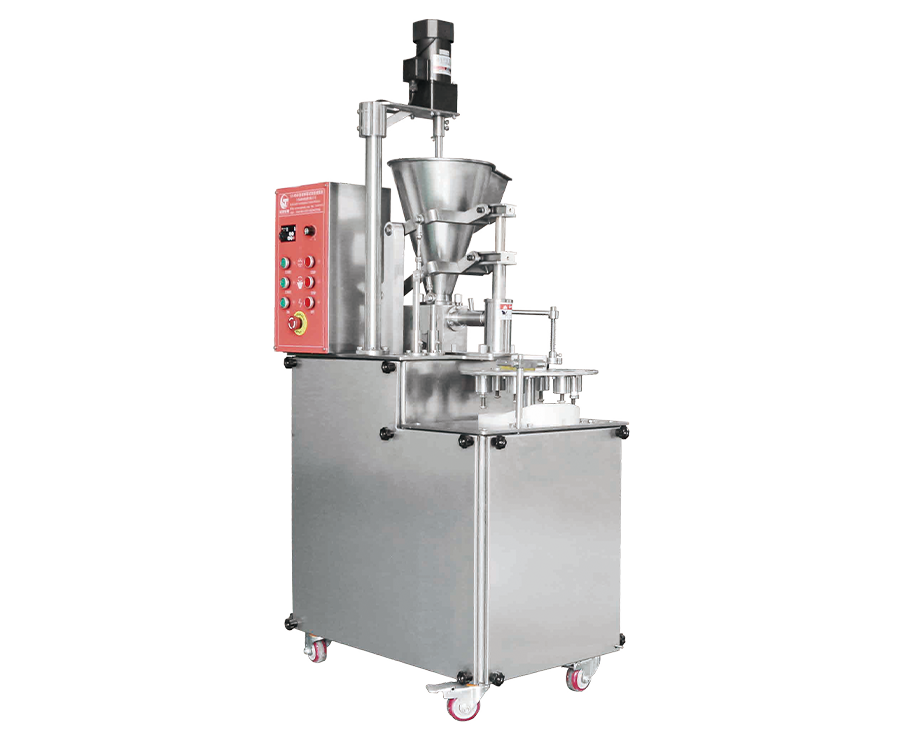 Wonton Making Machine Manufacturers, Automatic Wonton Maker SuppliersChengtao offer Wonton Making Machine Customized, Wholesale Automatic Wonton Machine Manufacturers and Automatic Wonton Maker Suppliers an...View Product →
Hopper and Nozzle Cleanability
Changeover between different fillings requires thorough cleaning of all contact surfaces. Machines with smooth interior surfaces, fewer crevices, and quick-disconnect hoppers reduce washdown time dramatically. A hopper that tilts back for inspection without tooling saves real minutes on every changeover.
Digital Parameter Memory
Some forming machines store recipe parameters for each product. When the operator selects a saved recipe, the machine automatically adjusts motor speeds, dwell times, and conveyor synchronization. This removes the guesswork from re-setting a line and significantly compresses the "trial and error" window that follows most changeovers.
Speed, Retention, and Product Storage: The Supporting Cast
Changeover reduction is not limited to the forming machine itself. The surrounding steps — dough preparation, intermediate proofing, and final steaming or frying—also influence how quickly a line returns to steady-state production. For instance, a fermentation cabinet that allows precise control over humidity and temperature reduces the variability that often forces operators to discard the first batch after a changeover. A commercial fermentation cabinet with accurate environmental control helps standardize the dough condition, so the former starts with consistent input rather than adjusting for a sticky or stiff dough.
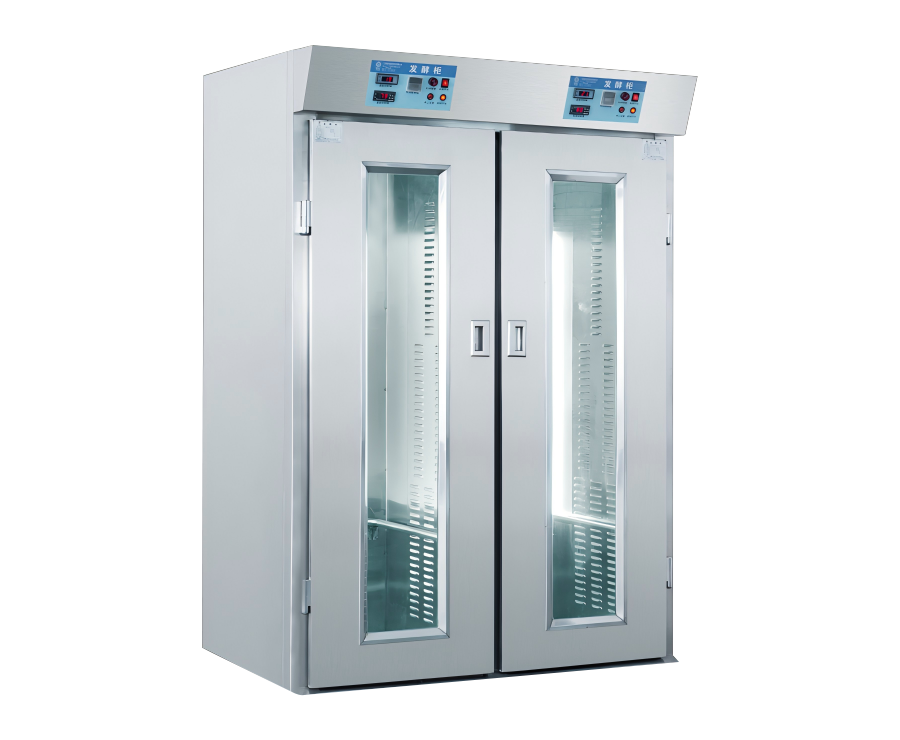 Fermentation Cabinet Manufacturers, Suppliers, Factory - Shanghai Chengtao MachiChengtao are Customized Fermentation Cabinet Manufacturers, Suppliers and Factory in China, Wholesale Fermentation Cabinet for sale, (1) ...View Product →
Similarly, a cooking step that can ramp up or down quickly—like a food steaming cart with responsive heat control—allows the line to reach production temperature faster after a changeover, reducing the wait time before the first batch can be processed.
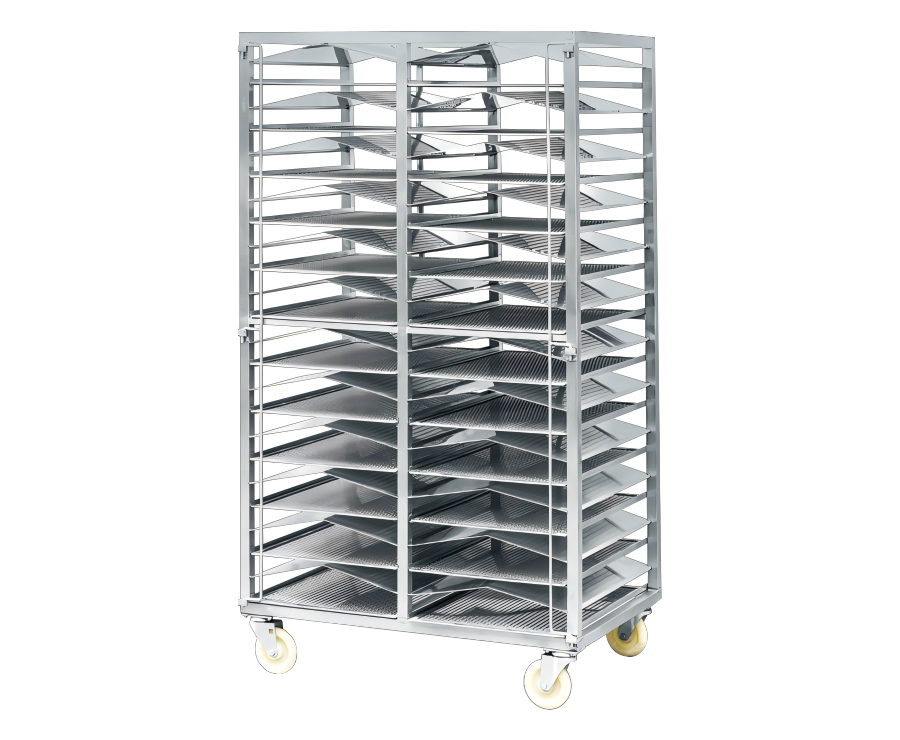 Steaming Cart Manufacturers, Suppliers, Factory - Shanghai Chengtao Machinery CChengtao are Customized Steaming Cart Manufacturers, Suppliers and Factory in China, Wholesale Steaming Cart for sale, 1. Waterproof an...View Product →
A Practical Playbook for Cutting Changeover Cost in Half
Reducing changeover cost by 50% is achievable in most plants without replacing every machine. The path requires a combination of observation, standardization, and targeted equipment upgrades.
Step 1: Video-Record and Time Every Changeover Step
Most operators do things during a changeover that are not documented in the standard work sheet. Recording a few changeovers and reviewing them with the line crew reveals wasted motion, duplicate checks, and waiting periods that nobody notices in real-time.
Step 2: Separate External and Internal Setup
External setup includes activities that can be done while the machine is still running, such as pre-heating the oven, staging the next product's packaging, or preparing the new mold. Internal setup requires the machine to be stopped. Moving as much work as possible to external setup is the fastest win.
Step 3: Standardize Tooling and Connections
If a plant runs three different products on the same former, each requiring a different mold, then having a dedicated color-coded cart for each mold set—complete with the correct quick-release clamps and cleaning brushes—shortens the search time and the adjustment time.
Step 4: Invest in Equipment with Built-In Changeover Speed
When evaluating a new machine, ask for a documented changeover time between two specific product types. A machine with independent filling and wrapper controls, quick-release molds, and a washdown-friendly hopper will pay for its higher initial cost through reduced changeover labor and scrap.
Measuring the Margin Improvement
Once you implement a changeover improvement program, track two numbers: average changeover time per line and first-pass yield on the first 30 minutes after changeover. The first measures efficiency; the second measures quality stability. Together they quantify the margin impact.
For a plant running two forming lines with a $200 changeover cost and 400 changeovers per year, cutting the average time by 30% delivers approximately $24,000 in annual savings. That is not a theoretical figure — it is realized as lower labor cost, less scrap, and greater output capacity that can be sold without additional fixed overhead.
Start with One Line, Measure Everything
The fastest way to recover lost margin from changeover cost is to pick the line with the highest SKU count and start measuring. Document the current state, identify the external vs. internal setup split, and verify whether your equipment supports tool-free changeovers. If it does not, the next equipment purchase should include changeover speed as a top selection criterion. Every minute saved is a minute of capacity that your plant has already paid for — and that is pure margin.
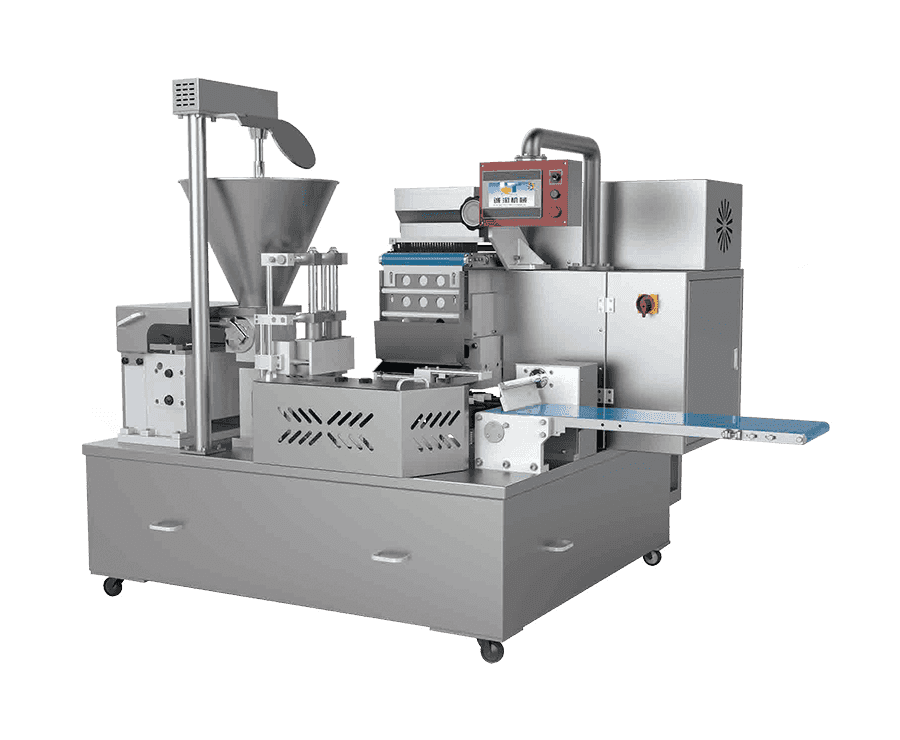
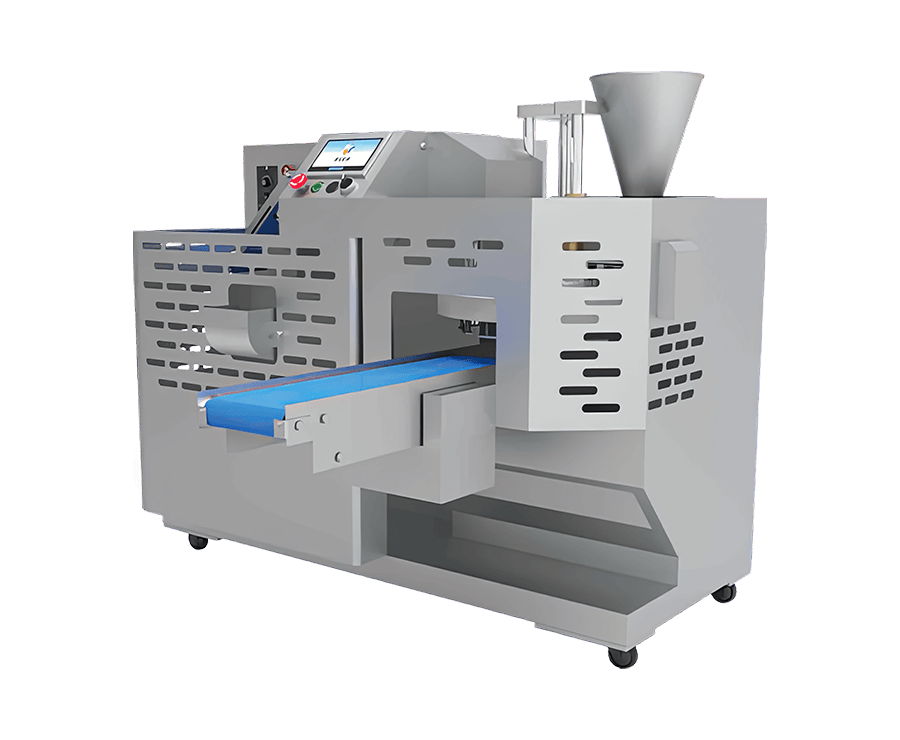
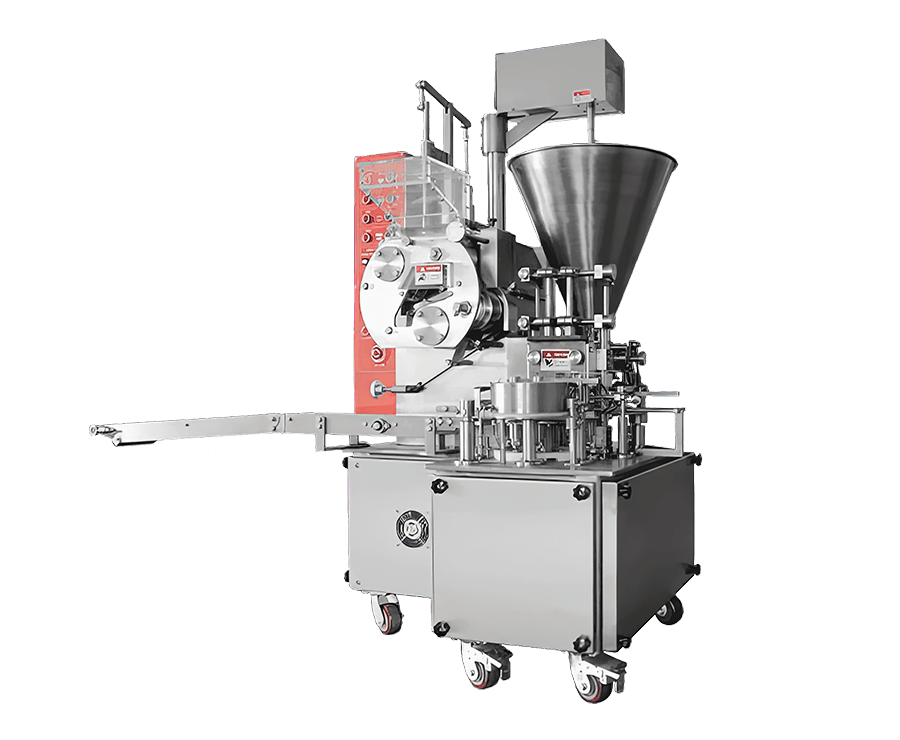
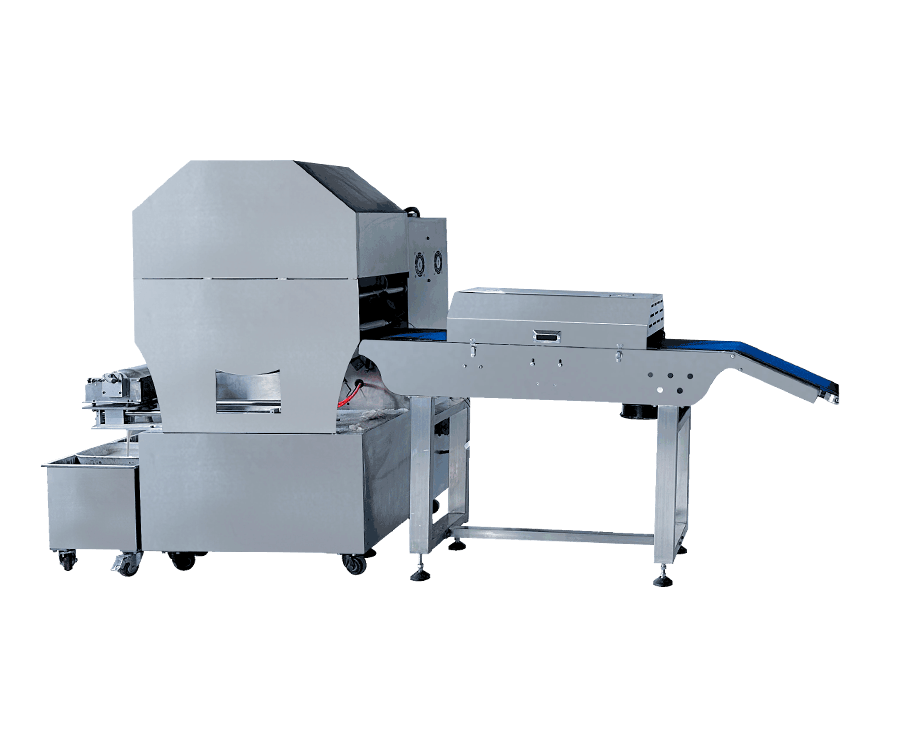
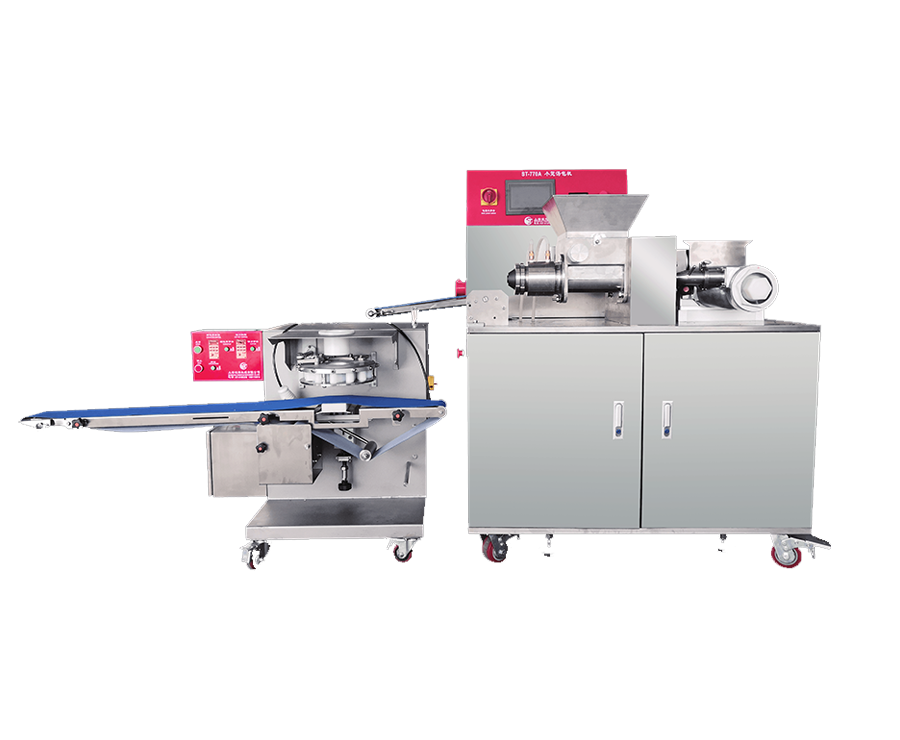
Related Products
Copyright © Shanghai Chengtao Machinery Co., Ltd. All rights reserved.  Food Machinery Manufacturers
Contact Us