
 en
en English
 Español
 Français
 русский
 عربى
عربى
After-Sales Isn't Fixing: Remote Support, Inspections, Spares, Training
Content
When a forming machine stops mid-shift, the natural instinct is to call for a repair technician. But that response treats the symptom, not the problem. In food manufacturing, the phrase "after-sales" has long been shorthand for "fixing what broke." That equation is outdated. A modern after-sales program is not a repair service; it is a system designed to maximize equipment availability. It has four distinct pillars: remote support, preventive inspections, spare parts planning, and operator training. Understanding the difference between these pillars—and knowing which one you actually need—is the difference between a production line that runs and one that merely exists.
Why "After-Sales = Fixing" Is an Outdated Equation
Consider what a single unplanned stoppage costs on a food production line. You lose not only the output during the downtime window but also the labor hours, the energy to reheat or re-cool, and potentially the batch itself if hygiene or temperature parameters were compromised. Industry reports indicate that 74% of field service leaders now consider meeting customer expectations their top challenge for 2026, and 80% of B2B buyers have switched suppliers within two years when service expectations were not met. The old model—wait for a breakdown, send a technician, replace a part—cannot meet those expectations because it is inherently reactive.
The real objective of after-sales support is not to fix machines faster. It is to reduce the frequency and duration of unplanned downtime, which directly impacts the availability component of your OEE (Overall Equipment Effectiveness). A technician who arrives in four hours and fixes a machine in two has still cost you six hours of production. A remote support session that diagnoses a parameter error in fifteen minutes, or an inspection that catches a worn seal before it fails, prevents those six hours entirely. While most operators already track repair expenses, few connect them to lost production economics—see our guide on building a spare parts knowledge base for downtime cost visibility to understand the true financial impact.
The Four Pillars of a Modern After-Sales Program
Shifting from a repair-only mindset requires breaking down after-sales into four discrete functions, each with its own tools, metrics, and goals. Here is what each pillar does and, just as importantly, what it cannot do.
1. Remote Support — First Response, Not a Substitute
Remote support is the first line of defense. It operates on three levels: real-time video diagnosis, remote parameter adjustment, and access to a searchable knowledge base of recorded solutions. Level one, video diagnosis, lets a technician see the machine's actual state and guide the operator through checks within minutes of a call. Level two, remote parameter tuning, is valuable when issues stem from settings rather than hardware—adjusting temperature curves, conveyor speeds, or mold timing can often be done without anyone touching the machine. Level three, the knowledge base, serves as self-service for recurring issues like cleaning procedures or error codes.
The value proposition here is simple: remote support collapses the time between "we have a problem" and "we have started solving it." Instead of waiting for a scheduled site visit, you start a diagnostic session within 15 minutes. That does not make remote support a substitute for physical intervention. When a bearing has seized or a gasket has torn, no video call fixes it. The skill lies in using remote support to confirm that physical help is actually needed—and often to ensure that the correct part is dispatched the first time, avoiding the costly second trip.
2. Preventive Inspections — Finding Wear Before It Finds You
Preventive inspections are scheduled, structured checks designed to identify wear and degradation before they cause a failure. For food forming machinery, high-priority inspection points include mold and forming tool wear, seal and gasket condition, conveyor belt tension, temperature sensor calibration, lubrication points, and the accumulation of residue in hard-to-clean corners. On automatic encrusting machines like the ST168 series, inspection priorities include mold alignment, sealing gaskets, and temperature sensor calibration—each with its own wear profile and replacement interval.
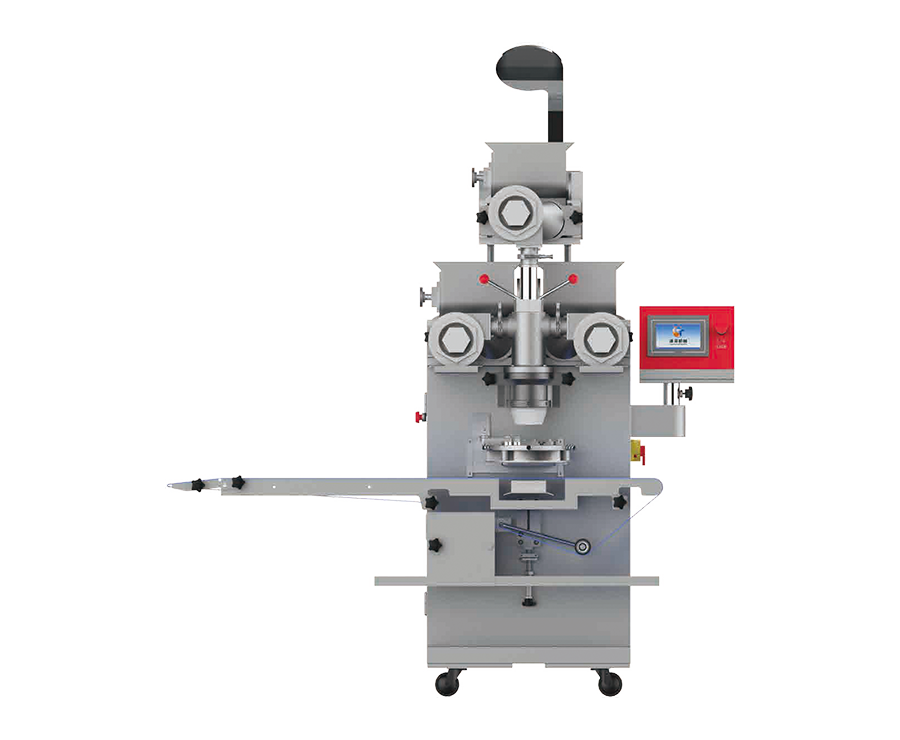 ST-168 Series Automatic Encrusting Machine Manufacturers, Suppliers, Factory - SChengtao are Customized ST-168 Series Automatic Encrusting Machine Manufacturers, Suppliers and Factory in China, Wholesale ST-168 Series...View Product →
The critical design decision is scheduling. Inspection cycles should be based on operating hours, not calendar dates. A line running two shifts per day accumulates wear three times faster than a single-shift operation. Seasonal producers running high volumes before holiday peaks need different inspection plans than steady-state operations. The most efficient approach is to align inspections with planned changeovers or Clean-in-Place (CIP) cycles. This transforms a preventive inspection from "extra downtime" into a strategic extension of an already-planned stoppage. Inspection priorities also include replaceable hygiene components such as fan covers and seals—see hygiene-focused maintenance inspection points in fermentation cabinets for a practical example of how component design affects serviceability.
3. Spare Parts — Inventory Is Not a Cost, It's an Insurance Premium
Spare parts management is the pillar most often mismanaged, typically in one of two directions: minimal inventory that leads to long downtime waiting for deliveries, or excessive inventory that ties up capital in parts never used. The correct approach is a tiered classification based on failure probability and downtime impact.
Class A parts are high-wear, high-failure components like mold springs, seals, and drive belts. These should be in your local stock, period. Class B parts are critical functional components whose failure stops production but whose lifespan is more predictable—inverters, temperature probes, PLC modules. These justify regional or supplier-side safety stock. Class C parts are general-purpose items with low downtime impact and short procurement lead times, like standard fasteners or air filters.
| Tier | Definition | Typical Examples | Recommended Stocking Level |
|---|---|---|---|
| A | High wear / high failure | Mold springs, seals, belts | Local on-site inventory |
| B | Critical function / predictable life | Inverters, temperature sensors, probes | Regional or supplier safety stock |
| C | Low impact / short lead time | Standard bolts, air filters, lubricants | Minimal or just-in-time |
The decision logic that should govern all parts ordering is simple: the cost of downtime exceeds the cost of holding spare parts. A single unplanned stoppage—including lost output, wasted labor, and potential customer penalties—almost always outweighs the carrying cost of a Class A spare. Every downtime event should also produce a record that feeds into your parts knowledge base. Over time, consumption patterns become data, allowing you to predict when a part will fail based on operating hours rather than guessing. This is exactly what a failure-cause spare parts knowledge base is designed to achieve.
4. Operator Training ��� The Highest-ROI Service Investment
Many equipment failures are not mechanical failures at all. They are operator errors: misconfigured parameters, incorrect cleaning procedures, and improper changeover sequences that stress components unnecessarily. Training is not a nice-to-have add-on; it is, dollar for dollar, the most effective service investment a plant can make. When the person running the machine understands why a parameter matters, they are less likely to change it arbitrarily.
Effective training follows a four-level progression:
- Basic operation — starting, stopping, and normal operation.
- Daily maintenance — cleaning, lubrication points, and visual checks.
- Changeover and mold changes — swapping forming molds and adjusting for product changeovers.
- Basic troubleshooting — identifying error codes, checking common failure points, and knowing when to escalate.
The fourth level is where the biggest gains hide. Operator-level troubleshooting means knowing what to check first—practical examples include solving common mechanical issues without halting production on high-speed siomai makers. If an operator can clear a jam, reset a sensor, or recalibrate a temperature offset without waiting for a technician, that is pure uptime recovered.
Training that covers parameter logic also helps operators move from artisan know-how to machine parameters—the first step toward true standardization. And this training must extend beyond forming machines. Dough mixers and other preparation equipment have their own critical parameters—water temperature, mixing time, dough hydration—that directly affect downstream forming stability. An untrained operator on the mixer can create problems that manifest hours later on the forming line.
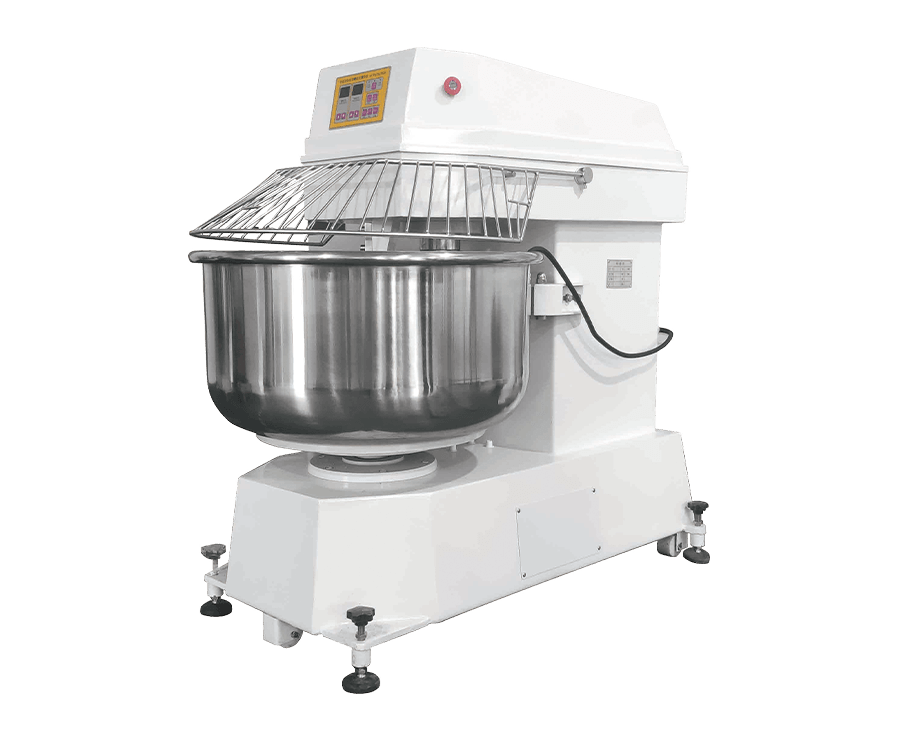 Dough Mixer Manufacturers, Suppliers, Factory - Shanghai Chengtao Machinery Co.,Chengtao are Customized Dough Mixer Manufacturers, Suppliers and Factory in China, Wholesale Dough Mixer for sale, 1. The machine is easy...View Product →
A Practical Framework: Evaluating Your Supplier's After-Sales Readiness
Knowing what a modern after-sales program looks like is only useful if you can apply it. Use these six questions to evaluate any food machinery supplier—including your current one—before you need them.
- What is the guaranteed response time for remote support? Is there a written Service Level Agreement (SLA), or is it an informal promise?
- Do they provide a structured preventive inspection checklist? Is the inspection frequency based on operating hours or calendar time?
- Are critical spare parts held in local or regional safety stock? Or are you expected to carry everything yourself?
- Is operator training included and structured? Does it cover changeover procedures and basic troubleshooting, or just the basics of starting and stopping?
- Do they maintain maintenance history per machine and proactively notify you of upcoming service needs?
- Do they offer proactive inspection before your seasonal production peaks? (Think mooncake season, dumpling holidays, or your own high-volume windows.)
Part of evaluating a supplier's readiness is understanding the scope of machinery they must support. A supplier offering a single machine type can focus their service resources narrowly. A supplier offering a full production line must build a more comprehensive support structure. To judge a supplier's after-sales readiness, first understand the breadth of machinery they must handle—review their full range of forming equipment and ask how their service programs scale across different machine types and technologies.
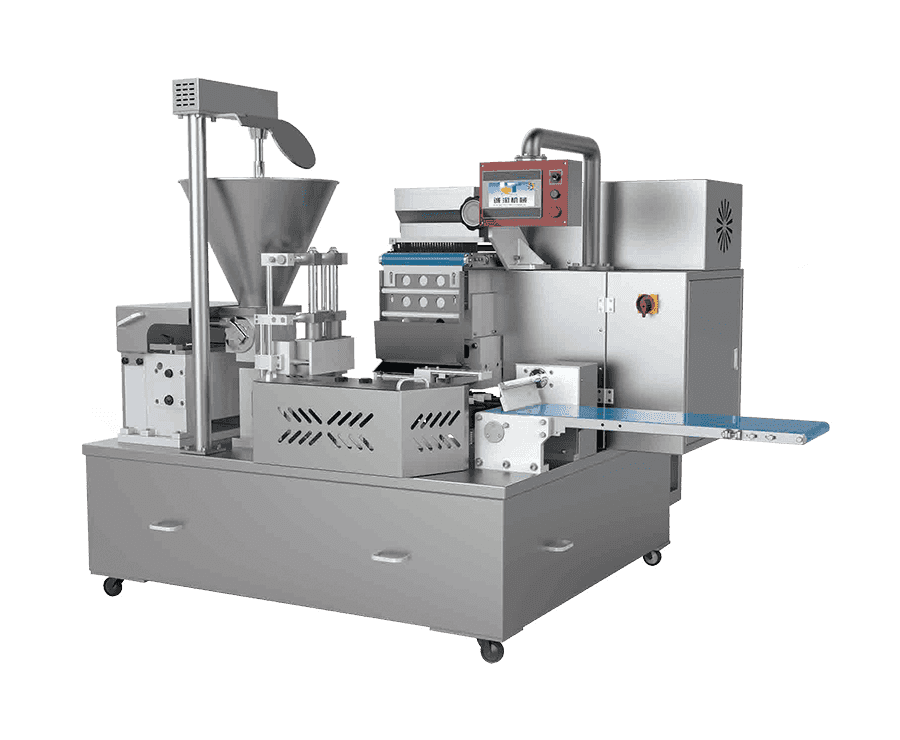 Food Forming Machine & Equipment Manufacturers, SuppliersShanghai Chengtao Machinery Co., Ltd. are Food Forming Machine Manufacturers and Food Forming Equipment Suppliers in China, wholesale foo...View Product →
What This Means for Your Food Production Line
Reframing after-sales from "fixing" to a four-pillar system changes how you buy equipment, how you schedule maintenance, and how you train your people. It also changes what you ask of your suppliers. Here are three actions to take now:
- Assess your current suppliers against the six-question framework above. Identify the gaps. If your supplier only offers "call us when it breaks," that is not a service program—it is a repair shop.
- Audit your Class A spare parts inventory. Do you have mold springs, seals, and belts for your highest-failure components? If not, the next unplanned stoppage will be longer and more expensive than it needs to be.
- Schedule quarterly operator training. Focus on the fourth level: basic troubleshooting. The goal is that your first-line operators can resolve 50% of minor issues without escalation, reserving technician calls for genuine mechanical failures.
The next time someone in your facility says "we need after-sales support," ask a clarifying question: do you need remote support, a preventive inspection, a spare part, or training? They are not the same thing. Only by separating these four pillars can you build a service model that protects your production line—and your bottom line—not just your broken parts.

Related Products
Copyright © Shanghai Chengtao Machinery Co., Ltd. All rights reserved.  Food Machinery Manufacturers
Contact Us