
 en
en English
 Español
 Français
 русский
 عربى
عربى
Bakery Equipment Solutions: How to Build a Production Line That Matches Your Output
Content
A bakery producing 3,000 pieces a day can often run on one mixer, a deck oven, and hand shaping. Push the same operation toward 15,000 pieces and the problem changes: dough reaches the forming stage at inconsistent temperatures, portion weights drift outside a two-gram tolerance, and the proofing room becomes the choke point that idles everything upstream. This is the point where buying machines one at a time stops working and planning a bakery equipment solution begins.
The conclusion up front: a solution is not a catalog of machines. It is a matched sequence — dough preparation, forming, proofing, and final baking or steaming — in which every stage is sized against one number, your daily output, and in which hygiene design, changeover time, and after-sales support are settled before the purchase order rather than after the first breakdown. The rest of this article walks through each stage, shows where bottlenecks actually form, and lists the purchase criteria that separate a workable line from an expensive one.
What a Bakery Equipment Solution Actually Covers
A solution differs from a machine list in three measurable ways.
First, capacity is matched across stages. A mixer that produces 200 kilograms of dough per hour feeding forming equipment rated for twice that means you have paid for capacity you can never run — and the mixer, not the forming machine, becomes the line's true output.
Second, equipment is specified around your product range, not a generic one. A line built for soft filled buns places different demands on mixing and forming than one built for deposited cookies or batter-based cakes, and the difference shows up in tooling, speed settings, and cleaning routines.
Third, engineering support is part of the deliverable. Layout planning, installation, commissioning, and operator training determine whether rated capacity is ever reached on your floor. Suppliers such as Chengtao structure their equipment portfolio by production stage — preparation, forming, extended application, and cooking — precisely so buyers can assemble and size a complete flow rather than collect unrelated units.
The Four Stages of a Bakery Line and What Each One Controls
Dough Preparation Sets the Ceiling
Everything downstream inherits the quality of the dough stage. Mixing determines gluten development, dough temperature, and batch-to-batch consistency, and it sets the rate at which dough becomes available to forming equipment. When shortlisting a commercial dough mixer, check three things: bowl capacity against your batch sizes, mixing cycle time against your hourly dough demand, and whether the machine keeps dough temperature inside your recipe's working range. A dough leaving the mixer above 30 degrees Celsius behaves very differently at the forming head than one held near 24 degrees, and that gap shows up as weight drift and shape defects hours later.
Forming and Portioning Define Consistency
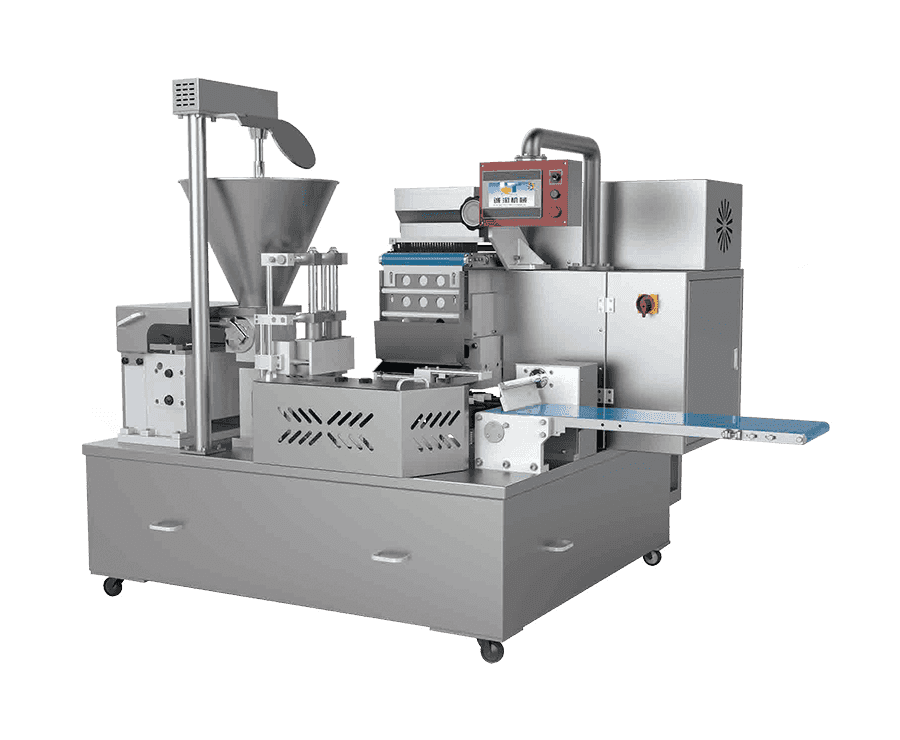
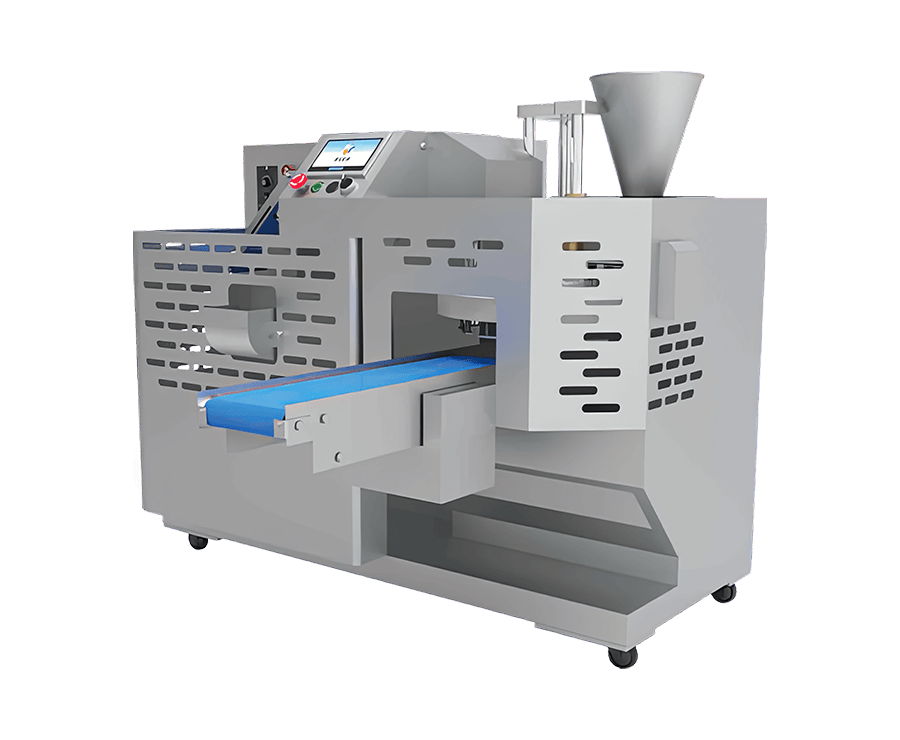
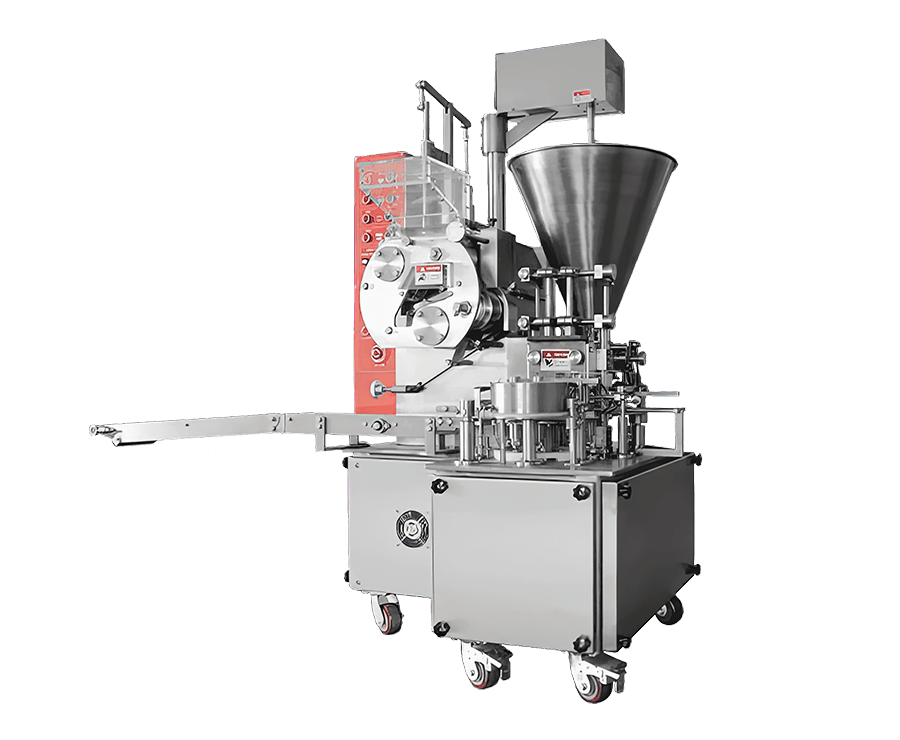
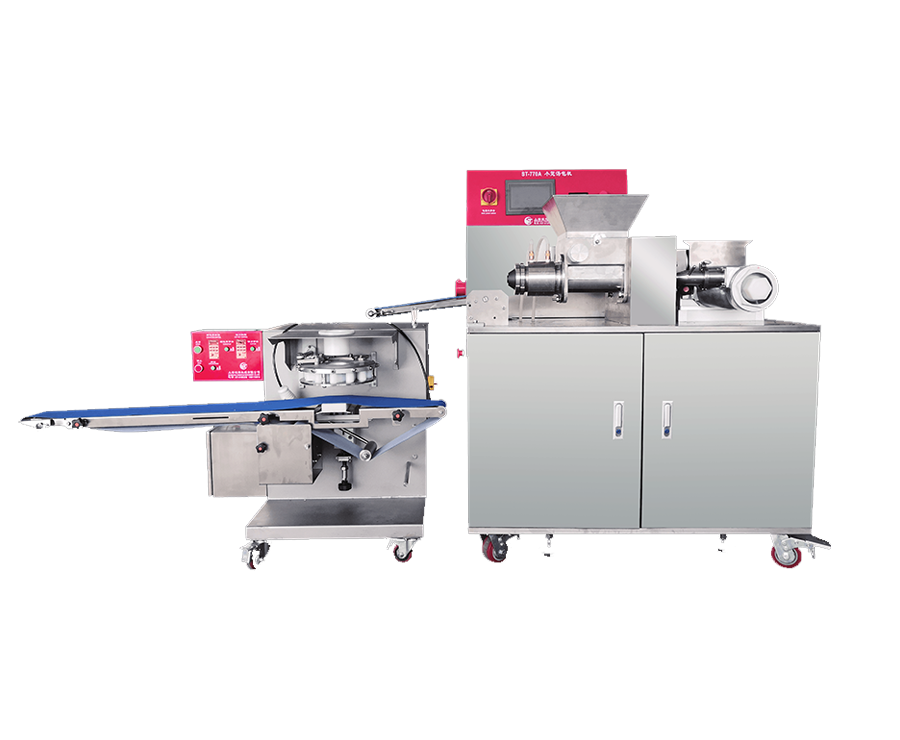
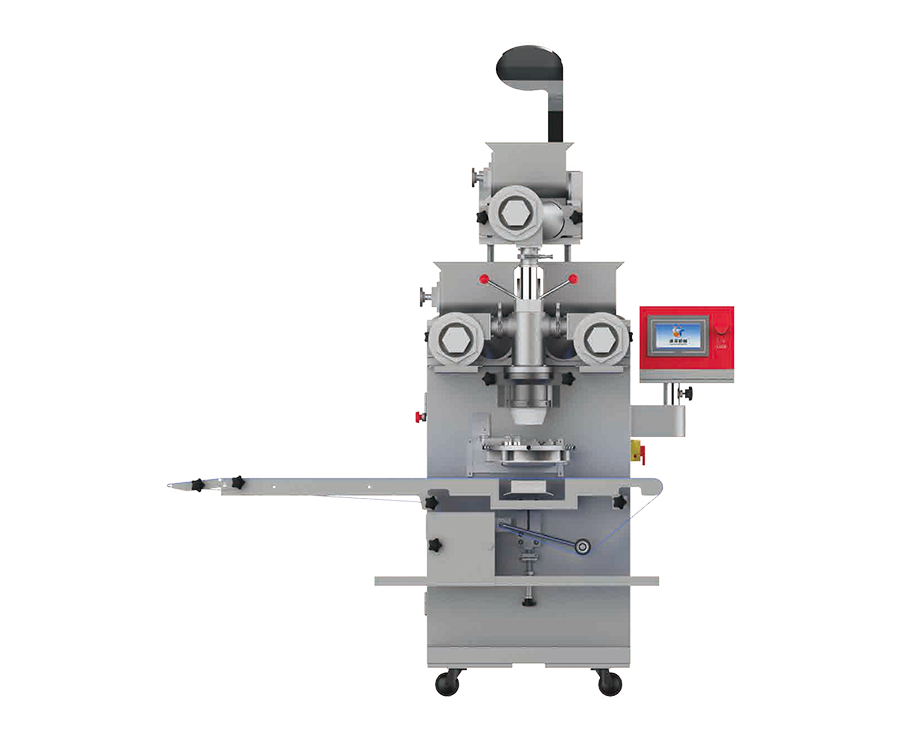
Forming equipment converts prepared dough into saleable units, and this is where weight accuracy and speed are won or lost. Encrusting machines handle filled products — buns, filled breads, mooncakes — by wrapping dough around a portioned center; an automatic cookie machine deposits soft dough directly onto trays; cake machines meter batter into molds. The practical specs to compare are portioning accuracy, rated pieces per hour at your product's specific weight, and changeover time between products. A machine rated at 4,000 pieces per hour for one product may deliver far less for a larger, softer, or stickier dough, so always ask for the rate measured on a product comparable to yours.
Proofing and Final Cooking Close the Loop
Proofing controls the final texture of yeast-raised products, and its capacity must absorb the forming machine's peak output rather than throttle it. A fermentation cabinet holds temperature and humidity inside tight tolerances — the difference between a well-risen bun and a dense one often comes down to one or two degrees and a few percentage points of relative humidity. Final cooking then splits by product: ovens for baked goods, steam carts and steaming cabinets for steamed items such as baozi and mantou. When sizing this stage, calculate loading and unloading time per tray or rack, because handling time, not chamber volume, is frequently the real limit on throughput.
Sizing the Line: Match Capacity Across Every Stage
Once the stages are clear, plan the line backwards from output. Divide your target daily production by working hours to get the pieces-per-hour rate every stage must sustain, then add 15 to 20 percent of headroom for changeovers, cleaning, and minor stoppages. The table below summarizes what each stage must match and where the bottleneck typically appears.
| Stage | Typical Equipment | What It Must Match | Where the Bottleneck Appears |
|---|---|---|---|
| Preparation | Dough mixer, planetary mixer | Hourly dough demand of the forming stage | Long mixing cycles that starve forming |
| Forming | Encrusting, cookie, and cake machines | Daily output target and proofing capacity | Changeovers that halt the line between products |
| Proofing | Fermentation cabinet | Peak output rate of the forming machine | Rack capacity that cannot absorb peak runs |
| Final cooking | Ovens, steam carts | Pieces per hour leaving proofing | Tray loading and unloading time per cycle |
A common and costly mistake is buying forming equipment rated at 4,000 pieces per hour and later discovering that the mixer and proofing room together support only 2,500. The surplus forming capacity adds purchase price, power consumption, and floor space without adding a single sellable piece. Sizing each stage against the same hourly figure, in writing, prevents that outcome.
Purchase Criteria That Decide Long-Term Value
Beyond capacity, five criteria separate equipment that runs for a decade from equipment that becomes a service burden:
- Hygiene design. Food-contact surfaces in 304 stainless steel, crevice-free welds, and tool-free disassembly for daily cleaning. If a machine cannot be stripped and sanitized within your cleaning window, its effective capacity is lower than its rating.
- Changeover flexibility. Ask how long a mold or tooling swap takes and whether recipe parameters can be stored and recalled. In multi-product bakeries, changeover time is often the largest hidden loss.
- Measured tolerances. Request portion-weight accuracy and temperature stability figures in writing, ideally from a test run with your own recipe rather than a demonstration material.
- Support and spare parts. Confirm commissioning, operator training, and the availability of wear parts such as belts, seals, and molds before signing. Downtime cost depends on parts lead time more than on machine price.
- Facility fit. Verify power supply, water and drainage, floor loading, and ceiling height against the supplier's installation sheet. Retrofit costs for utilities are a frequent surprise in older buildings.
Single Machines or a Full Line: How to Decide
Neither approach is automatically right. Single machines with manual transfer suit output below a few thousand pieces per day, narrow product ranges, and teams with skilled bakers on hand. A full integrated line earns its cost when output targets, product variety, or labor costs push manual handling past its limit — and when consistency between batches matters to your customers.
The practical method is to find the true bottleneck before adding anything. If dough preparation already runs at its limit, a faster forming machine will simply wait for dough; if proofing racks are the constraint, more mixers change nothing. Working through demand, capacity, and handling time at each stage is the fastest way to see whether you need one machine or a rearranged flow, and it is the same approach used when scaling from single machines to full lines.
Before contacting any supplier, write down three numbers: your daily output target, the product range you expect to run over the next two years, and the floor space available. Ask each bidder to state, in writing, the sustained hourly capacity of every stage against those numbers — not just the headline rating of the forming machine. Suppliers who answer that question with measured figures and a line layout, rather than a price list, are the ones who will still be useful after installation.
Related Products
Copyright © Shanghai Chengtao Machinery Co., Ltd. All rights reserved.  Food Machinery Manufacturers
Contact Us